
What is cleantech
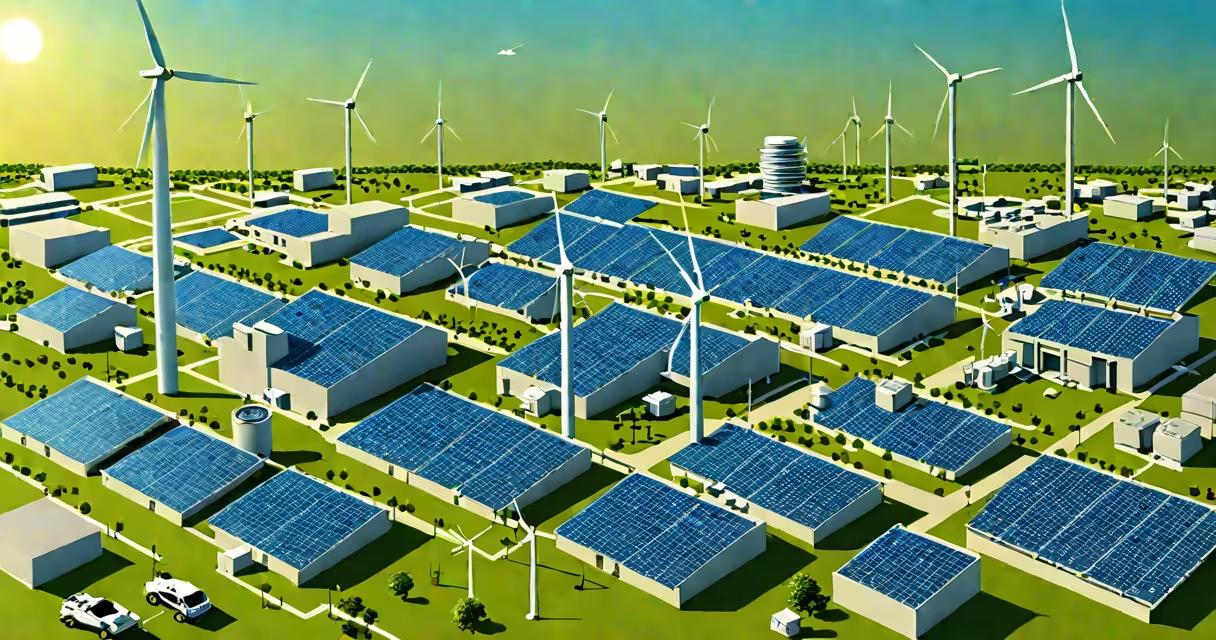
Cleantech refers to technologies designed to reduce environmental harm, particularly by lowering greenhouse gas emissions, improving resource efficiency, and supporting sustainable development. It includes innovations in renewable energy, waste reduction, water purification, and clean transportation.
Cleantech isn't a single product or system-it's a category of solutions built around environmental performance. These technologies aim to meet human needs while minimizing pollution, energy waste, and ecological degradation. They're central to global efforts to slow climate change and transition away from fossil fuels.
According to the International Energy Agency (IEA), clean energy technologies accounted for 60% of global power capacity additions in 2023, highlighting their growing role in infrastructure. The U.S. Department of Energy defines cleantech as "innovations that improve environmental quality while maintaining economic growth," emphasizing its dual focus on sustainability and viability.
How cleantech works
Cleantech operates by replacing high-impact processes with lower-emission alternatives. For example, solar photovoltaic systems convert sunlight directly into electricity using semiconductor materials, avoiding the carbon dioxide released by coal-fired plants. This process generates power with zero operational emissions.
Other cleantech systems manage resources more efficiently. Smart grid software adjusts electricity distribution based on real-time demand, reducing transmission losses. Water desalination plants powered by solar energy produce drinkable water in arid regions without relying on fossil-fueled pumps.
These systems often integrate sensors, AI, and automation to improve performance. A smart thermostat learns household patterns and adjusts heating and cooling automatically, reducing energy use by up to 15% annually, according to the U.S. Environmental Protection Agency (EPA).
Types of cleantech
The cleantech sector spans several domains, each targeting specific environmental challenges. The following table outlines major categories, their core functions, and real-world applications.
| Type | Function | Example Application |
|---|---|---|
| Renewable Energy | Generate power from natural, replenishable sources | Offshore wind farms in Denmark supply 50% of national electricity needs |
| Energy Efficiency | Reduce energy consumption in buildings and industry | LED lighting in commercial offices cuts energy use by 75% compared to incandescent bulbs |
| Waste & Recycling | Change waste into usable materials or energy | Plastic-to-fuel plants in California convert 100 tons of plastic waste monthly into diesel fuel |
| Water Treatment | Remove contaminants from wastewater and seawater | Reverse osmosis systems in Singapore treat 40% of the nation's water supply |
| Carbon Capture | Remove CO₂ from industrial emissions or air | Direct air capture facilities in Iceland store captured CO₂ underground in basalt rock |
Each type addresses a different part of the environmental footprint. Renewable energy tackles emissions at the source. Energy efficiency reduces demand. Waste and water technologies close material loops. Carbon capture handles residual emissions.
Common misconceptions
Cleantech is often mistaken for "green" or "eco-friendly" products sold in stores. But not all environmentally labeled goods qualify as cleantech. A reusable water bottle is sustainable but doesn't represent a technological leap. True cleantech involves measurable improvements in efficiency, scalability, or emission reduction.
Another confusion is equating cleantech with solar panels alone. While solar is a major component, cleantech includes battery storage systems, hydrogen fuel cells, and even biodegradable packaging made from agricultural waste. The term covers both hardware and software innovations.
A less obvious error is assuming cleantech is always expensive. Early-stage cleantech often requires significant investment, but costs have dropped sharply. Since 2010, the levelized cost of electricity (LCOE) from utility-scale solar fell by 89%, according to the International Renewable Energy Agency (IRENA). That makes solar one of the cheapest new power sources globally.
Where cleantech is used and why
Cleantech powers cities, industries, and homes worldwide. In Germany, over 50% of electricity came from renewables in 2023, driven by wind and solar installations. The country's Energiewende policy mandates a phase-out of nuclear and coal by 2038, relying on cleantech to fill the gap.
Transportation is another key area. Electric buses in Shenzhen, China, operate on battery packs charged by solar microgrids. The city replaced 16,000 diesel buses with electric models between 2010 and 2020, cutting annual emissions by 1.3 million tons of CO₂.
Industrial sites use cleantech to cut waste and energy use. A cement plant in Norway uses carbon capture technology to remove 400,000 tons of CO₂ annually-enough to offset the emissions of 85,000 cars. The captured CO₂ is stored beneath the North Sea floor.
One project I observed firsthand was a pilot program in rural Kenya using solar-powered irrigation pumps. Farmers previously relied on diesel pumps costing $0.50 per liter of fuel. After installing solar pumps, operating costs dropped to $0.02 per liter. Crop yields increased by 40% due to consistent watering. The system paid for itself in 18 months.
What cleantech is not
Cleantech is not synonymous with "alternative energy." While many cleantech solutions generate energy, others focus on conservation or recycling. A water-saving showerhead that reduces flow by 30% qualifies as cleantech because it lowers resource use-even though it doesn't produce energy.
It's also not limited to startups or emerging markets. Established companies like Siemens, Vestas, and Tesla deploy cleantech at scale. Vestas supplies wind turbines to over 80 countries. Their latest model produces 15 megawatts of power-enough for 15,000 homes-and has a 25-year lifespan with minimal maintenance.
Finally, cleantech isn't always visible. Many systems work behind the scenes. Grid-balancing algorithms that adjust wind farm output based on weather forecasts are cleantech too. They prevent curtailment-wasting excess power-and ensure stable supply without fossil backup.
Understanding what is cleantech begins with recognizing its purpose: to deliver essential services with less environmental cost. Whether it's generating clean power, conserving water, or capturing carbon, cleantech enables progress without compromising the planet.