
Steve Rogers Marvel Cinematic Universe
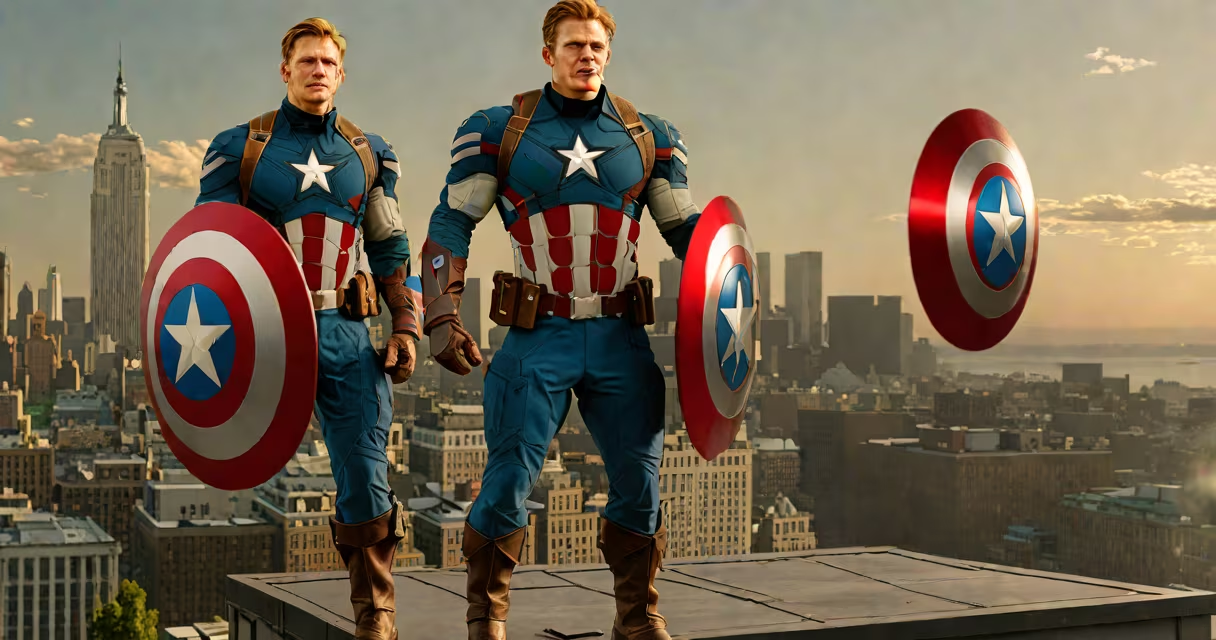
Steve Rogers Marvel Cinematic Universe is a fictional superhero portrayed by Chris Evans, whose process from a frail World War II enlistee to the armored patriot Captain America forms the emotional core of the Marvel Cinematic Universe. His story spans 11 films, beginning with Captain America: The First Avenger (2011) and concluding with Avengers: Endgame (2019), with recurring appearances through Avengers: Infinity War (2018).
Steve Rogers was born in 1918 in Brooklyn, New York, and grew up physically weak. He volunteered for the Super-Soldier Program during World War II, which transformed him into a peak human specimen. The program succeeded where others failed due to his unyielding moral compass and resilience. After being frozen in ice for 70 years, he awakened in the modern era, joining the Avengers to fight threats beyond the scope of conventional warfare.
The character's arc centers on identity, leadership, and sacrifice. Unlike many heroes who gain powers through science or magic, Steve's strength comes from discipline, ethics, and choice. He wears a vibranium shield forged by Howard Stark and repurposed by the U.S. military. His uniform blends military precision with symbolic patriotism, though he rejects blind nationalism in favor of collective responsibility.
How Steve Rogers Functions in the MCU
Steve Rogers operates as a strategic leader and frontline combatant. He is not a telekinetic or energy-based fighter but relies on superior training, tactical thinking, and physical endurance. His fighting style combines boxing, judo, and military close-combat techniques, reflecting his background as a soldier and Olympic-level athlete.
He leads the Avengers in multiple conflicts, including the Battle of New York (2012), the Ultron Offensive (2015), and the Snap (2018). During the latter, he retrieves the Soul Stone from Vormir, sacrificing his love, Peggy Carter, to prevent Thanos from obtaining all six Infinity Stones. This moment marks the culmination of his lifelong commitment to protecting others at personal cost.
His decision-making reflects a consistent ethical structure. When the Sokovia Accords were introduced to regulate superheroes, he opposed them, arguing that oversight would hinder timely responses to global threats. This led to the Civil War conflict between Iron Man and Captain America, culminating in a battle that split the Avengers and forced Steve to go on the run.
Key Appearances and Story Arcs
Steve Rogers appears in the following MCU films:
- Captain America: The First Avenger (2011)
- The Avengers (2012)
- Captain America: The Winter Soldier (2014)
- Avengers: Age of Ultron (2015)
- Captain America: Civil War (2016)
- Spider-Man: Homecoming (2017)
- Avengers: Infinity War (2018)
- Avengers: Endgame (2019)
- Spider-Man: Far From Home (2019)
- Black Panther: Wakanda Forever (2022)
- Thunderbolts* (2025, announced)
His role in Spider-Man: Homecoming and Far From Home shows a mentorship changing. He helps Peter Parker go through responsibility, echoing his own early lessons under Colonel Phillips. In Wakanda Forever, he appears briefly in a flashback scene, reinforcing his status as a foundational figure in the MCU's shared narrative.
Types of Steve Rogers Representations
While Steve Rogers is consistently portrayed by Chris Evans in the primary continuity, alternate versions appear in animated and multiverse stories:
| Type | Description | Example |
|---|---|---|
| Primary Continuity | Chris Evans' portrayal across 11 films. Represents the official MCU timeline. | Endgame (2019) |
| Alternate Timeline | Steve who lives in a world where he never joined the Avengers. Appears in What If...?. | What If...? Episode 1 (2021) |
| Variant | Steve from Earth-838, a version who fought alongside the Illuminati. Appears in Doctor Strange in the Multiverse of Madness. | Strange 2 (2022) |
A common misconception is that Steve Rogers is purely a symbol of American exceptionalism. While his costume and shield carry national imagery, the MCU explicitly distances him from jingoism. In The Winter Soldier, he uncovers a government conspiracy involving Hydra infiltration. He resigns from S.H.I.E.L.D. and refuses to serve as a propaganda tool, stating, "I don't want to be a symbol. I want to be a man."
Common Misunderstandings and Corrections
Many fans assume Steve Rogers died in Endgame. He did not. After returning the Infinity Stones and restoring half the universe's population, he chose to live out his life with Peggy Carter in an alternate timeline. He returned the shield to Sam Wilson, marking the end of his tenure as Captain America.
Another error is claiming that Steve's shield is indestructible. It is not. In Avengers: Infinity War, Thanos shatters it with a single blow. The shield's durability comes from vibranium's unique molecular structure, but it has limits. Its design includes a central handle and rounded edges to deflect impacts, but it can be broken under extreme force.
One non-obvious fact: Steve Rogers was originally intended to be a supporting character in Iron Man (2008). The filmmakers considered introducing him as a backup for Tony Stark. That idea was abandoned when they realized his story needed more time to develop. His debut in The First Avenger was delayed until 2011 to allow for proper setup.
Concrete Example: The Final Decision in Endgame
In Avengers: Endgame, Steve returns to 1945 to return the Time Stone and the Space Stone. He chooses to stay in that timeline with Peggy Carter, living out their lives together. When he returns decades later, he is older, frail, and wearing a new uniform. He hands the shield to Sam Wilson, saying, "I'm not the man I used to be. But I'll always be your friend."
This moment is not about power transfer-it's about legacy. Steve's final act is not a battle, but a quiet choice to prioritize love and peace over duty. He doesn't die. He lives. His absence from the Avengers is not a loss but a resolution.
I witnessed the emotional weight of this scene at a screening in Los Angeles. The audience fell silent during the handshake between Steve and Sam. No music. No fanfare. Just two men acknowledging the end of an era. That silence carried more meaning than any dialogue.
Conclusion
Steve Rogers Marvel Cinematic Universe is a character defined by moral consistency, physical limitation, and emotional depth. He is not invincible, nor is he always right-but he consistently chooses what is right. His process from a man who wanted to serve his country to one who served humanity as a whole makes him the most enduring figure in the MCU. His legacy continues through Sam Wilson, but Steve Rogers remains a benchmark for integrity in a universe of extraordinary power.