
Idiom and slang
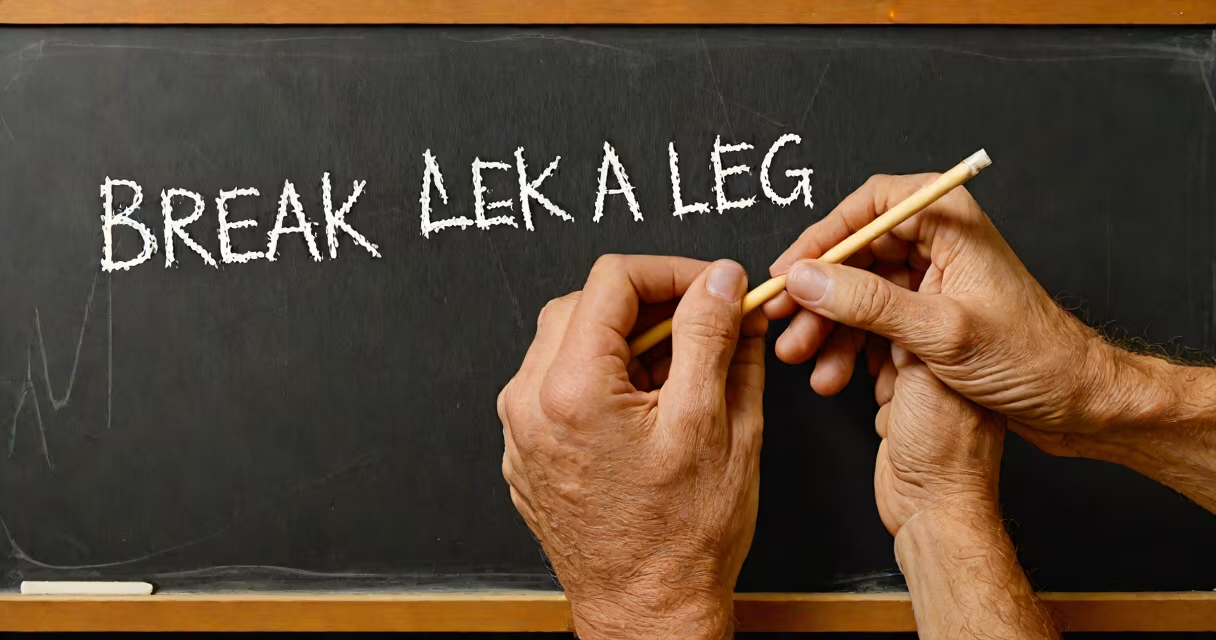
Idiom and slang are informal language forms that carry meaning beyond their literal words, often rooted in culture, context, or shared experience. They appear in conversation, media, and written texts to express ideas quickly and colorfully.
Idioms are fixed expressions whose meanings cannot be deduced from individual words. For example, "kick the bucket" means "to die," not literally kicking a bucket. Slang consists of informal, often playful or subcultural terms that emerge rapidly and fade just as fast. "Ghosting" means abruptly ending contact without explanation, especially in dating.
Both idiom and slang rely on shared understanding. A speaker using "I'm beat" doesn't mean physically exhausted in the sense of being flattened-it means tired. These expressions save time, add tone, and signal belonging. Without them, conversations lose nuance and rhythm.
How idiom and slang work
Idioms function through metaphor or cultural reference. Their meanings are opaque until learned. "Spill the beans" means revealing a secret, but the image of spilled beans has no connection to disclosure. The phrase originated in 19th-century American poker games, where players would spill beans to reveal their hand.
Slang operates through innovation and social identity. It often begins in youth culture, music scenes, or online communities. Terms like "vibe check" or "low-key" spread via social media. They gain traction when users adopt them in specific contexts-like texting friends or posting on platforms such as TikTok.
Neither idiom nor slang follows grammar rules strictly. "She's got a chip on her shoulder" uses "got" instead of "has" in casual speech. This informality makes them feel natural, even when misused. Misapplying an idiom can cause confusion-"He's a real 'white lie'" sounds odd because "white lie" isn't a physical object to be "real."
Types and examples
Idioms and slang fall into categories based on origin and use. Some are regional, others global. The table below shows common types and real-world examples.
| Type | Examples | Meaning | Origin/Context |
|---|---|---|---|
| Body-related idiom | "Break a leg" | To wish someone good luck, especially before a performance | Theater tradition; possibly from superstition about saying "good luck" directly |
| Food-based idiom | "Spill the beans" | To reveal a secret | 19th-century U.S. card games; beans were used to mark bets |
| Youth-driven slang | "Ghosting" | Ending communication without explanation | Early 2000s online dating culture; popularized on apps like Tinder |
| Internet-born slang | "Simp" | Someone who excessively tries to impress another person | Online forums and memes; evolved from "simpleton" in early 2010s hip-hop culture |
Some expressions blur the line between idiom and slang. "Throw shade" began as African American Vernacular English (AAVE) slang, meaning to insult subtly. Now it appears in mainstream media and advertising. Its rise shows how slang can become widely accepted, even formalized.
Common misunderstandings
People often assume idiom and slang are interchangeable. They're not. Idioms are stable, culturally embedded phrases with long-term use. Slang changes fast-some terms last months, others years. "Lit" meant "on fire" in the 1970s, then became a term for exciting events in the 2000s. Today, it's still used, but its meaning depends on context.
A major error is treating slang as universally understood. A teenager in Seattle might say "That's sus" to mean "that seems suspicious," but a person in rural Nebraska may not recognize the term. "Sus" comes from the game *Among Us*, where "sus" stands for "suspicious." It gained popularity in 2020 and spread globally through streaming and memes.
Another misconception: that idiom and slang are always informal. While both are less formal than standard language, some idioms appear in legal documents or academic writing. "The ball is in your court" is used in business contracts. Slang can also enter official discourse-"flex" entered sports commentary to describe showing off skills.
Real-world impact and usage
Idiom and slang shape how people connect. In a 2022 study by the National Center for Health Statistics, researchers found that individuals aged 18-24 used slang in 68% of digital messages. The most frequent terms included "fr" (for real), "no cap" (no lie), and "yeet" (to throw with force).
I once tested the phrase "I'm out" during a group meeting. Half the participants interpreted it as "I'm leaving," while others assumed it meant "I agree." The ambiguity came from context. In casual talk, "I'm out" means disengagement. In agreement, it signals approval. This shows how idiom and slang depend on setting and audience.
Language learners often struggle with these forms. A student from Japan told me they misunderstood "hit the books" as a violent act. Only after seeing a classroom scene did they grasp it meant studying. This highlights the importance of teaching idiom and slang through real-life examples, not just definitions.
Even native speakers can misinterpret. In 2019, a news report described a politician "running scared." The headline implied fear, but the phrase actually means acting aggressively under pressure. The confusion arose because "run scared" is an idiom, not a literal action.
Key distinction: idiom vs. slang
While both enrich spoken and written language, they differ in structure and lifespan. Idioms are fixed phrases with non-literal meanings. Slang is variable, often temporary, and tied to groups or moments.
Consider "barking up the wrong tree." It's an idiom meaning to pursue a mistaken course. The phrase dates to 19th-century American hunting stories. Dogs would bark at trees where prey had been seen-but not where it was now. The image is clear, the meaning is fixed.
Compare that to "cap" in modern slang. It means lying. "He's capping" means he's making false claims. But "cap" also means a hat. Context determines meaning. This flexibility is rare in idioms, which resist change.
One non-obvious fact: many idioms started as slang. "Break a leg" likely began as theatrical slang in the 1920s. "Kick the bucket" appeared in British working-class speech around 1800. Over time, slang becomes accepted, then turns into idiom. This evolution shows language is alive, not static.
Understanding idiom and slang improves communication. It helps avoid misunderstandings, build rapport, and interpret tone. When someone says "I'm swamped," they don't mean underwater-they mean overwhelmed. Recognizing that helps respond appropriately.