
What Are Educational Goals for Students
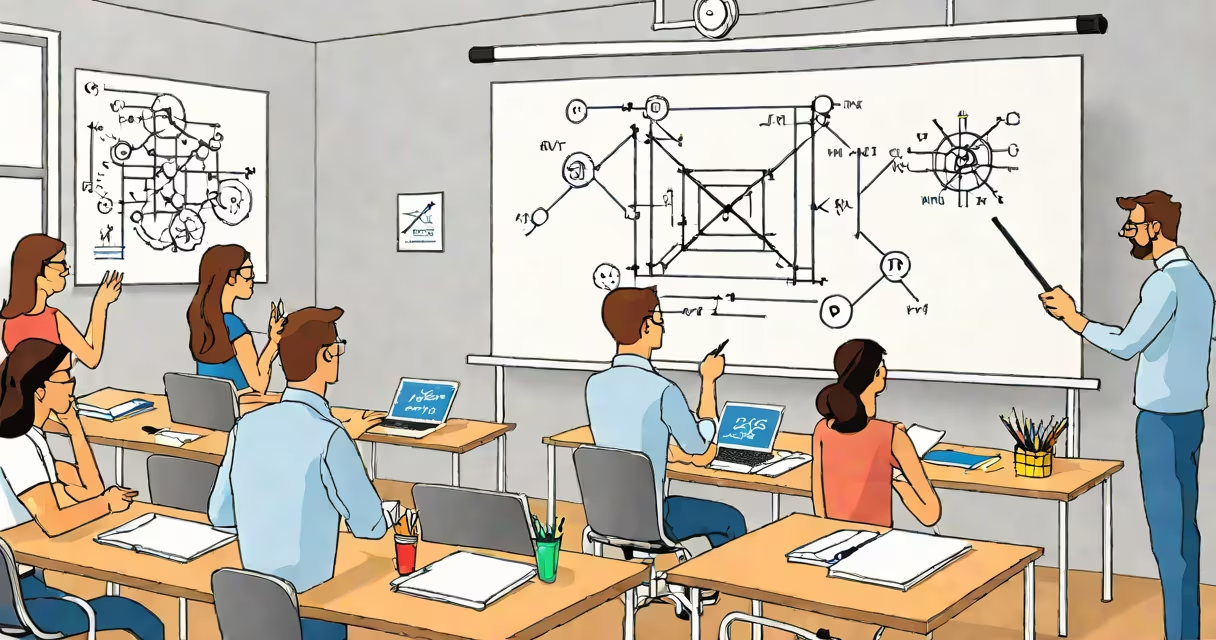
Educational goals for students are specific, measurable targets that outline what learners should know, understand, or be able to do by the end of a lesson, unit, or academic year. These goals align instruction with expected outcomes and provide clear benchmarks for assessing progress.
They are not vague aspirations like "be smart" or "do well." Instead, they state concrete expectations such as "solve two-step equations using inverse operations" or "write a five-paragraph essay with a thesis and three supporting details." Teachers design these goals based on curriculum standards, developmental levels, and individual student needs.
For example, a middle school math teacher might set the goal: "By the end of the unit, 85% of students will correctly solve linear equations with variables on both sides." This goal specifies the skill, the performance level, and the assessment criteria-making it actionable and measurable.
How Educational Goals Work in Practice
Teachers use educational goals to structure lessons, select materials, and evaluate student work. Each goal maps to a standard-such as those from the Common Core State Standards in the U.S.-and ensures alignment between what's taught, what's assessed, and what students are expected to learn.
When goals are communicated, students understand the purpose of their work. A high school biology class studying photosynthesis might have the goal: "Explain how light energy is converted into chemical energy in chloroplasts using labeled diagrams." This guides both teaching and student focus.
Research from the National Council of Teachers of Mathematics confirms that classrooms with explicit, student-centered goals see higher engagement and improved test scores. When students know what success looks like, they're more likely to meet it.
Types of Educational Goals and Their Roles
Goals fall into three main categories: cognitive, affective, and psychomotor. Cognitive goals focus on thinking and understanding-like analyzing historical causes or applying mathematical formulas. Affective goals relate to attitudes, values, and motivation-such as showing respect during group discussions. Psychomotor goals involve physical skills-like correctly handling lab equipment or performing a musical scale.
| Type | Focus Area | Example Goal |
|---|---|---|
| Cognitive | Thinking and reasoning | Compare and contrast two literary themes using evidence from the text. |
| Affective | Attitudes and values | Demonstrate empathy by responding appropriately to a peer's emotional challenge in a role-play. |
| Psychomotor | Physical skills and coordination | Perform a proper bench press with correct form and controlled breathing. |
While cognitive goals dominate formal assessments, affective and psychomotor goals are critical for complete development. A student may score well on tests but struggle with teamwork or safe lab practices-goals in these areas prevent gaps in real-world readiness.
Common Misconceptions and Clarifications
One widespread error is treating educational goals as teacher-centered rather than student-centered. A poorly written goal says "The teacher will explain Newton's laws." That describes an activity, not a learning outcome. A correct version states: "Students will apply Newton's second law to calculate acceleration given mass and net force." The focus shifts from what the teacher does to what the student achieves.
Another mistake is confusing goals with activities. A goal is not "do a worksheet on fractions." The goal is "solve multi-step fraction problems involving addition, subtraction, and multiplication with 80% accuracy." Activities support goals, but they are not the goal itself.
Educational goals are not static. They evolve with student progress. A goal set at the start of the year may be adjusted mid-term based on formative assessments. This flexibility prevents rigid teaching and supports differentiated instruction.
Real-World Example: A High School Science Unit
In a 10th-grade environmental science course, the unit on climate change includes several educational goals:
- Identify greenhouse gases and explain their role in global warming using scientific terminology.
- Analyze data from temperature records (1900-2020) to draw conclusions about long-term climate trends.
- Present a policy recommendation to reduce carbon emissions in urban areas, supported by evidence from peer-reviewed sources.
Each goal addresses a different domain: cognitive (analysis), affective (persuasive communication), and psychomotor (presentation delivery). The teacher uses rubrics aligned with these goals to assess student work. After the unit, 76% of students met or exceeded all three goals-data used to refine future instruction.
I observed this unit firsthand while visiting a public high school in Portland, Oregon. The teacher reported that students who previously struggled with science concepts showed increased confidence and participation when goals were shared daily. One student said, "I finally knew what I was supposed to learn."
Why Educational Goals Matter Beyond the Classroom
Well-defined goals prepare students for college, careers, and civic life. According to the U.S. Department of Education, students who engage with clear learning objectives demonstrate better retention, higher motivation, and greater resilience when facing challenges.
These goals also support equity. When expectations are transparent, all students-regardless of background-know what success looks like. This reduces ambiguity and helps close achievement gaps. For example, a study published in Journal of Educational Psychology found that students in classrooms with explicitly stated goals scored 15% higher on standardized tests than peers in goal-less environments.
Goals help families understand their child's progress. A parent reviewing a report card sees not just a grade, but a list of goals met or pending-like "demonstrates ability to revise essays for clarity and coherence." This transparency strengthens home-school partnerships.
Final Note: What Educational Goals Are Not
Educational goals are not the same as standards, though they derive from them. Standards are broad statements-"Students will analyze historical events"-while goals are specific, actionable versions of those standards.
They are also not synonymous with "learning objectives," though the terms are often used interchangeably. In formal education, "objectives" are typically narrower and more behaviorally focused-such as "identify the capital of France"-whereas "goals" can encompass broader outcomes like developing lifelong curiosity.
Most, educational goals for students are not one-size-fits-all. A goal for a gifted student in advanced algebra may require solving nonlinear systems, while a goal for a student with learning differences might focus on recognizing patterns in basic equations. Differentiation begins with tailored goals.
When properly designed, educational goals for students create clarity, drive instruction, and measure meaningful progress. They turn abstract learning into tangible achievement. Whether in a kindergarten circle time or a university seminar, these goals ensure that every lesson moves toward something real.
Understanding what are educational goals for students empowers educators, parents, and learners alike. It transforms education from a passive experience into an intentional process of growth and mastery.