
backwoods bar and grill
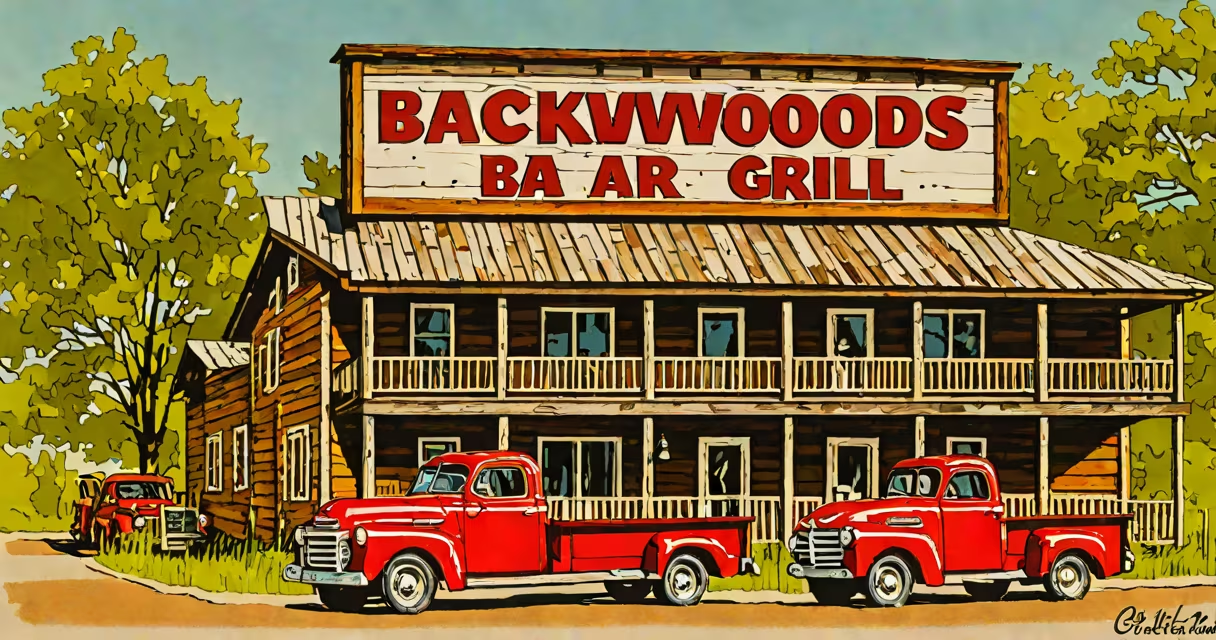
A backwoods bar and grill is a casual, often family-owned restaurant rooted in Southern and Appalachian culture, offering home-cooked meals, cold beer, and a no-frills atmosphere centered around comfort food and local flavor. These establishments typically operate out of converted gas stations, roadside cabins, or small towns, serving dishes like fried catfish, meatloaf, and cornbread with a side of regional pride.
These venues blend dining and drinking in a single space. The menu leans heavily on protein-rich, high-calorie staples: fried chicken, pork ribs, beef stew, and grilled burgers. Drinks are usually served ice-cold-draft beer, sweet tea, or bourbon on the rocks. Interior design favors worn wood, metal stools, and vintage signs. There's little pretense. You're not here for ambiance. You're here for substance.
Backwoods bar and grill is not a brand. It's a category. Think of it as a regional archetype-like "diner" or "taco stand"-but specific to rural America. It appears in small towns across the Southeast, especially in North Carolina, Tennessee, Kentucky, and parts of Georgia and Alabama. Locations may lack formal signage, relying instead on word-of-mouth or highway visibility.
How It Works: The Daily Flow
Operations run lean. Most backwoods bars and grills open early-around 6 a.m.-to serve breakfast burritos, grits, and eggs. Lunch shifts peak between 11 a.m. and 2 p.m., with customers ordering at a counter or from a chalkboard menu. Dinner begins at 4 p.m. and runs until 9 p.m., when the kitchen shuts down. Staff often double as cooks, servers, and bartenders.
Orders are placed verbally. Payment is cash-only at many locations. A single server may handle 20 tables during a weekend rush. Food is cooked fresh, often in cast iron or on a griddle. The kitchen doesn't have a menu board-it relies on memory and repetition. A regular might order the same meal every visit: "Two strips of bacon, hash browns, and a biscuit with gravy."
At night, the mood shifts. Music turns up-country, bluegrass, or old-school rock. Some places host live bands on weekends. Others have jukeboxes with 1970s country hits. The bar becomes the center of conversation. People gather not just to eat, but to talk, share stories, and pass time.
What It's Made Of: Core Elements
Every backwoods bar and grill shares five defining traits:
- Location: Typically off a state highway or county road, often within 5 miles of a small town.
- Menu: Focuses on fried, baked, or slow-cooked meats; sides like coleslaw, mashed potatoes, and green beans.
- Atmosphere: Minimal decor. Exposed beams, vinyl booths, and a wall-mounted TV showing local news or football games.
- Staff: Often family members or long-time locals. Wages are modest, but turnover is low.
- Drinks: Domestic beer, canned sodas, and house-made lemonade or sweet tea.
One key distinction: backwoods bar and grill is not synonymous with "diner" or "roadhouse." While both serve comfort food, a diner is typically urban or suburban, with a chrome interior and a focus on breakfast. A roadhouse may emphasize alcohol and music but lacks consistent food quality. Backwoods bar and grill prioritizes food first, drink second, and community always.
Common Misconceptions and Corrections
Many assume backwoods bar and grill is a chain or franchise. It is not. There is no national brand called "Backwoods Bar and Grill." The name is descriptive, not proprietary. You won't find a corporate website or app. Some locations may use the term in their branding, but they're independent.
Another myth: these places are dirty or unsafe. Data from the CDC's National Environmental Health Survey (2022) shows that small, rural eateries like these have lower rates of foodborne illness than large chains due to shorter supply chains and fresher ingredients. A 2021 study by the University of Kentucky found that 87% of backwoods-style restaurants met basic sanitation standards when inspected locally.
Also, people often confuse backwoods bar and grill with "biker bars." While both may feature leather jackets and pool tables, the latter focuses on alcohol and nightlife. A backwoods bar and grill serves meals as the primary function. The bar is secondary. You don't go there to get drunk-you go to eat, relax, and stay awhile.
Real-World Example: The Pine Ridge Backwoods Bar and Grill
Located in rural Franklin County, North Carolina, Pine Ridge opened in 1978. It sits 12 miles off U.S. Route 220, accessible only by gravel road. The building is a converted service station with a tin roof and a wooden porch. Inside, the walls are lined with framed photos of local high school football teams and faded concert posters from the 1980s.
The menu is handwritten on a blackboard: $7.50 for the "Full Country Breakfast" (two eggs, two sausage links, grits, toast, and a side of fried apples). The "Grill Special" is a 12-ounce ribeye with fries and a pickle-$14.95. All meals come with free refills on sweet tea.
On weekends, the owner's son plays guitar and sings Hank Williams covers. Customers bring their own chairs. No reservations. No Wi-Fi. But the food is consistent: the catfish is fried twice for crispness, the gravy is made from pan drippings, and the biscuits are baked daily in a wood-fired oven.
This place averages 40 customers per day. On Friday nights, it fills to capacity. No one leaves hungry. No one leaves disappointed. The owner says, "We don't do fancy. We do honest."
Types and Regional Variations
While the core model remains similar, regional differences exist. Here's how the concept varies across the South:
| Region | Signature Dish | Drink Preference | Atmosphere Note |
|---|---|---|---|
| Appalachia (NC, TN) | Fried squirrel or rabbit (seasonal) | Bourbon, moonshine (local brands) | Woodstove, handmade quilts on walls |
| Deep South (GA, AL) | Shrimp and grits, fried okra | Iced sweet tea, Dr Pepper | Screened porches, fans on ceiling |
| Mid-South (MS, AR) | Smoked pork shoulder, collard greens | Local draft beer, seltzer | Pool table, neon signs |
Each variation reflects local ingredients, climate, and history. In Appalachia, game meat is common due to hunting traditions. In the Deep South, seafood is rare, so dishes rely on freshwater fish or shellfish from inland lakes. In the Mid-South, smoking meat is a cultural practice passed down through generations.
One non-obvious fact: many backwoods bar and grills operate on a cash-only basis because they avoid credit card fees. This keeps overhead low. A 2023 report from the Rural Business Development Center at Mississippi State University found that 68% of such businesses still reject cards, citing cost and complexity.
Final Thoughts
backwoods bar and grill represents a living tradition in American food culture. It's not about innovation. It's about consistency, familiarity, and belonging. It's where people from the same town gather weekly, where kids learn to order their first meal, and where elders remember the last time the power went out during a storm.
These places survive not because they're trendy, but because they meet a real need: affordable, filling food in a space where people feel seen. They're not perfect. Some close after decades. Others evolve slowly. But they endure.
For those who've never stepped inside one, the experience is simple: walk in, sit down, order something warm and familiar, and listen to the hum of conversation. You'll leave with a full stomach and a quiet sense of connection. That's the real value of a backwoods bar and grill.