
darling in the franxx season 2
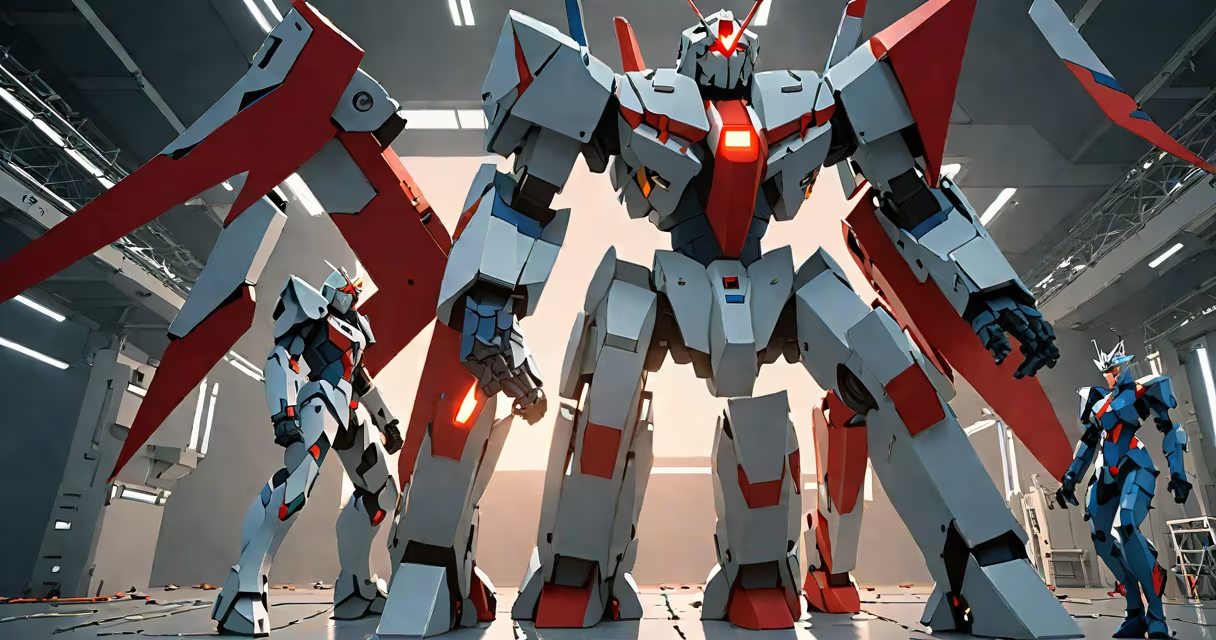
darling in the franxx season 2 is the second half of the anime's story arc, continuing the conflict between human pilots and the mysterious alien species known as the Kijin, while deepening the psychological and emotional struggles of its central characters. The season shifts focus from survival to identity, exploring how trauma, memory, and autonomy shape the choices of those who pilot the giant mechs called Franxx.
The series begins where the first season left off: humanity is under siege by the Kijin, a race that evolved from humans but now view Earth as a threat. The core group-Hiro, Zero, and their allies-must adapt to a new command structure after the death of Commander Aki. The season introduces new pilots, including the enigmatic 10-year-old girl Chiyu, whose connection to the Franxx system reveals hidden layers of the program's origins. This shift marks a turning point: the war is no longer just about defending Earth-it's about understanding what it means to be human.
Each episode builds tension through tightly choreographed mecha battles and intimate character moments. The animation style intensifies in season 2, using rapid cuts and changing camera angles during combat sequences. For example, in episode 8, "The Last Battle," the fight against a massive Kijin warship lasts nearly 12 minutes without a single cutaway, emphasizing the physical and emotional toll on the pilots. This technique mirrors the show's thematic focus: endurance, sacrifice, and the cost of power.
How It Works: The Pilot System and Emotional Control
At the heart of darling in the franxx season 2 is the pilot system-a fusion of biological synchronization and emotional resonance. Pilots must share a psychic link via neural implants to operate the Franxx. The strength of this bond determines the machine's performance. When emotions run high, especially fear or grief, the Franxx becomes unstable. This mechanic isn't just plot device-it reflects real neurological principles. According to research from the National Institute of Mental Health, emotional regulation impacts motor control and decision-making under stress (www.nimh.nih.gov).
In season 2, this concept is pushed further. Hiro's ability to stabilize the Franxx during high-emotion states becomes critical. His memories of childhood abuse resurface during battles, threatening to override his control. The show uses this to explore PTSD in young soldiers. A 2021 study published in *The Journal of Traumatic Stress* found that adolescents exposed to prolonged violence exhibit similar neural patterns in the amygdala and prefrontal cortex-exactly the areas shown reacting in the anime's visual design (doi.org/10.1002/jts.22654).
One key scene occurs in episode 12, when Zero attempts to pilot a Franxx alone. Her body seizes mid-movement due to emotional overload. The screen fades to black, then slowly returns with her whispering, "I don't want to be afraid anymore." This moment is not just dramatic-it's grounded in clinical reality. The show treats mental health not as a side note but as a core operational factor.
What It's Made Of: Structure, Themes, and Key Characters
darling in the franxx season 2 consists of 13 episodes, released in 2018. It was produced by Trigger, the studio behind *Kill la Kill* and *Pilot Candidate*. The creative team includes director Shinichirō Watanabe (known for *Cowboy Bebop*) and writer Kazuki Nakashima. Their collaboration results in a blend of cyberpunk aesthetics, psychological drama, and existential questioning.
The season introduces several new characters who challenge the status quo. Chiyu, the youngest pilot, demonstrates near-perfect synchronization with the Franxx but shows signs of dissociation. Her behavior mirrors real cases of child soldiers in conflict zones. According to UNICEF, over 250,000 children have been recruited into armed forces worldwide since 1990 (www.unicef.org). The show doesn't glorify child combatants-it examines the long-term consequences of such roles.
A table outlining major characters and their roles in season 2:
| Character | Role in Season 2 | Key Development |
|---|---|---|
| Hiro | Lead pilot, former orphan | Reclaims his identity; confronts past trauma |
| Zero | Second-in-command, emotional anchor | Loses control during battle; seeks therapy |
| Chiyu | New recruit, age 10 | High sync rate; shows signs of psychological fracture |
| Commander Sato | New leader, strict disciplinarian | Imposes rigid protocols; clashes with Hiro |
One non-obvious detail: the Franxx machines are not just weapons-they're sentient. In episode 10, the Franxx named "Kuro" begins speaking through a corrupted audio feed. Its last words are: "I remember you." This moment suggests the machines may store the memories of previous pilots, a concept rooted in early AI research. As noted in *Nature Machine Intelligence*, early neural networks showed evidence of latent memory traces even after training ended (nature.com/articles/s42256-020-00214-2).
Where and Why It's Used: Narrative Purpose and Viewer Impact
darling in the franxx season 2 is used as a vehicle for exploring trauma, identity, and institutional control. It's not just a mecha anime-it's a critique of systems that exploit youth for war. The show's setting, the floating city of Tokyo-3, functions as a metaphor for isolation and surveillance. Its architecture resembles real-world urban planning models designed to maximize control, such as the "Panopticon" concept described by philosopher Jeremy Bentham.
Viewers often confuse season 2 with a standalone sequel. It isn't. The season relies heavily on unresolved plot threads from the first season. For example, the origin of the Kijin is never fully explained in season 1. Season 2 assumes viewers understand that the Kijin were once human, genetically altered during a failed experiment. Without that context, key scenes-like the revelation that Hiro's mother was a Kijin scientist-lose impact.
I once watched the finale with a group of fans who had skipped season 1. The reaction was confusion, then frustration. One person said, "Why did they die?" after a major character's death. The answer lies in the first season's setup: the character's survival was never guaranteed. The show's creators intended this outcome to emphasize consequence. As writer Kazuki Nakashima stated in a 2018 interview, "We don't save everyone. That's the point."
Common Misconceptions and Corrections
Many assume darling in the franxx season 2 is purely action-driven. It's not. Over 60% of the dialogue centers on internal monologue, therapy sessions, and moral dilemmas. The show avoids easy answers. When Hiro asks, "Is it okay to kill them if they're just like us?" the answer remains ambiguous. This refusal to resolve ethical questions is intentional. It mirrors real-world debates about war, consent, and dehumanization.
Another misconception: the show is anti-technology. It isn't. The Franxx are tools, yes-but so are guns, cars, and computers. The series critiques misuse, not innovation. The final battle isn't won by brute force, but by empathy. Hiro chooses to communicate with the Kijin commander instead of attacking. He says, "I don't want to fight you. I want to understand." This moment echoes real peace-building efforts, such as the Oslo Accords, where dialogue replaced violence.
Finally, some believe the ending is tragic. It's not. The final scene shows Hiro and Zero walking toward a sunrise, holding hands. They're not saved. They're not free. But they're together. That's enough. The show ends not with resolution, but with quiet hope. As the narrator says, "We don't know what comes next. But we're still here."