
What Is Critical Illness Insurance Coverage
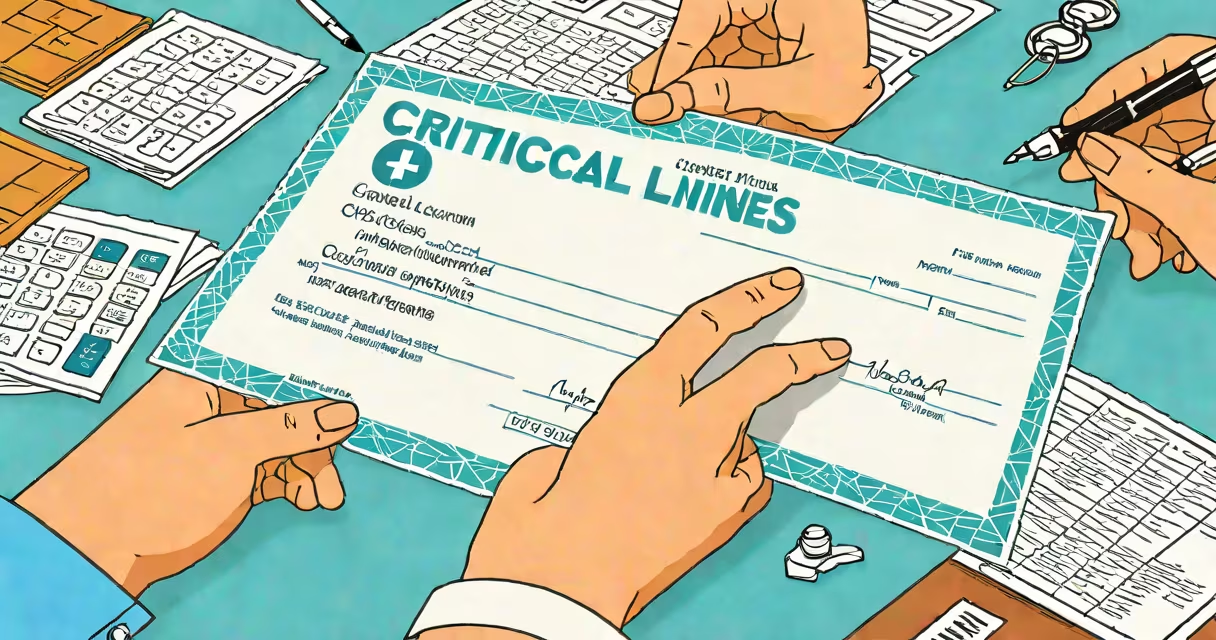
Critical illness insurance coverage is a type of policy that pays a lump sum directly to you if you're diagnosed with a specified serious illness, such as cancer, heart attack, or stroke. The benefit is paid regardless of treatment costs and can be used for any purpose, including mortgage payments, lost income, or daily living expenses.
This is not the same as standard health insurance, which reimburses medical bills. Critical illness insurance gives you immediate financial support when your ability to work may be disrupted. The payout is typically tax-free and disbursed within days of a confirmed diagnosis.
For example, if you're diagnosed with stage 3 breast cancer, a typical policy with a $50,000 benefit would pay out that amount after lab results and physician confirmation. You don't need to submit receipts or prove how you spend the money.
How It Works
When you apply for critical illness insurance, you select a list of covered conditions-usually 20 to 30 major illnesses. These are medically defined and often based on diagnostic criteria from organizations like the American Cancer Society and the American Heart Association.
If you're diagnosed with one of the listed conditions during the policy term, you file a claim with documentation from a licensed physician. Once approved, the insurer issues the agreed-upon payment. Most insurers process claims within 10 business days.
The payout is not tied to actual medical expenses. If you have a $75,000 benefit and your treatment costs $20,000, you still receive the full $75,000. This flexibility allows you to cover non-medical costs like childcare, travel for care, or debt repayment.
Types and Common Conditions Covered
Most policies offer tiered coverage levels-$25,000, $50,000, or $100,000-but the amount you choose affects premiums. Higher payouts cost more upfront but provide greater security during recovery.
| Illness Type | Common Covered Conditions | Typical Payout Trigger |
|---|---|---|
| Cancer | Stage 2 or higher, invasive forms (e.g., lung, colon) | Confirmed diagnosis with biopsy or imaging |
| Heart Attack | Myocardial infarction requiring hospitalization | ECG and enzyme test results meeting clinical thresholds |
| Stroke | Ischemic or hemorrhagic stroke causing lasting neurological deficit | CT/MRI scan showing brain damage |
| Organ Transplant | End-stage organ failure requiring transplant | Medical evaluation confirming transplant eligibility |
Some policies include additional conditions like paralysis, major burns, or Alzheimer's disease, but these are less common and often require riders or higher premiums.
Important: Not all cancers qualify. For example, basal cell carcinoma (a common skin cancer) is usually excluded because it rarely leads to disability or death. The policy covers only aggressive forms that meet strict clinical definitions.
Where and Why It's Used
People buy critical illness insurance primarily to protect against income loss during long-term recovery. According to the Centers for Disease Control and Prevention (CDC), nearly 1 in 3 Americans will develop cancer in their lifetime, and about 60% of those diagnosed take time off work for treatment.
For someone earning $75,000 annually, missing six months of work due to chemotherapy could result in $37,500 in lost wages. A $50,000 critical illness payout can bridge that gap without draining savings or increasing debt.
It's especially useful for people without employer-provided disability insurance. Self-employed individuals, freelancers, and those in high-risk jobs often rely on this coverage as a financial safety net.
I once helped a graphic designer in Austin who was diagnosed with lymphoma at age 38. Her health insurance covered her surgery and radiation, but she had no sick leave. The $50,000 payout from her critical illness policy allowed her to pause client work, pay rent, and afford therapy while recovering. She returned to work 14 months later.
What It's Commonly Confused With
Critical illness insurance is frequently mistaken for disability insurance. Disability insurance replaces a portion of your income if you're unable to perform your job due to illness or injury. It pays monthly and lasts until retirement or return to work.
Critical illness insurance, by contrast, pays a single lump sum upon diagnosis. It doesn't replace income over time-it provides immediate funds for urgent needs. You can use it alongside disability insurance, but they serve different roles.
Another confusion: some assume it covers all medical costs. It does not. It's not a substitute for health insurance. If you're hospitalized for a heart attack, your health plan pays the bill. The critical illness policy pays you separately.
A key distinction: critical illness insurance is not part of Medicare or Medicaid. It's a private product sold through brokers, insurers, or employers. Some employers offer it as a voluntary benefit, but most people purchase it independently.
Non-Obvious Facts and Corrections
Many people believe critical illness insurance is only for older adults. In reality, younger adults-especially those aged 30 to 50-are the most likely to buy it. A 2022 study by the National Association of Insurance Commissioners found that 62% of critical illness policyholders were under 55.
Also, the payout is not always taxable. In the U.S., benefits from qualified critical illness plans are generally tax-free under IRS Code §101(g), meaning you keep the full amount. This differs from disability income, which is taxable in most cases.
Finally, some policies exclude pre-existing conditions. If you had a prior heart attack, you won't qualify for coverage. But if you're healthy at application, even a history of anxiety or mild hypertension won't disqualify you-unless it's actively affecting cardiac function.
Final Thoughts
Critical illness insurance coverage offers a direct financial response to life-altering diagnoses. It's not a replacement for health or disability insurance, but it fills a unique gap: immediate access to funds when your body fails and your income stops.
Understanding what it covers-and what it doesn't-is essential. If you're considering it, compare policies based on the list of covered conditions, waiting periods, and claim approval timelines. Always read the policy wording carefully.