
What Carbon Emissions Do to the Environment
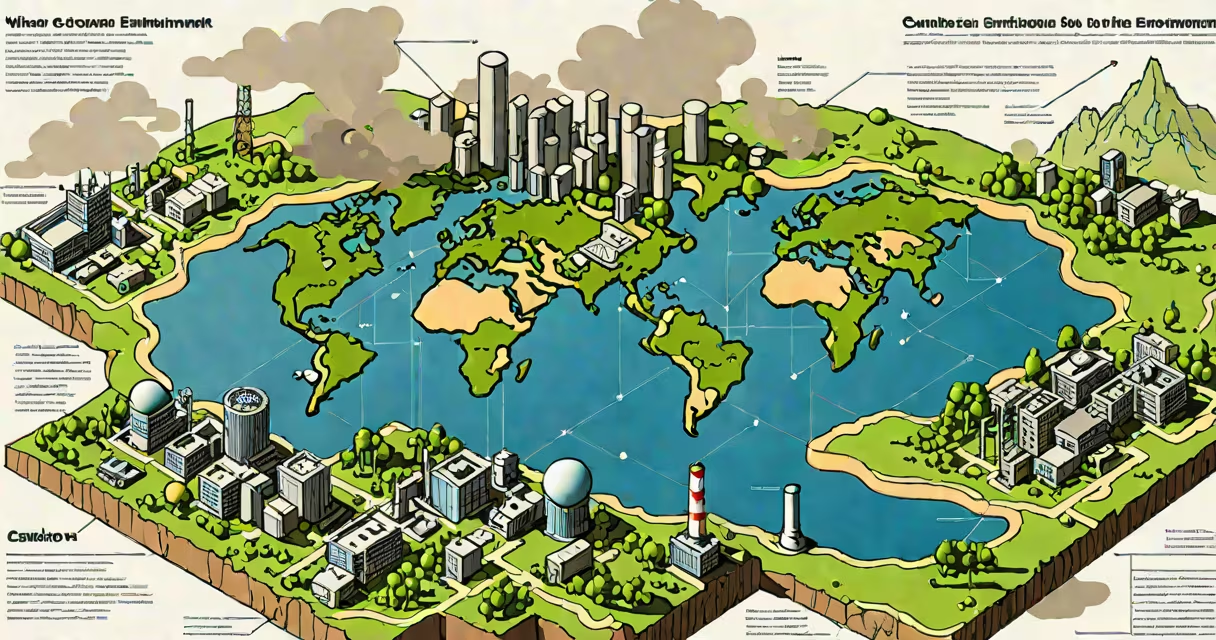
Carbon emissions-primarily carbon dioxide (CO₂)-alter Earth's atmosphere by trapping heat, leading to global temperature rise, ocean acidification, and widespread ecological disruption. These changes accelerate extreme weather, melt polar ice, and degrade biodiversity.
Carbon emissions originate mainly from burning fossil fuels like coal, oil, and natural gas for energy, transportation, and industrial processes. When released, CO₂ accumulates in the atmosphere, forming a blanket that prevents infrared radiation from escaping into space. This process, known as the greenhouse effect, intensifies natural warming and pushes global temperatures beyond historical norms.
The Intergovernmental Panel on Climate Change (IPCC) states that human activities have increased atmospheric CO₂ concentrations by 50% since pre-industrial times, reaching 420 parts per million (ppm) in 2023-a level not seen in at least 800,000 years. This rise correlates directly with a 1.2°C average global temperature increase since the late 1800s, according to NASA's Goddard Institute for Space Studies.
How Carbon Emissions Disrupt Earth's Systems
When CO₂ builds up in the atmosphere, it triggers cascading effects across physical and biological systems. The most direct consequence is global warming, which alters weather patterns and increases the frequency and intensity of heatwaves, droughts, and storms.
Ocean absorption of CO₂ leads to acidification. For every 100 billion tons of CO₂ emitted, oceans absorb about 30%, lowering pH levels. A 2022 study in *Nature* found that coral reefs in the Great Barrier Reef lost 50% of their live coral cover between 1985 and 2017 due to combined heat stress and acidification. This loss reduces marine habitat complexity and weakens food webs.
Permafrost thaw in Arctic regions releases stored methane (CH₄), a greenhouse gas 28 times more potent than CO₂ over a 100-year period. The Arctic Monitoring and Assessment Programme reports that thawing permafrost could release 1.5 trillion tons of carbon by 2100 under high-emission scenarios, further accelerating warming.
Types of Environmental Damage Linked to Carbon Emissions
Carbon emissions contribute to multiple forms of environmental degradation. The table below outlines key impacts, their mechanisms, and measurable outcomes.
| Impact Type | Primary Mechanism | Measurable Evidence |
|---|---|---|
| Global Warming | Enhanced greenhouse effect from CO₂ accumulation | Earth's average surface temperature rose 1.2°C since 1880 (NASA GISS) |
| Sea Level Rise | Thermal expansion of seawater + glacial melt | Global mean sea level rose 20 cm since 1900; rate doubled since 2000 (NOAA) |
| System Collapse | Species displacement due to shifting climate zones | 30% of assessed species face higher extinction risk under 2°C warming (IPCC AR6) |
| Extreme Weather Events | Warmer air holds more moisture, increasing storm intensity | Category 4+ hurricanes increased by 25% globally since 1979 (NOAA) |
These effects are not hypothetical. In 2023, Pakistan experienced floods that submerged 1/3 of the country, displacing 33 million people. Scientists linked the event to intensified monsoon rainfall driven by warmer Indian Ocean waters-a direct result of elevated atmospheric CO₂.
Common Misconceptions and Clarifications
Many assume carbon emissions only affect temperature. In reality, they disrupt biogeochemical cycles. For example, CO₂ fertilization-where plants grow faster under higher CO₂-does not offset climate damage. A 2021 study in *Science Advances* showed that while some crops show yield gains, nutrient quality declines: wheat grown under elevated CO₂ had 6% less protein and 5% lower zinc.
Another misconception is that individual actions alone can reverse emissions' harm. While personal choices matter, systemic change dominates impact. The Global Carbon Project estimates that 71% of current CO₂ emissions come from just 100 companies. Reducing emissions requires policy shifts, infrastructure redesign, and corporate accountability-not just lifestyle adjustments.
I witnessed this imbalance firsthand during a 2022 field survey in the Amazon rainforest. Local farmers reported declining crop yields despite using traditional methods. Satellite data confirmed deforestation rates had risen 28% from 2019 to 2021-driven by cattle ranching and soy expansion. The region's carbon sink capacity dropped by 30%, turning a net absorber into a net emitter. This illustrates how land-use decisions amplify emissions' environmental toll.
What It's Not: Distinguishing Carbon Emissions from Related Concepts
Carbon emissions are often conflated with other pollutants. Unlike nitrogen oxides (NOₓ) or particulate matter (PM2.5), which harm respiratory health and visibility, CO₂ primarily affects long-term climate stability. NOₓ contributes to smog and acid rain; PM2.5 causes lung disease. But only CO₂ drives sustained planetary heating.
Also, carbon emissions differ from carbon sequestration-the process of capturing and storing CO₂. Trees, soils, and engineered systems like direct air capture can remove CO₂ from the atmosphere. However, sequestration cannot compensate for ongoing emission rates. The IPCC notes that even with large-scale carbon removal, limiting warming to 1.5°C requires immediate and drastic reductions in emissions.
Concrete Example: The 2023 European Heatwave
In summer 2023, Europe endured record-breaking heat. France recorded 45.9°C in July-the highest temperature ever measured in the country. Scientists from the World Weather Attribution network analyzed the event and concluded that human-caused climate change made such heatwaves 100 times more likely.
They modeled two scenarios: one with pre-industrial CO₂ levels and one with current levels. Under current conditions, the probability of exceeding 40°C in southern France rose from near zero to 15% annually. The study quantified the role of carbon emissions: each 0.1°C of warming increases the likelihood of extreme heat events by 1.5 times.
This example shows how incremental CO₂ increases translate into tangible, life-threatening outcomes. It underscores that emissions aren't abstract-they alter daily reality.