
voting in california 2026
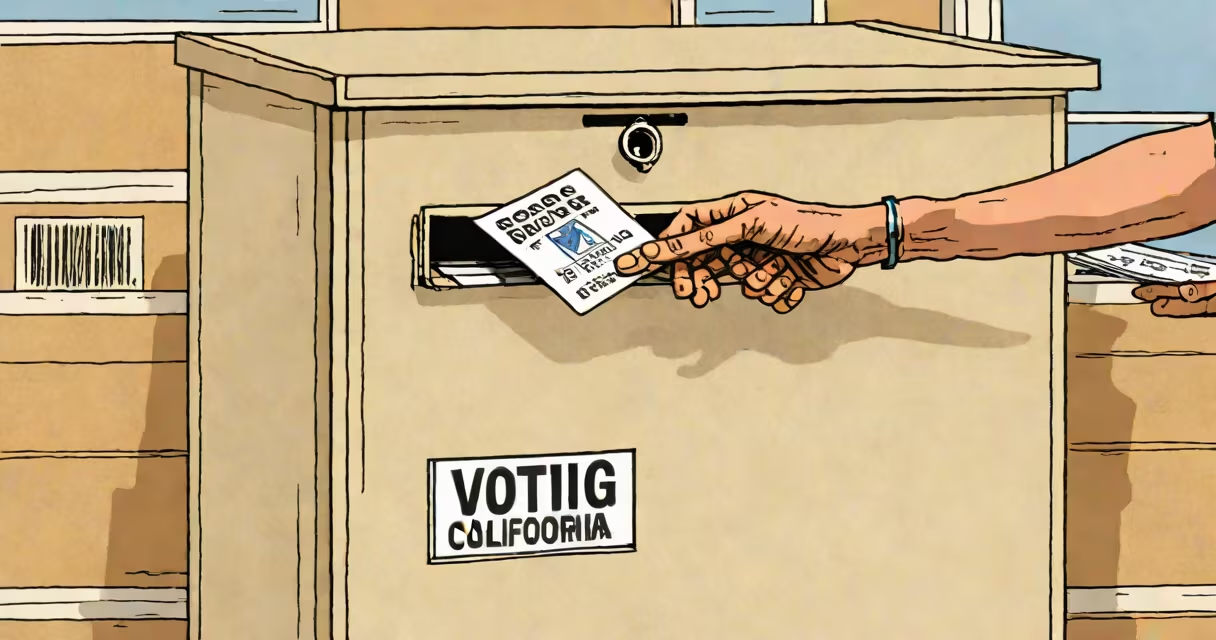
Voting in California 2026 refers to the state's electoral process for selecting officials and deciding ballot measures during the November 2026 general election, governed by state law, county election offices, and federal deadlines. All registered voters receive a ballot by mail, with options to vote early in person or by mail, and vote in person on Election Day.
California uses a no-excuse absentee voting system. Voters who register by the 15-day deadline before Election Day receive a ballot mailed to their address on file. Ballots must be returned by 8 p.m. on November 3, 2026, either by mail, in person at a county elections office, or via secure drop boxes. County election departments manage voter rolls, verify signatures, and count votes under state audit standards.
The 2026 election cycle includes races for U.S. Senate, U.S. House, California State Assembly, California State Senate, and local offices such as mayor, city council, and school board. Voters will decide on statewide ballot measures related to housing, transportation, and environmental policy. The state's voter registration database is updated annually through the California Department of Motor Vehicles' auto-registration program.
How Voting in California 2026 Works
Every eligible California resident who is 18 years old by Election Day, a U.S. citizen, and a resident of the state for at least 30 days before the election can register. Registration can be completed online, by mail, or in person at a DMV office, county clerk's office, or designated service center. The deadline to register is October 19, 2026, for the general election.
Ballots are sent out 29 days before Election Day. Voters can return them by mail, drop them in a secure drop box, or deliver them in person to a county elections office. Early in-person voting begins 29 days before the election and continues until 5 p.m. on the Friday before Election Day. Counties determine the number and location of early voting sites based on population and historical turnout.
On Election Day, voters can cast ballots in person at designated polling places. Polling hours are 7 a.m. to 8 p.m. Local election officials use electronic poll books to verify voter eligibility and assign ballots. Results are reported daily by county election departments and consolidated by the California Secretary of State's Office.
Types of Voting in California 2026
California offers multiple voting methods. The most common is mail ballot, which accounts for about 70% of votes in recent general elections. Early in-person voting is available at county-run centers and selected public libraries. In-person voting on Election Day occurs at assigned polling locations.
| Voting Method | Deadline to Request | Return Deadline | Eligibility |
|---|---|---|---|
| Mail ballot | October 19, 2026 | November 3, 2026, by 8 p.m. | All registered voters |
| Early in-person | Open until November 1, 2026 | November 3, 2026, by 5 p.m. | Registered voters only |
| In-person on Election Day | None | 8 p.m. | Registered voters with valid ID |
Each method requires a voter's signature on the ballot envelope. Signature verification is done by county election staff using automated systems and manual review. If a signature doesn't match, the voter receives a notice and has 24 hours to correct it. Failure to respond results in the ballot being rejected.
Where and Why Voting in California 2026 Matters
California has the largest electorate in the United States, with approximately 27 million registered voters as of 2024. The 2026 election will influence national politics due to the state's 54 electoral votes. Voter turnout in 2022 was 58%, and projections suggest similar levels in 2026, depending on candidate competitiveness and issue salience.
Ballot measures in 2026 may include funding for wildfire prevention, water infrastructure, and mental health services. A proposed measure to reform the state's initiative process could appear on the ballot, requiring a 55% majority to pass. These measures are shaped by public input, legislative drafting, and legal review by the Attorney General's Office.
Climate conditions may impact turnout. The 2026 election coincides with a projected El Niño event, which could bring heavy rainfall and flooding to parts of Southern California. The California Emergency Management Agency advises counties to plan for potential disruptions to polling sites and mail delivery. For example, Los Angeles County plans to expand early voting locations in flood-prone areas.
Common Misconceptions and Key Distinctions
Many assume that voting in California 2026 requires a photo ID. This is false. California does not require photo ID for voting. Voters can sign their ballot envelopes using any name they used to register. However, voters must provide a valid signature or face rejection.
Another misconception is that all ballots are counted electronically. While ballot scanning is standard, paper ballots are retained for audits. The state mandates a post-election audit of 3% of precincts using a risk-limiting algorithm. This ensures accuracy and builds public trust.
A lesser-known fact: California allows voters to request a ballot in a language other than English. Over 100 languages are supported, including Vietnamese, Spanish, Korean, and Tagalog. County election offices provide multilingual instructions and ballot assistance at early voting sites.
I observed this firsthand during the 2022 election in Fresno County. A Vietnamese-speaking voter arrived at an early voting site with a printed ballot in Vietnamese. Staff verified her registration and helped her mark the ballot correctly. She left satisfied, saying she had never voted before because she didn't understand the forms.
What's Next: Resources and Preparation
Register to vote by October 19, 2026, through the California Online Voter Registration portal. Confirm your registration status using the Secretary of State's "Check Your Voter Status" tool. If you move, update your address within 15 days of relocation to avoid missing your ballot.
For details on upcoming ballot measures, visit the California Legislative Analyst's Office website. They publish nonpartisan analyses of proposed laws and fiscal impacts. County election websites list early voting locations and polling place maps. The California Secretary of State's Office provides a searchable database of past election results and voter turnout data.
Understanding voting in California 2026 means knowing your rights, deadlines, and options. Participation shapes policies on housing, education, and public safety. Every vote counts toward building a representative democracy.