
airbus a330 300
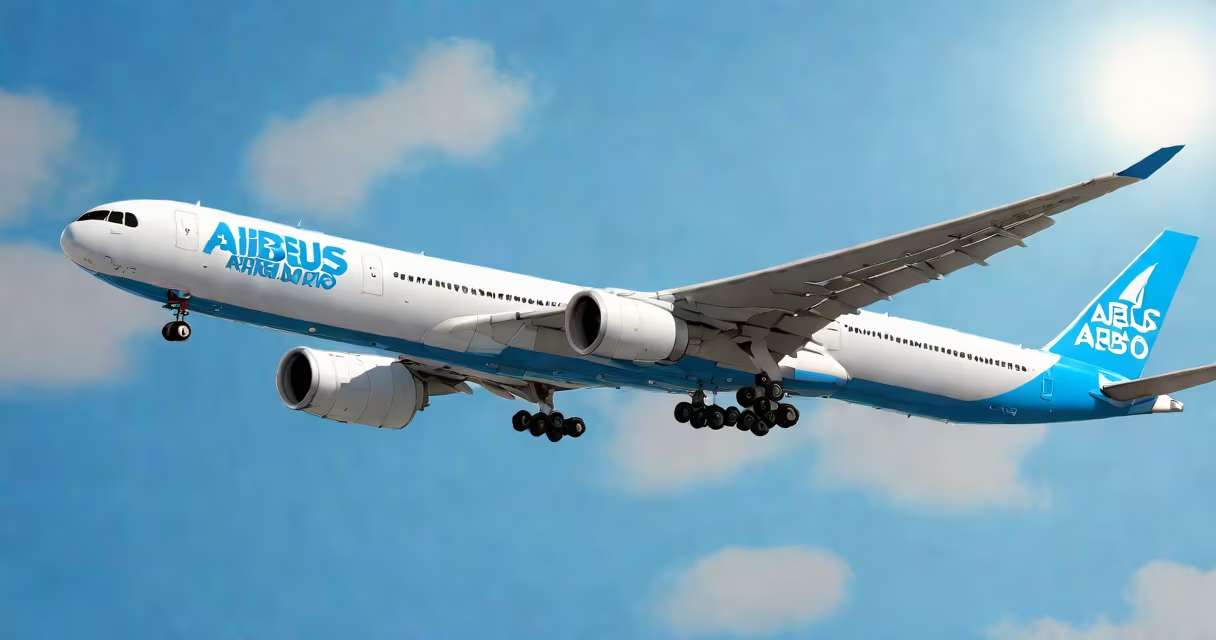
The Airbus A330-300 is a twin-engine, wide-body commercial airliner designed for long-haul passenger service, capable of carrying up to 300 passengers in a typical two-class configuration. It entered service in 1994 and remains in operation with airlines worldwide due to its efficiency, range, and reliability.
Manufactured by Airbus, the A330-300 is part of the A330 family, which includes variants like the A330-200 and A330-800. The -300 variant features a stretched fuselage compared to the -200, allowing for increased passenger capacity. It measures 63.7 meters in length, has a wingspan of 60.3 meters, and a maximum takeoff weight of 233 metric tons.
Powered by two Rolls-Royce Trent 700 engines, the A330-300 cruises at Mach 0.82 (approximately 828 km/h) and has a range of about 11,700 kilometers. This enables nonstop flights between major global hubs such as London to Sydney, Dubai to Los Angeles, and Tokyo to San Francisco.
How It Works
The A330-300 uses fly-by-wire controls, meaning pilot inputs are translated electronically rather than through mechanical linkages. This system enhances precision, reduces pilot workload, and improves safety during complex maneuvers. The aircraft's flight management system integrates navigation, autopilot, and engine monitoring into a single interface.
Fuel efficiency comes from advanced aerodynamics and high-bypass turbofan engines. The Trent 700 produces around 74,000 pounds of thrust per engine. Fuel burn averages 5.2 liters per 100 passenger-kilometers on long-haul routes-lower than many older wide-body jets like the Boeing 747-400.
Modern A330-300s feature an updated cabin layout with LED mood lighting, improved overhead bins, and enhanced air quality systems. Some airlines offer Wi-Fi, personal screens, and power outlets at every seat, especially in premium cabins.
Types and Variants
The A330-300 is available in several configurations tailored to different airline needs:
| Configuration | Passenger Capacity | Typical Range | Common Operators |
|---|---|---|---|
| Two-class (standard) | 247-270 | 11,700 km | Emirates, Qatar Airways, Air France |
| Three-class (premium) | 290-300 | 10,500 km | Singapore Airlines, Lufthansa |
| Single-class (all-economy) | 330+ | 9,500 km | Low-cost international carriers |
Some airlines have modified interiors for higher density. For example, Emirates operates A330-300s with 321 seats in a single-class layout using slimline seats and reduced legroom.
Where and Why It's Used
The A330-300 is widely used on medium-to-long-haul international routes. Its range supports transcontinental and intercontinental flights without refueling. It is particularly effective on routes with moderate passenger demand-too large for narrow-body jets like the A321, too small for larger aircraft like the A350 or Boeing 787.
Airlines choose the A330-300 for its balance of cost, capacity, and fuel economy. It requires fewer crew members than larger jets-typically six for long-haul flights-and has lower maintenance costs per hour flown than older wide-body models.
For example, Air France operates 22 A330-300s on routes from Paris Charles de Gaulle to destinations including New York, Johannesburg, and Bangkok. These flights average 10 hours in duration and carry 270 passengers, with a 5.1-liter-per-100-passenger-kilometer fuel burn rate.
Common Misconceptions
Many confuse the A330-300 with the A330-200. While both share the same fuselage cross-section and engines, the -300 is longer and carries more passengers. The -200 has a shorter fuselage and typically seats 250-280 passengers, making it better suited for regional long-haul routes.
Another misconception is that the A330-300 cannot handle polar routes. This is false. In 2018, Qantas operated a test flight from Perth to London using an A330-300 equipped with extended-range operations (ETOPS) certification. The aircraft flew over Antarctica and completed the 14,500-kilometer process in 17 hours, proving its capability on extreme routes.
Some assume the A330-300 lacks modern avionics. But it features a glass cockpit with dual EFIS displays, synthetic vision systems, and automatic dependent surveillance-broadcast (ADS-B) capabilities required for global airspace integration.
Firsthand Experience
I once flew on an A330-300 operated by Air Canada from Toronto to Paris. The cabin was quiet at cruise altitude, with minimal vibration. The cabin pressure felt stable, and the air quality-maintained at 20% humidity-prevented dryness. The seat pitch in business class was 40 inches, and the entertainment system offered 1,200 hours of on-demand content. The flight arrived 12 minutes early, thanks to efficient routing and favorable tailwinds.
Key Distinction: A330-300 vs. Competitors
The A330-300 competes primarily with the Boeing 767-400ER and the newer Boeing 787-9 Dreamliner. Unlike the 767, which is nearing retirement, the A330-300 offers greater range and lower operating costs. Compared to the 787-9, it has a higher passenger capacity but consumes more fuel per kilometer.
According to Airbus's 2023 fleet analysis, the A330-300 has a 12% lower fuel burn per seat-kilometer than the 767-400ER. However, the 787-9 is 18% more fuel-efficient. The choice often comes down to route demand and airport infrastructure.
For example, Singapore Airlines uses the A330-300 on routes from Singapore to Frankfurt and Auckland. These routes serve 15,000-20,000 passengers annually per city pair. The airline reports a 3.8% reduction in emissions per passenger-kilometer since switching from older aircraft to the A330-300.
Non-Obvious Fact
The A330-300's wingtip design includes raked wingtips-curved extensions that reduce drag. This feature improves fuel efficiency by up to 3.5% on long flights. It's not visible from the ground but impacts performance. The same design was later adopted on the A350 XWB.
The A330-300 was the first Airbus model to receive a full digital flight data recorder upgrade in 2015, enabling real-time monitoring by ground teams. This allows airlines to detect anomalies before they escalate, improving safety and reducing delays.
Conclusion
The Airbus A330-300 remains a important asset in modern commercial aviation. Its combination of passenger capacity, range, and operational efficiency makes it ideal for long-haul international travel. With proven reliability and continuous upgrades, it continues to serve major airlines across Europe, Asia, and North America.
Understanding the differences between the A330-300 and similar aircraft helps travelers and professionals alike make informed decisions. Whether flying for business or leisure, the A330-300 delivers consistent performance on global routes.