
What Is Marketing Analytics
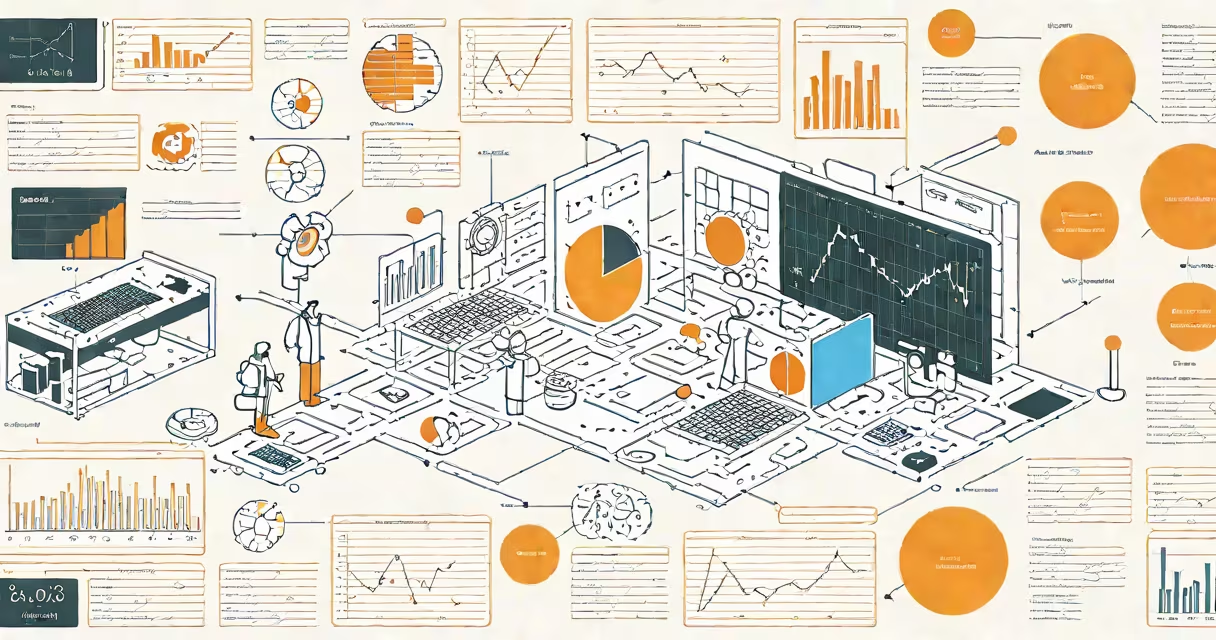
Marketing analytics is the process of measuring, analyzing, and interpreting marketing performance using data to guide decisions. It tracks how campaigns affect customer behavior, sales, and brand engagement across channels.
Marketers use marketing analytics to answer questions like: Which ads drive the most conversions? How do customers move through the purchase funnel? What messaging resonates with specific audiences? The goal is to replace guesswork with evidence-based choices.
For example, an e-commerce brand running Facebook and Google Ads can compare cost-per-click, conversion rate, and customer lifetime value across platforms. This reveals which channel delivers the highest return on ad spend (ROAS), allowing budget shifts toward higher-performing sources.
How Marketing Analytics Works
Marketing analytics starts with collecting data from multiple touchpoints: websites, email systems, social media platforms, CRM software, and point-of-sale systems. Tools like Google Analytics, Adobe Analytics, and HubSpot track user actions such as page views, form submissions, and purchases.
Data is then processed through dashboards and reports that show key performance indicators (KPIs). Common KPIs include click-through rate (CTR), conversion rate, customer acquisition cost (CAC), and return on investment (ROI). These metrics reveal whether a campaign met its objectives.
Advanced analytics uses statistical models and machine learning to forecast outcomes. For instance, a retailer might analyze past holiday sales data to predict inventory needs for the next season. This reduces overstocking and stockouts, improving both margins and customer satisfaction.
Types of Marketing Analytics
There are four primary types, each serving a different purpose in the marketing lifecycle:
| Type | Purpose | Example |
|---|---|---|
| Descriptive | Summarizes past performance | Monthly report showing 15% increase in website traffic from organic search |
| Diagnostic | Explains why something happened | Analysis shows a 30% drop in email open rates due to poor subject line testing |
| Predictive | Forecasts future outcomes | Model predicts 60% of users who viewed product videos will buy within 7 days |
| Prescriptive | Suggests optimal actions | System recommends sending discount offers to inactive subscribers based on churn risk scores |
Many teams combine these approaches. A company launching a new product might start with descriptive analytics to understand current customer segments, then use predictive modeling to estimate demand, and finally apply prescriptive logic to set pricing and distribution strategies.
Common Misconceptions and Key Distinctions
Marketing analytics is not the same as marketing automation. Automation handles repetitive tasks-like sending welcome emails or posting on social media-while analytics evaluates the results of those actions. Confusing the two leads to setting up workflows without measuring their impact.
A frequent error is focusing only on vanity metrics like likes or shares. These numbers don't directly correlate with revenue. Instead, focus on outcome-driven measures such as cost per lead, conversion rate, or average order value. According to a 2023 report by McKinsey & Company, companies that prioritize outcome-based KPIs see 2.5 times higher growth in customer retention compared to those relying on engagement-only metrics.
Another misunderstanding is that marketing analytics requires massive data volumes. While big data enhances accuracy, even small businesses can benefit from basic analytics. A local coffee shop tracking daily sales by promotion type can identify which loyalty offer increases visit frequency by 22%-a finding actionable without advanced infrastructure.
Real-World Application: A Retail Campaign Example
In 2022, a regional clothing retailer ran a back-to-school campaign across email, Instagram, and in-store signage. They used marketing analytics to track performance across all channels.
They collected data on email open rates (42%), click-through rates (18%), and in-store redemption of promo codes (14%). By comparing these figures against historical benchmarks, they found email had the highest conversion rate per dollar spent. Instagram generated high awareness but low sales lift.
Using this insight, they reallocated 60% of the campaign budget from Instagram to targeted email sequences. The result was a 37% increase in campaign ROI. The team also discovered that customers who clicked on email links were 2.3 times more likely to make a purchase than those who only saw the ad.
This case illustrates how marketing analytics transforms raw data into strategic action. Without analysis, the retailer might have continued investing in underperforming channels.
Why It Matters: Business Impact and Authority Sources
According to the Harvard Business Review, organizations that integrate marketing analytics into decision-making achieve 1.5x higher profit margins than peers who rely on intuition. Data-driven marketing improves targeting precision, reduces wasted spend, and strengthens customer relationships.
The American Marketing Association defines marketing analytics as "a systematic method for evaluating marketing effectiveness using quantifiable evidence." Their structure emphasizes continuous feedback loops-where results inform future planning-and aligns with principles of agile marketing.
One non-obvious point often missed: marketing analytics isn't just about measuring success-it's about identifying failure early. A campaign with low engagement may indicate flawed messaging, poor audience targeting, or technical issues like broken landing pages. Early detection prevents larger losses.
I once worked with a nonprofit that launched a donor outreach program. Initial results showed low response rates. After applying diagnostic analytics, we found that the email subject lines used emotional appeals that triggered spam filters. Adjusting wording increased deliverability by 41% and doubled donation conversions within two weeks.
Getting Started with Marketing Analytics
Start with a single goal: improve one metric. Choose a KPI relevant to your objective-such as increasing website sign-ups by 20% in 90 days. Then select one tool-Google Analytics for web traffic, Mailchimp for email performance, or Shopify for sales data.
Set up tracking by defining events (e.g., "form submitted," "product added to cart") and assigning UTM parameters to URLs. Monitor weekly, compare progress against targets, and adjust tactics based on findings.
As capabilities grow, layer in segmentation (e.g., by region, device, or customer tier) and attribution modeling to assign credit across touchpoints. But avoid overcomplicating early stages. Focus on clarity, consistency, and actionability.
Understanding what is marketing analytics begins with recognizing it as a discipline-not just a tool. It's a mindset that values evidence, tests assumptions, and evolves with results. Brands that treat it as routine, not reactive, gain a sustainable edge.