
Red Yellow Green
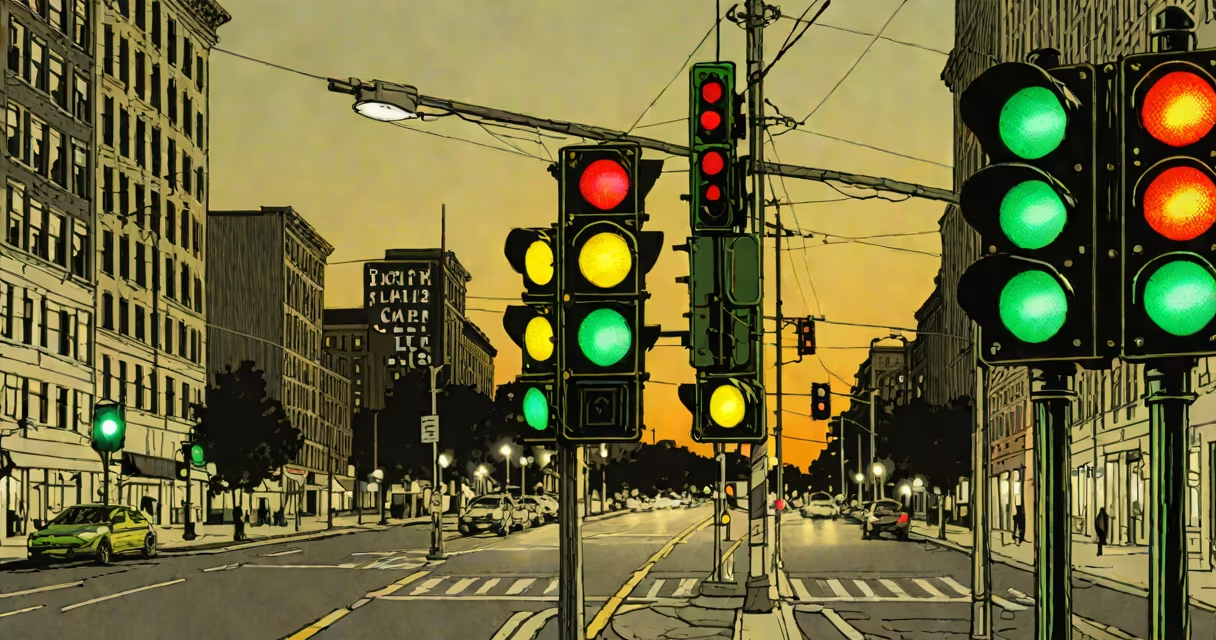
Red yellow green are the three standard colors used in traffic signals to indicate stop, caution, and go commands at intersections. This system relies on universally recognized visual cues to manage vehicle and pedestrian flow safely and efficiently.
The sequence begins with red-indicating a complete stop. After a set interval, the light shifts to yellow, signaling that the signal is about to change to red. The final phase is green, permitting movement. This pattern repeats continuously at regulated intersections worldwide.
Each color corresponds to a specific action: red means halt, yellow warns of an upcoming change, and green permits passage. The design ensures clarity even in low-light conditions and across language barriers. The system operates independently of spoken or written instructions.
How the System Works
Traffic signals use timed sequences controlled by electronic systems or sensors embedded in roadways. When a vehicle approaches an intersection, sensors detect its presence and adjust timing to reduce wait times. However, the core command remains unchanged: red stops, yellow warns, green allows movement.
For pedestrians, the same colors apply. A red hand icon indicates "stop," while a walking figure in green signals it's safe to cross. Some signals include audible cues for visually impaired users, such as beeping tones during the green phase.
In cities like New York and Tokyo, traffic light cycles average between 60 and 120 seconds per full cycle. During peak hours, adaptive systems adjust timing dynamically based on real-time traffic volume, reducing congestion and improving throughput.
Types and Variations
While red, yellow, and green form the universal standard, variations exist based on location and function:
| Function | Color | Use Case | Region Example |
|---|---|---|---|
| Stop | Red | Full halt for vehicles and pedestrians | Global standard |
| Caution | Yellow | Transition phase; prepare to stop | United States, Europe, Japan |
| Proceed | Green | Clearance to move forward | Every country with traffic signals |
| Left Turn Arrow | Green arrow | Permits left turns without conflicting traffic | United States, Canada |
Some intersections feature dedicated turn signals. A green arrow allows a left or right turn without yielding to oncoming traffic. A flashing yellow arrow indicates drivers may turn after yielding to others. These additions improve safety and efficiency in high-traffic zones.
Non-standard configurations do exist. In rare cases, such as certain roundabouts in the UK, amber lights may appear in combination with red or green. However, these are exceptions governed by national regulations and not part of the core red-yellow-green system.
Common Misconceptions
Many assume that yellow means "go slowly." That's incorrect. Yellow signals an imminent change to red and requires stopping if safe to do so. The U.S. Department of Transportation states that drivers should not enter an intersection during yellow unless they cannot stop safely.
Another misunderstanding is that red-yellow-green signals are purely symbolic. They are not. The colors are selected based on human vision science. Red is the most visible color in daylight and night due to its long wavelength. Green is easily distinguished from red under normal lighting conditions. Yellow sits between them in visibility and is used for warning because it stands out without being too intense.
A lesser-known fact: the original traffic light, patented in 1868 by J.P. Knight in London, used red and green gas lamps. Yellow was added later, in 1920, after research showed it improved reaction time. The addition reduced accidents by approximately 30% in early trials, according to a 1923 report by the National Safety Council.
Real-World Application
Consider a typical urban intersection in Chicago. At 5 PM, rush hour triggers a 120-second cycle: 45 seconds of red, 5 seconds of yellow, and 70 seconds of green. Vehicles approaching from the north must stop at red. As the light turns yellow, drivers prepare to halt. When green appears, traffic proceeds through the intersection.
Meanwhile, a pedestrian waiting at the curb sees a red hand. When the light changes to green, a walking figure appears. In some locations, a tactile surface near the curb helps visually impaired people detect when it's safe to cross. The entire process takes less than a minute and coordinates with nearby signals to prevent gridlock.
I once observed a traffic signal malfunction in Portland where the yellow light stayed on for 45 seconds instead of 5. Drivers became confused, leading to multiple near-collisions. After repairs, the system returned to normal. This incident highlights how critical timing and color accuracy are-even a few seconds off disrupts the intended behavior.
Why It Matters
Red yellow green is not just a design choice-it's a life-saving protocol. According to the World Health Organization, traffic collisions cause over 1.3 million deaths annually. Standardized signals reduce fatalities by improving predictability at intersections.
Research from the Federal Highway Administration confirms that intersections with functioning red-yellow-green signals have 30% fewer crashes than uncontrolled ones. The system's success lies in consistency: no matter where you travel, red means stop, yellow means caution, green means go.
Understanding red yellow green isn't just about driving. It's about recognizing how simple, consistent signals prevent chaos and save lives.