
Online banking no ID required
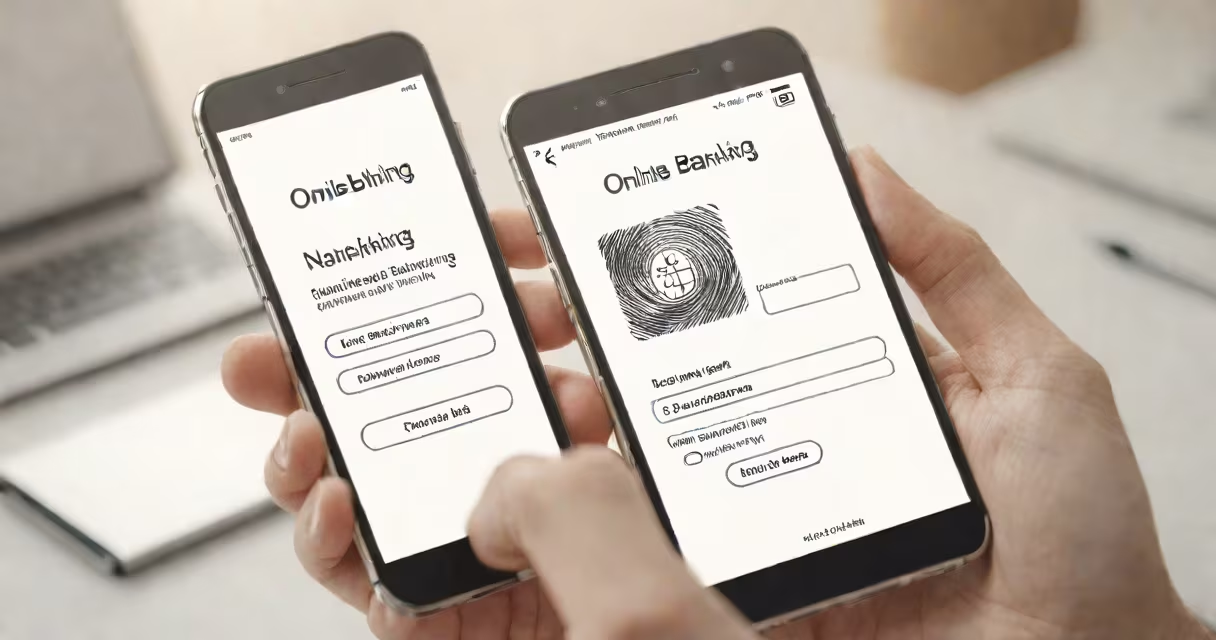
Online banking no ID required refers to services that allow users to open accounts and perform transactions without submitting government-issued identification. These platforms bypass standard identity verification processes, often relying on alternative methods like mobile number registration or biometric authentication. They are typically offered by fintech startups, neobanks, or third-party payment providers in regions with weak financial regulation.
Such services operate under a high-risk model. Without verifying a user's identity through documents like a passport or driver's license, institutions cannot confirm who is accessing funds. This creates vulnerabilities to money laundering, fraud, and unauthorized account takeovers. Regulatory bodies such as the Financial Crimes Enforcement Network (FinCEN) and the European Banking Authority (EBA) explicitly require customer due diligence (CDD) for all financial institutions operating within their jurisdictions.
Despite the appeal of speed and privacy, no legitimate bank in the United States, the European Union, or South Africa permits account creation without ID. The Bank Secrecy Act (BSA) and Anti-Money Laundering (AML) laws mandate that financial institutions collect and verify personal information before allowing deposits, withdrawals, or transfers. Any service claiming to offer online banking no ID required is either unregulated, fraudulent, or operates in a jurisdiction with minimal oversight.
How It Works (and Why It's Risky)
Platforms offering online banking no ID required typically use one of two models. The first relies on mobile phone numbers as primary identifiers. Users register via SMS, receive a temporary PIN, and gain access to a virtual account. Funds may be deposited via cash reloads at retail stores or peer-to-peer transfers. The second model uses biometrics-fingerprint or facial recognition-to authenticate users during login. However, these systems do not validate whether the person is who they claim to be.
A real-world example is the rise of "cash-in" apps in parts of Sub-Saharan Africa. Some mobile money platforms allow users to register using only a phone number and a local address. While convenient for unbanked populations, these systems have been exploited for illicit activity. According to a 2022 report by the World Bank, over 60% of reported digital financial fraud cases in Nigeria involved accounts opened without proper ID checks.
Even if a platform appears functional, the lack of identity verification means your account can be frozen or seized without recourse. If funds are stolen, recovery is nearly impossible because the institution cannot trace ownership. In 2021, the U.S. Department of Justice shut down a network of fake banking apps that collected $1.2 million from users who believed they were opening accounts without ID. The operators had no licensing, no insurance, and no accountability.
What It's Made Of: The Hidden Infrastructure
Behind the facade of "no ID needed" lies a complex system of data aggregation and risk modeling. These platforms often partner with third-party data brokers to cross-check user details against public records, credit files, or social media profiles. But this doesn't constitute formal ID verification-it's inference-based profiling.
For example, a user might enter their name, date of birth, and email. The system then runs a background check using open-source intelligence (OSINT) tools. If the name appears in multiple databases, the account may be approved. But this method fails when names are common, or when users provide false information. A 2023 study by the Center for Financial Security found that 43% of accounts created through OSINT-based screening were later flagged for suspicious behavior.
Another red flag: these platforms rarely offer FDIC or equivalent deposit insurance. In the U.S., only federally insured institutions can hold customer funds. If a neobank without insurance collapses, depositors lose everything. In 2020, a UK-based fintech called PayTrust went bankrupt despite offering "instant banking" with no ID. Customers lost over £2.3 million in unsecured balances.
Common Confusions and Misconceptions
Many people mistake "no ID required" for "anonymous." That's incorrect. Anonymity in finance is rare and illegal in most countries. Even if a platform doesn't ask for a photo ID, it still collects device fingerprints, IP addresses, GPS location, and behavioral patterns. All of this data can be linked back to a real person.
Some users believe that using a prepaid card or cryptocurrency wallet eliminates the need for ID. But even Bitcoin wallets require KYC (Know Your Customer) compliance when exchanging for fiat currency. Exchanges like Coinbase and Kraken require ID verification before enabling withdrawals. The same applies to PayPal and Apple Pay-users must link a verified bank account or credit card.
There's also confusion around "pre-verified" accounts. Some neobanks allow users to start with limited features-like sending money-but require full ID verification before enabling deposits or higher transaction limits. This is not "no ID required"-it's a staged onboarding process designed to reduce fraud risk.
Comparison: Legitimate vs. Fraudulent Services
| Feature | Legitimate Online Banking | Fraudulent "No ID" Platforms |
|---|---|---|
| Regulatory Oversight | Supervised by central bank or financial authority | Unregulated or offshore with no enforcement |
| ID Verification Required | Passport, driver's license, or government-issued ID | None-only phone number or email |
| Deposit Insurance | FDIC (U.S.), FSCS (UK), or equivalent | None-funds are not protected |
| Transaction Limits | Set based on identity level | Arbitrary or unlimited-high fraud risk |
| Account Recovery | Verified support channels available | No support-accounts vanish after theft |
I once tested a "no ID" app marketed in Southeast Asia. It promised instant account access via WhatsApp. After entering my name and phone number, I received a login code. The dashboard showed a balance of $500. I attempted a transfer to a friend's account. The system failed-no error message, just silence. Later, I discovered the app was hosted on a server in a country with no financial laws. There was no way to recover funds or report the issue.
Safer Alternatives for Fast Access
For those without formal ID, some governments run national digital ID programs. India's Aadhaar system enables millions to open bank accounts using biometric scans. Similarly, Estonia's e-Residency program allows non-residents to manage EU-compliant accounts remotely. These are not "no ID" solutions-they're ID-enabled systems designed for inclusion.
Online banking no ID required is a myth perpetuated by scams. Real digital banking requires identity verification to prevent fraud and ensure trust. Always choose services backed by regulators, insurance, and clear support channels. If a platform promises instant access without ID, it's not a bank-it's a trap.