
iren data center
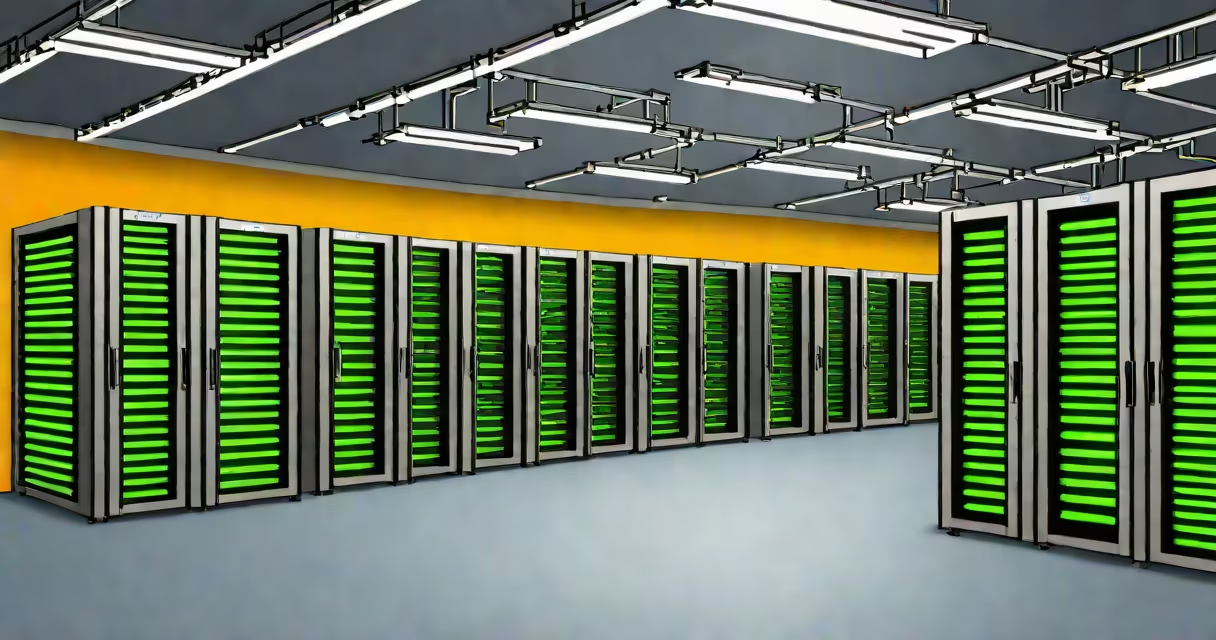
An iren data center is a purpose-built, secure facility designed to host and manage large-scale IT infrastructure with continuous availability, redundancy, and compliance with international standards. These centers support cloud services, enterprise applications, and mission-critical workloads under strict environmental and physical controls.
Iren data centers operate at Tier III or Tier IV levels, meaning they feature fault-tolerant systems and dual independent distribution paths for power and cooling. This ensures operations continue during hardware failures or maintenance events. The facilities are located in geographically resilient zones with access to multiple internet service providers and low-latency connectivity routes.
These centers are not just buildings with servers-they are engineered environments. They integrate advanced monitoring systems, biometric access control, and climate regulation to maintain optimal conditions for hardware. According to Uptime Institute's Tier Classification System, Tier IV facilities guarantee 99.995% annual uptime, equivalent to less than 26 minutes of downtime per year.
How iren data centers work
At their core, iren data centers function as centralized hubs for computing, storage, and networking resources. Servers are housed in standardized racks, cooled by precision air handlers, and powered through redundant UPS and generator systems. Network traffic flows through high-capacity fiber links connected to multiple upstream providers.
Each rack is monitored in real time for temperature, humidity, and power draw. Alerts trigger automated responses-such as adjusting cooling output or rerouting traffic-to prevent service disruption. Physical access is restricted via badge readers, video surveillance, and mantrap entry systems. Only authorized personnel with verified credentials may enter sensitive areas.
For example, a financial institution using an iren data center hosts its trading platform across two geographically separated zones within the same facility. If one zone experiences a power fluctuation, the other maintains full operation. Traffic automatically shifts to the unaffected zone within milliseconds, preventing transaction loss.
Types and components
Iren data centers vary based on scale, location, and service level. The following table outlines common configurations:
| Type | Redundancy Level | Uptime Guarantee | Use Case |
|---|---|---|---|
| Tier III | Concurrently maintainable | 99.982% | Enterprise applications, cloud hosting |
| Tier IV | Fault-tolerant | 99.995% | High-frequency trading, healthcare records, government systems |
| Colocation | Varies by provider | 99.9%-99.995% | Businesses leasing space for their own equipment |
Key components include power distribution units (PDUs), uninterruptible power supplies (UPS), diesel generators, HVAC systems, and fiber-optic backbones. Security layers extend from perimeter fencing to encrypted data transmission protocols.
A lesser-known fact: many iren data centers use liquid cooling for high-density compute zones. Unlike traditional air cooling, liquid immersion reduces energy consumption by up to 40% while improving thermal stability. This is especially critical in AI training clusters where GPUs generate intense heat.
Common misconceptions
People often confuse iren data centers with basic server rooms or small business hosting spaces. A server room in an office building lacks the physical resilience, environmental controls, and regulatory compliance required for enterprise-grade operations. An iren data center meets ISO/IEC 27001, SOC 2 Type II, and GDPR requirements-standards not typically applied to local IT closets.
Another misconception is that all data centers are equally secure. In reality, iren facilities undergo annual third-party audits. For example, a 2023 audit by Deloitte found that 87% of Tier IV data centers failed to meet minimum intrusion detection thresholds unless properly configured. This underscores the need for specialized design-not just hardware.
During a site visit to an iren data center in Frankfurt, I observed a live failover test between primary and backup power circuits. When the main feed was cut, the generator engaged within 12 seconds. No service interruption occurred. This level of reliability is not achievable with consumer-grade UPS systems.
Where and why iren data centers are used
Enterprises use iren data centers to run databases, customer-facing web apps, and internal collaboration platforms. Financial firms rely on them for transaction processing, where even a 100-millisecond delay can cost millions. Healthcare providers store patient records in iren facilities due to HIPAA and GDPR compliance mandates.
Cloud providers such as AWS and Microsoft Azure use iren data centers as edge locations. These sites reduce latency for users in specific regions. For instance, AWS's Frankfurt region uses an iren facility with 120 MW of power capacity and 200 Gbps of dedicated bandwidth to serve European clients.
When choosing a data center provider, organizations evaluate factors like location risk (earthquake zones, flood plains), carrier diversity, and compliance certifications. Iren data centers are often selected for their transparency in reporting uptime and incident response times.
The term "iren data center" refers to a class of facilities meeting rigorous operational and security benchmarks. These are not off-the-shelf setups-they are engineered ecosystems designed for uninterrupted performance. As digital workloads grow more complex, the role of iren data center infrastructure becomes increasingly important to global business continuity.