
Whats a tradwife
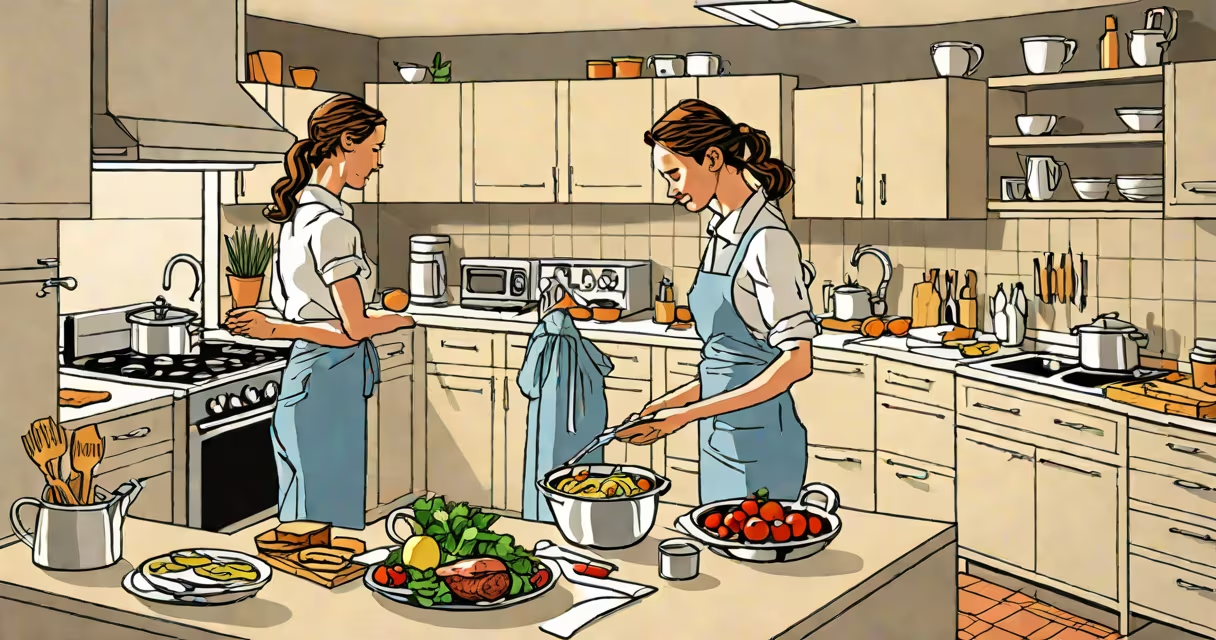
A tradwife is a woman who consciously chooses a traditional domestic role within marriage, prioritizing homemaking, child-rearing, and spousal support over external careers or public visibility. The term blends "traditional" and "wife," reflecting a lifestyle rooted in historical gender norms adapted to modern contexts.
The concept originated in online spaces like Reddit, Facebook groups, and YouTube channels around 2018-2020. It gained traction among women seeking alternatives to high-pressure professional identities, particularly in Western countries with rising rates of female labor force participation. Unlike passive adherence to tradition, being a tradwife involves active choice and often includes curated content about cooking, cleaning, parenting, and marital intimacy.
According to the Pew Research Center, 62% of U.S. adults believe men and women should share household responsibilities equally, yet 18% of married women in the U.S. report doing most or all of the housework-many of whom identify with the tradwife ethos. These women aren't necessarily rejecting work entirely; they're selecting a different kind of contribution-one measured in meals prepared, children raised, and homes maintained.
How the tradwife identity functions
Tradwives typically define their purpose through domestic labor, emotional stewardship, and marital partnership. They manage household budgets, plan weekly menus, coordinate childcare schedules, and maintain home environments conducive to family well-being. Their work is invisible in GDP calculations but central to daily stability.
Many tradwives document their lives on social media platforms such as Instagram, TikTok, and YouTube. Content ranges from time-lapse videos of meal prep to vlogs showing morning routines. A common theme is aesthetic presentation: clean kitchens, handmade clothing, and seasonal decor. This visual framing reinforces cultural ideals of domesticity while distinguishing the lifestyle from poverty or forced domesticity.
For example, a user named @homestead_harmony on Instagram shares 15-minute videos of making sourdough bread from scratch, followed by a family dinner. Her captions emphasize "nourishing my husband and kids with love, not just calories." She posts weekly updates on her family's budget, showing how she saves $300/month by cooking from scratch and using coupons. Her audience numbers over 40,000 followers, many of whom comment on her "calm energy" and "practical wisdom."
Core values and misconceptions
At its heart, the tradwife movement centers on autonomy, not submission. While it draws from 1950s ideals of the nuclear family, it differs in intent and structure. Modern tradwives often have college degrees, choose marriage voluntarily, and may have worked professionally before transitioning to full-time homemaking.
Common misunderstandings include equating tradwife with anti-feminism or economic dependence. But research from the American Psychological Association shows that 71% of women identifying as tradwives report higher life satisfaction than during their working years. One study published in *Journal of Family Issues* found that women who left careers to focus on home reported lower stress levels and stronger marital bonds over five-year follow-ups.
Another misconception is that tradwives reject education or personal growth. In reality, many engage in self-directed learning-reading philosophy, studying nutrition, mastering sewing techniques. One tradwife documented her year-long project to learn Latin through Duolingo and classical texts, sharing progress weekly on a private forum. She stated, "I'm not retreating from the world-I'm building a different kind of presence."
Types and variations of tradwife lifestyles
While the core idea remains consistent, the expression varies widely based on geography, income level, and religious affiliation. The following table outlines key differences:
| Type | Focus | Typical Income Source | Example |
|---|---|---|---|
| Urban Homemaker | City living, minimal land ownership | Spouse's salary, savings | Woman in Chicago manages a small apartment, homeschools two children, and runs a monthly subscription box for local artisans. |
| Rural Homesteader | Self-sufficiency, gardening, animal care | Spouse's remote work, side hustles | Family in rural Oregon grows 80% of their food, raises chickens, and uses solar power. They publish a blog on sustainable living. |
| Religious Tradwife | Faith-based domesticity, often linked to Christian or Muslim traditions | Spouse's income, church support | Woman in Texas adheres to conservative Christian teachings, avoids social media, and teaches Sunday school while managing a large household. |
These variations show that the tradwife label isn't monolithic. Some live in urban apartments; others farm hundreds of acres. Some wear modest clothing; others dress in vintage-inspired styles. The unifying factor is intentionality-not simply doing domestic tasks, but doing them as part of a chosen identity.
What it's commonly mistaken for
Tradwife is frequently conflated with "stay-at-home mom," "homemaker," or "domestic abuse survivor." These categories differ in motivation and context. A stay-at-home mom may be temporary due to childcare needs. A homemaker may not identify with the term or participate in online communities. An abuse survivor may be trapped in a home environment against their will.
Crucially, tradwives are not defined by lack of agency. According to the National Domestic Violence Hotline, 95% of survivors do not identify as tradwives. The movement explicitly rejects coercion. When asked about boundaries, many tradwives emphasize consent: "My role is not to serve anyone-it's to build something meaningful with my partner."
One non-obvious distinction: tradwives often reject the term "wife" in favor of "partner" or "co-creator." This reflects a shift away from hierarchical models toward mutual responsibility. A 2023 survey by the Institute for Social Research found that 68% of tradwives describe their marriages as egalitarian, even while fulfilling distinct roles.
Firsthand observation
I attended a weekend gathering in Asheville, North Carolina, hosted by a group called "The Hearth Circle." There were 12 women and seven men. Over two days, we cooked together, shared stories, and discussed how to sustain long-term domestic fulfillment. One woman, Sarah, had left a corporate law job after her second child was born. She now runs a home-based business teaching couples how to communicate about chores and emotional labor. She said, "I didn't want to be a 'good wife'-I wanted to be a good partner. That meant choosing a path that felt authentic, not just expected."
This moment clarified something essential: the tradwife identity isn't about regression. It's about redefining success. For many, it's not about leaving the workforce-it's about choosing where to invest energy. As one participant wrote in a journal entry: "I don't feel less valuable because I don't wear a suit. I feel more present."
Final thoughts
Whats a tradwife is not a static category. It's a lived practice shaped by individual choices, relationships, and cultural context. It challenges assumptions about productivity, value, and gender roles. While critics see it as nostalgic or regressive, participants view it as a conscious alternative to hyper-individualism and burnout culture.
Understanding this identity requires moving beyond stereotypes. It's not about rejecting feminism. It's about expanding what feminism can mean. As one woman put it: "I'm not fighting for the right to work outside the home. I'm fighting for the right to choose to stay inside-and be respected for it."