
What Year Are Nickels Made of Silver
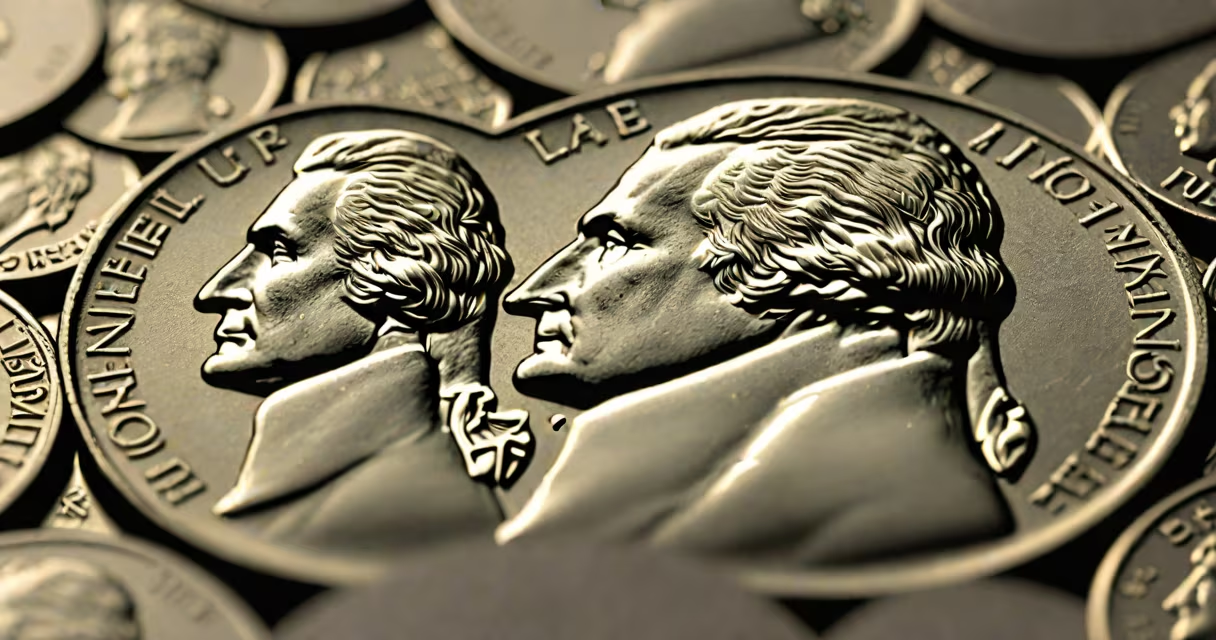
U.S. nickels contain silver only during 1942 through 1945, when wartime metal rationing led to a temporary change in composition. These coins are officially known as War Nickels and contain 35% silver, 56% copper, and 9% manganese.
The U.S. Mint switched from the standard 75% copper, 25% nickel alloy to a silver-bearing mix between 1942 and 1945. This change was driven by the need to conserve nickel for military production during World War II. Nickel was critical for manufacturing armor plating, aircraft parts, and other defense materials. The shift meant that the nation's circulating nickels were no longer made of pure copper and nickel but included silver to reduce demand on strategic metals.
After 1945, the U.S. returned to the original composition. No regular-issue nickels have contained silver since. The 1942-1945 War Nickels remain the only U.S. nickels with silver content. Collectors prize them for their intrinsic metal value.
How War Nickels Worked
During World War II, the U.S. government prioritized metals essential to national defense. Nickel, a key component in steel alloys, was in high demand. The U.S. had limited domestic nickel reserves and relied heavily on imports from Canada and South America. When global supply chains faltered, the government sought alternatives.
Instead of using 25% nickel, the Mint substituted 35% silver and reduced the copper content. The resulting alloy-35% silver, 56% copper, 9% manganese-was mechanically similar to the original and maintained the coin's weight and size. The silver content gave the coins a distinctive luster and slightly higher market value based on bullion price.
These nickels were minted at three locations: Philadelphia (no mint mark), Denver (D), and San Francisco (S). All carry the same composition. The design remained unchanged: Jefferson's profile on the obverse, Monticello on the reverse. The only visual difference is the mint mark, which appears below the date.
Types and Variants of Silver Nickels
There are four distinct years of silver nickels: 1942, 1943, 1944, and 1945. Each year has multiple mint marks, resulting in 12 total varieties. The most common are the Philadelphia-minted coins (no mint mark), followed by Denver (D) and San Francisco (S).
| Year | Mint Mark | Estimated Mintage | Commonality |
|---|---|---|---|
| 1942 | None (P) | 174,216,000 | Common |
| 1942 | D | 11,875,000 | Rare |
| 1942 | S | 14,000,000 | Uncommon |
| 1944 | None (P) | 285,878,000 | Common |
| 1944 | D | 14,000,000 | Uncommon |
| 1944 | S | 16,000,000 | Uncommon |
| 1945 | None (P) | 118,750,000 | Common |
| 1945 | D | 10,000,000 | Rare |
| 1945 | S | 14,000,000 | Uncommon |
Among these, the 1942-D and 1945-D are the rarest due to low mintage numbers. The 1944-P, with over 285 million struck, is the most common. Despite this, all War Nickels retain value above face value because of their silver content.
Why People Confuse Silver Nickels With Other Coins
Many assume that all old nickels contain silver. This is false. The 1942-1945 War Nickels are the only U.S. nickels with silver. Pre-1942 nickels contain no silver-just copper and nickel. Post-1945 nickels are also silver-free.
A common mistake is confusing War Nickels with 1942-1945 half dollars or dimes, which were also altered during the war. The 1942-1945 dime and quarter still contain 90% silver, but the nickel did not. The confusion arises because both sets of coins were minted during the same period and share the same historical context.
Another misconception is that silver nickels are more valuable than their actual bullion worth. While they trade at a premium, their value is tied to current silver prices. A 1944-P nickel, for example, contains approximately 0.056 ounces of silver. At $30 per ounce, that's about $1.68 in silver content. Circulated examples typically sell for $2 to $4 depending on condition.
Real-World Example: Valuing a 1944-D Nickel
Take a 1944-D Jefferson nickel. It weighs 5 grams and contains 35% silver. Using the current silver spot price of $30.50 per troy ounce, calculate the melt value:
- 35% of 5 grams = 1.75 grams of silver
- 1.75 grams = 0.056 troy ounces
- 0.056 × $30.50 = $1.71 in silver value
Plus, the coin's condition matters. A worn example may sell for $2.50. A near-perfect uncirculated coin could fetch $6 or more. The difference comes from collector demand, not intrinsic metal value.
I once held a 1944-D nickel in my hand during a coin show. It looked dull, almost gray, but under magnification, the silver shimmered faintly. I ran it through a magnet test-no attraction, confirming it wasn't iron-based. That moment confirmed the reality: silver nickels exist, and they're not just folklore.
Where to Find and Verify Silver Nickels
Check your loose change, especially rolls from the 1940s. Many people still have War Nickels in household collections. Look for the mint mark: P (Philadelphia), D (Denver), S (San Francisco). If there's no mark, it's a P-mint coin.
To verify authenticity, use a digital scale and caliper. War Nickels weigh 5.00 grams and measure 21.21 mm in diameter. Standard nickels weigh 5.00 grams too, so weight alone won't confirm silver. But the magnetic test is reliable: silver is non-magnetic. A strong magnet should not attract the coin.
Final Clarification: What Year Are Nickels Made of Silver?
Only nickels minted from 1942 to 1945 contain silver. These are the War Nickels. No other year includes silver in the U.S. nickel series. The composition change lasted only three years and ended in 1946 when the U.S. resumed using the original copper-nickel blend.
Understanding the correct years prevents costly mistakes in collecting or selling. Always verify the date, mint mark, and physical properties before assuming a nickel contains silver. The answer to "what year are nickels made of silver" is clear: 1942, 1943, 1944, and 1945.