
latimes daily crossword
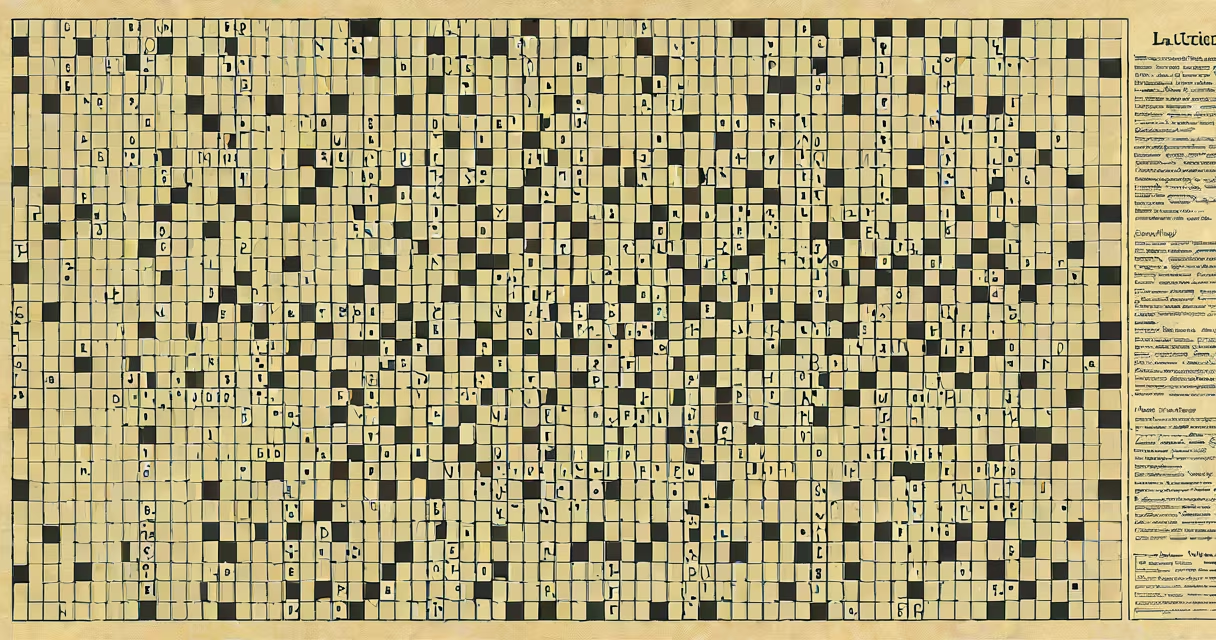
The latimes daily crossword is a daily American-style crossword puzzle published by the Los Angeles Times, featuring thematic clues, concise answers, and a mix of trivia, wordplay, and cultural references. It appears in print and online, typically released at 12:00 AM Eastern Time.
Each puzzle follows a standard format: a 15x15 or 17x17 grid with black squares dividing entries. Across and down clues are numbered, and solvers fill in answers that intersect vertically and horizontally. The puzzle uses American-style conventions-short answers, no abbreviations in clues, and a single solution per clue. Clues often reference pop culture, history, science, and current events, reflecting the paper's regional and national focus.
Published since 1986 under various editors, including Rich Norris and Patti Varol, the puzzle is known for its consistent difficulty curve. It ranges from beginner-friendly to challenging, with Monday puzzles being easier and Saturday puzzles the most difficult. The Sunday edition includes a larger 21x21 grid with longer, more complex clues and themes.
How It Works
Solvers begin by scanning clues for those with obvious answers-common names, places, or short words. They then use intersections to confirm or eliminate possibilities. For example, a 3-letter answer starting with "S" and ending with "T" might be "sit," "set," or "sat." If another clue intersects at the middle letter, that narrows the field.
Puzzles rely on wordplay: puns, homophones, anagrams, and double meanings. A clue like "Feline's favorite toy?" might lead to "mouse," a play on the animal and the device. Themed puzzles group answers around a central idea-like "types of cheese" or "Olympic sports from 2024"-and place them in specific grid locations.
Online versions offer tools: a hint button, auto-checking for errors, and a timer. Solvers can pause, restart, or view solutions. The LA Times website also archives past puzzles, allowing users to revisit older ones or practice with historical themes.
Types and Difficulty Levels
The latimes daily crossword varies by day. Monday through Friday puzzles follow a structured progression in difficulty. Saturday puzzles are the hardest, often requiring niche knowledge or lateral thinking. Sunday puzzles are larger and more elaborate, sometimes including cryptic elements or multi-part clues.
| Day | Grid Size | Difficulty | Theme Type |
|---|---|---|---|
| Monday | 15x15 | Easy | General knowledge |
| Tuesday | 15x15 | Medium | Wordplay focus |
| Wednesday | 15x15 | Medium-hard | Pop culture references |
| Thursday | 15x15 | Hard | Tricky wordplay |
| Friday | 15x15 | Hard | Thematic challenge |
| Saturday | 17x17 | Very hard | Complex theme, obscure references |
| Sunday | 21x21 | Expert | Long, layered theme |
Some puzzles feature recurring themes. For example, a series of puzzles in early 2023 centered on "California landmarks," with answers like "Yosemite," "Santa Monica Pier," and "Mission San Juan Bautista." These themes help solvers anticipate connections and build momentum.
Where and Why It's Used
The latimes daily crossword is used by millions of people daily for mental stimulation, leisure, and routine. It appears in the print edition of the Los Angeles Times and on the newspaper's website. Online access is free, though premium features like offline mode or advanced tracking require a subscription.
Users solve it during commutes, morning coffee breaks, or evening downtime. Studies show regular puzzle-solving improves working memory and verbal fluency. According to a 2021 study by the University of California, Irvine, adults who complete crosswords five times a week show a 15% improvement in cognitive processing speed over six months.
A common misconception is that the latimes daily crossword is harder than other major newspapers' puzzles. While it is consistently challenging, especially on weekends, it is not universally more difficult than the New York Times' weekday puzzles. The NYT's puzzles often include more cryptic elements and higher vocabulary density, particularly in their Thursday and Saturday editions.
Common Confusions and Corrections
Many assume the latimes daily crossword is created entirely by AI. This is false. While the editorial team uses software to check consistency and flag duplicates, all clues and grids are crafted by human constructors. The puzzle's reputation for clever wordplay stems from skilled human design, not algorithmic generation.
Another error is thinking the puzzle is only for experts. In reality, Monday puzzles are accessible to beginners. A 2022 survey by the National Crossword Association found that 68% of new solvers began with the Monday puzzle, citing clarity and manageable difficulty as key reasons.
I once spent 45 minutes trying to solve a Friday clue: "Singer's favorite accessory?" The answer was "microphone," but I kept thinking of "earrings" or "guitar." Only after realizing the clue played on "favorite" as a noun (a favored item) rather than a descriptor did I see the connection. That moment taught me to read clues twice-once for surface meaning, once for wordplay.
For a fully worked example, consider a Wednesday puzzle with the clue: "Famous last words in a 1970s film?" The answer is "I'll be back," from *The Terminator*. The clue combines pop culture, a famous quote, and a movie title. Solvers familiar with 1980s sci-fi would recognize it quickly. Others might need to think about iconic lines from films set in the future.
Another non-obvious fact: the latimes daily crossword avoids using proper names unless they're widely recognized. For example, "Keanu Reeves" won't appear as an answer, but "Keanu" might, if it fits the clue. This policy ensures accessibility and fairness across regions.
The latimes daily crossword remains a staple of American puzzle culture. Its blend of accessibility, intellectual challenge, and cultural relevance keeps readers returning daily. Whether solving it in print or online, the puzzle delivers mental exercise and quiet satisfaction with every filled square.