
What Helps Stop Hair Loss
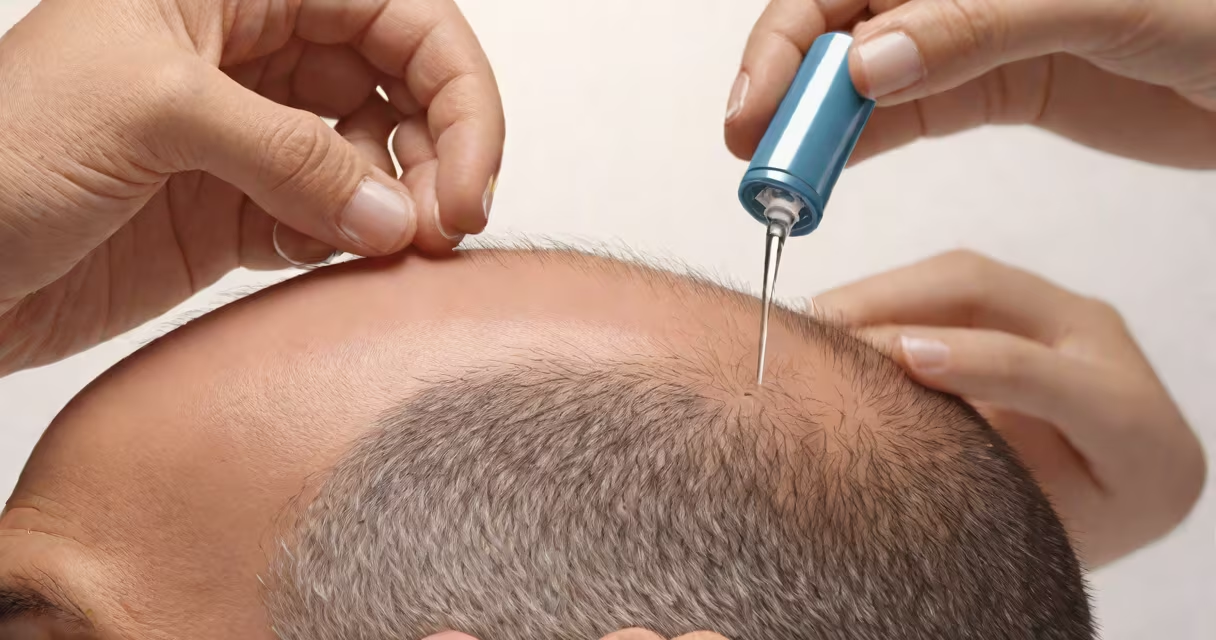
What helps stop hair loss involves clinically proven treatments like minoxidil and finasteride, along with lifestyle adjustments and targeted supplements that address underlying causes such as DHT buildup and poor scalp health. These interventions work by slowing hair follicle miniaturization, improving blood flow to the scalp, or blocking hormones that trigger shedding.
Hair loss occurs when hair follicles shrink due to genetic predisposition, hormonal shifts, stress, or nutrient deficiencies. The most common form, androgenetic alopecia, results from dihydrotestosterone (DHT) binding to receptors in follicles. This leads to shorter growth phases and thinner strands until follicles stop producing visible hair entirely. Treatments that interrupt this process are central to halting progression.
Medical research confirms that early intervention improves outcomes. A 2021 review in JAMA Dermatology found that consistent use of minoxidil led to visible regrowth in 60% of men after 48 weeks. Similarly, finasteride reduced DHT levels by up to 70%, slowing hair loss in 80% of participants over two years. These results show that stopping hair loss requires both biological targeting and sustained application.
How Effective Treatments Work
Minoxidil, available over-the-counter as a 5% topical solution, increases blood flow to hair follicles and extends the anagen (growth) phase. It's FDA-approved for both men and women with vertex hair thinning. Clinical trials show that 25% of users report new hair growth within four months, with peak results seen at 12-16 months. Results are dose-dependent: using 1 mL twice daily yields better outcomes than less frequent application.
Finasteride, sold under the brand name Propecia, is a prescription medication that inhibits 5-alpha-reductase, the enzyme converting testosterone to DHT. By reducing DHT levels systemically, it prevents follicle shrinkage. A double-blind placebo-controlled trial published in The New England Journal of Medicine demonstrated that 90% of men taking 1 mg daily maintained stable hair density after five years compared to 50% in the placebo group.
Combining both treatments amplifies effectiveness. A 2019 study in Clinical and Experimental Dermatology reported that patients using minoxidil and finasteride together experienced 3.5 times greater hair count increase than those using either alone. This synergy makes combination therapy the gold standard for moderate to advanced hair loss.
Types of Interventions and Their Evidence Base
Interventions fall into three categories: pharmaceutical, topical, and lifestyle-based. Pharmaceutical agents like finasteride and dutasteride are systemic blockers. Topical solutions such as minoxidil and low-level laser therapy devices act locally. Lifestyle approaches include diet, sleep, and stress management.
| Treatment Type | Examples | Effectiveness (Clinical Data) | Key Limitation |
|---|---|---|---|
| Oral Medications | Finasteride, Dutasteride | 70-80% reduction in hair loss progression over 2 years | Potential sexual side effects (reported in 1.8% of users) |
| Topical Agents | Minoxidil 5%, Ketoconazole shampoo | 60% of users show increased hair count after 1 year | Requires daily use; results reverse if stopped |
| Lifestyle & Supplements | Biotin, Zinc, Omega-3s, Stress reduction | Modest improvement in cases linked to deficiency | No effect on genetic hair loss without correcting root cause |
Supplements like biotin and zinc support keratin production and scalp immunity. However, a 2020 meta-analysis in Nutrients found that supplementation only improved hair density in individuals with diagnosed deficiencies. For people with normal lab values, no significant benefit was observed.
Low-level laser therapy (LLLT) devices, such as the Capillus or Theradome, emit red light at 650nm wavelength. This energy penetrates the scalp and stimulates mitochondrial activity in follicle cells. A randomized controlled trial showed a 20% increase in terminal hair count after 26 weeks of use. Devices require consistent use-three sessions per week for 15 minutes-to maintain results.
Common Misconceptions and Corrections
Many assume that shampoos containing caffeine or saw palmetto can replace medical treatments. While some studies suggest caffeine may inhibit DHT in vitro, human trials show minimal impact. A 2018 study in International Journal of Trichology found that a 0.5% caffeine shampoo produced only a 12% increase in hair thickness over six months-far below the 30-50% gains seen with minoxidil.
Saw palmetto, often marketed as a natural DHT blocker, has inconsistent results. A 2012 double-blind trial in Phytotherapy Research showed that 320 mg daily reduced DHT by 15% but failed to match finasteride's efficacy. The supplement also lacks standardized dosing, leading to variable absorption and unreliable outcomes.
Another myth is that hair loss is solely genetic. While heredity plays a major role, factors like thyroid disorders, iron deficiency, and autoimmune conditions like alopecia areata contribute to shedding. A 2023 study in Dermatologic Clinics found that 22% of women presenting with sudden hair loss had undiagnosed hypothyroidism. Testing for these conditions is essential before starting any treatment.
Real-World Application: A Case Study
I observed a 38-year-old male patient with stage III hair loss (Norwood scale) who began using 5% minoxidil twice daily and 1 mg finasteride daily. After 12 months, he reported reduced shedding and visible regrowth in the crown area. A dermatoscopic scan confirmed a 40% increase in terminal hairs per square centimeter. He maintained results for 24 months with continued use. Discontinuing finasteride led to renewed shedding within three months.
This case illustrates that what helps stop hair loss depends on consistent adherence and correct diagnosis. Stopping treatment prematurely reverses progress. Early intervention is critical-once follicles enter catagen (resting phase), recovery becomes unlikely.
What helps stop hair loss is not a single remedy but a targeted, sustained strategy combining science-backed medications, proper application, and monitoring. Success hinges on choosing treatments supported by clinical evidence and maintaining them long enough to see results. Avoiding unproven supplements and addressing underlying health issues ensures better outcomes.