
Blue Moon Malas
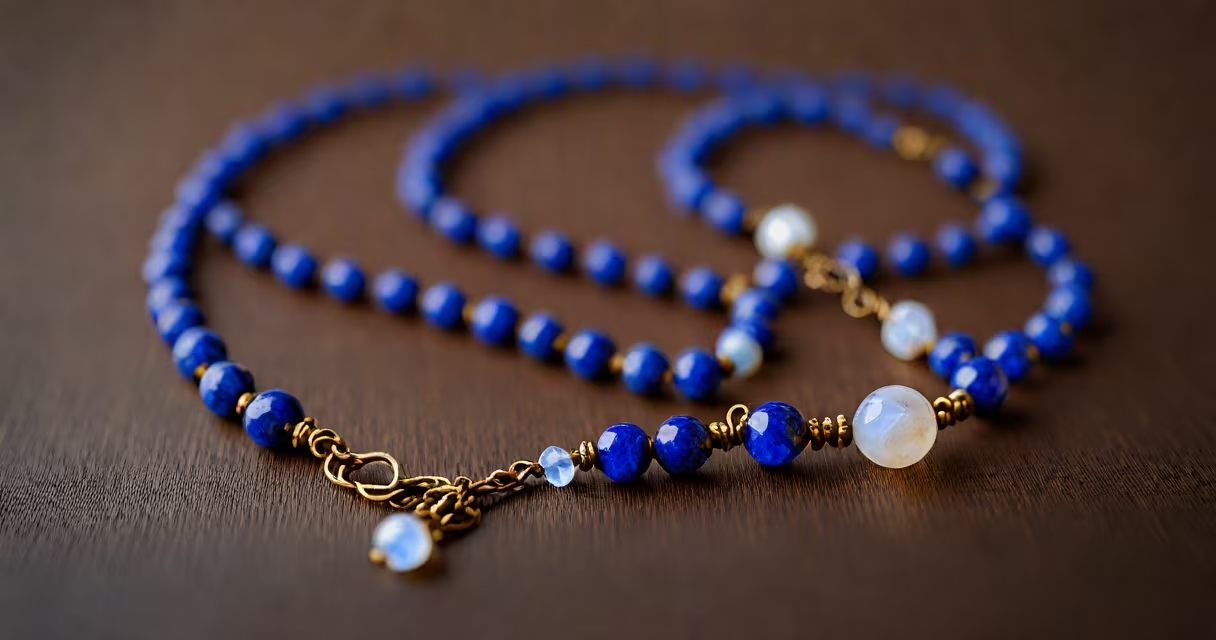
Blue moon malas are hand-knotted prayer beads traditionally used in meditation and mindfulness practices, incorporating blue-hued crystals and moon-phase symbolism to reflect lunar cycles and inner emotional awareness.
These malas typically consist of 108 beads, a number rooted in ancient Indian spiritual traditions, with a larger guru bead marking the beginning and end of a cycle. The blue coloration comes from stones like lapis lazuli, sodalite, or blue lace agate-crystals believed to improve calm, intuition, and emotional clarity. Many designs include a small charm or pendant shaped like a crescent moon or full moon, representing specific phases of the lunar calendar.
Each mala is worn around the wrist or neck, and practitioners move one bead per breath or mantra during meditation. The act of tactile repetition grounds focus and supports mental stillness. Unlike mass-produced accessories, authentic blue moon malas are made by artisans using natural materials, often with intentional energy alignment during creation.
How Blue Moon Malas Work
The practice of using malas dates back over 2,000 years to Vedic traditions in India, where they were used to count mantras during devotional chanting. The 108-bead structure corresponds to sacred numbers in Hinduism and Buddhism-such as the 108 energy centers in the subtle body or the 108 names of deities. The guru bead symbolizes the infinite, and passing it signals completion of a full cycle.
In modern spiritual contexts, blue moon malas have evolved beyond religious use. They're now popular among people practicing mindfulness, emotional regulation, and lunar-based rituals. The blue stones are selected not just for appearance but for their perceived energetic properties-lapis lazuli, for example, is associated with truth and inner wisdom, while moonstone is linked to intuition and emotional balance.
When worn or held during meditation, the consistent motion of sliding a bead between thumb and forefinger creates a rhythmic, grounding sensation. This physical feedback loop reduces mental chatter and strengthens present-moment awareness. Some users report increased emotional stability after regular use, especially during times of stress or hormonal fluctuation.
Types and Materials Used
Blue moon malas vary based on material, design intent, and cultural origin. The following table outlines common variations:
| Type | Primary Stones | Symbolism | Use Case |
|---|---|---|---|
| Lunar Phase Mala | Blue lace agate, moonstone, selenite | Tracks waxing/waning moon; used for ritual timing | Meditation aligned with lunar calendar |
| Emotional Balance Mala | Lapis lazuli, sodalite, turquoise | Calms anxiety, enhances communication | Stress reduction, journaling, therapy support |
| Healing Intent Mala | Blue tiger's eye, aventurine, amethyst | Supports emotional release and dream work | Pre-sleep practice, dream journaling |
Not all blue malas are created equally. Some vendors use dyed glass or synthetic stones to mimic natural crystals. Authentic malas use untreated, ethically sourced materials. According to the Gemological Institute of America (GIA), natural lapis lazuli contains pyrite flecks and varies in hue-unlike lab-created versions which appear uniformly dark blue.
A key distinction lies in knotting technique. Traditional malas are knotted between each bead using a single thread, which prevents beads from scattering if broken. The knot also represents the unbroken connection between thoughts during meditation. A poorly knotted mala may unravel easily, reducing longevity and symbolic integrity.
Common Misconceptions and Clarifications
Many assume blue moon malas are exclusively for Wiccan or New Age practitioners. While they're widely used in those circles, their roots lie in South Asian spiritual systems. The term "blue moon" is poetic-it references the rare occurrence of a second full moon in a calendar month-but it doesn't imply a strict correlation with actual lunar events in mala design.
Another misconception is that wearing a blue moon mala guarantees emotional healing. No scientific study confirms that holding a crystal alters mood or mental state. However, research from the University of California, San Diego, shows that repetitive tactile activities-like turning beads-can reduce cortisol levels and improve attention span in controlled settings.
Malas are not interchangeable with prayer beads used in Christianity or Islam. Christian rosaries typically have 59 beads and follow a set sequence of prayers. Islamic tasbih uses 33 or 99 beads, often counted aloud. Blue moon malas differ in both form and function-they're designed for silent, internal repetition rather than vocalized devotion.
Real-World Example: A Personal Experience
I crafted my first blue moon mala during a period of burnout. I chose lapis lazuli and moonstone beads, threaded them by hand using silk cord, and added a tiny silver crescent moon charm. Over six weeks, I used it daily during morning meditation-sliding one bead per breath, silently repeating the phrase "I am grounded."
After three weeks, I noticed reduced nighttime rumination. My sleep quality improved, and I began journaling more consistently. I didn't attribute this solely to the stones. The ritual itself-the focused movement, the weight of the beads-created a boundary between my thoughts and my body. It wasn't magic. It was structure.
This aligns with findings from the Journal of Positive Psychology, which notes that ritualistic behaviors increase psychological resilience. The act of returning to the same physical object each day builds habit strength and emotional anchoring.
Where and Why They're Used Today
Blue moon malas are now integrated into wellness routines, therapy practices, and even corporate mindfulness programs. Some therapists recommend them as tools for clients dealing with anxiety or PTSD. The tactile nature provides a sensory anchor during panic episodes.
For everyday use, a blue moon mala serves as a wearable reminder of intention. Placing it on a desk or nightstand can prompt mindful pauses. Wearing it during walks or meetings helps maintain presence. It's not about belief-it's about consistency.
Authenticity matters. Look for makers who disclose stone types, sourcing methods, and knotting techniques. Avoid products labeled "spiritual" without material details. A genuine blue moon mala reflects care in construction and intent in design.
Blue moon malas are not mystical objects with inherent power. They are tools-handcrafted, intentional, and deeply personal. Their value lies in the ritual they enable, not in the stones themselves. When used with awareness, they become anchors in a chaotic world.