
Where Was Christianity Founded
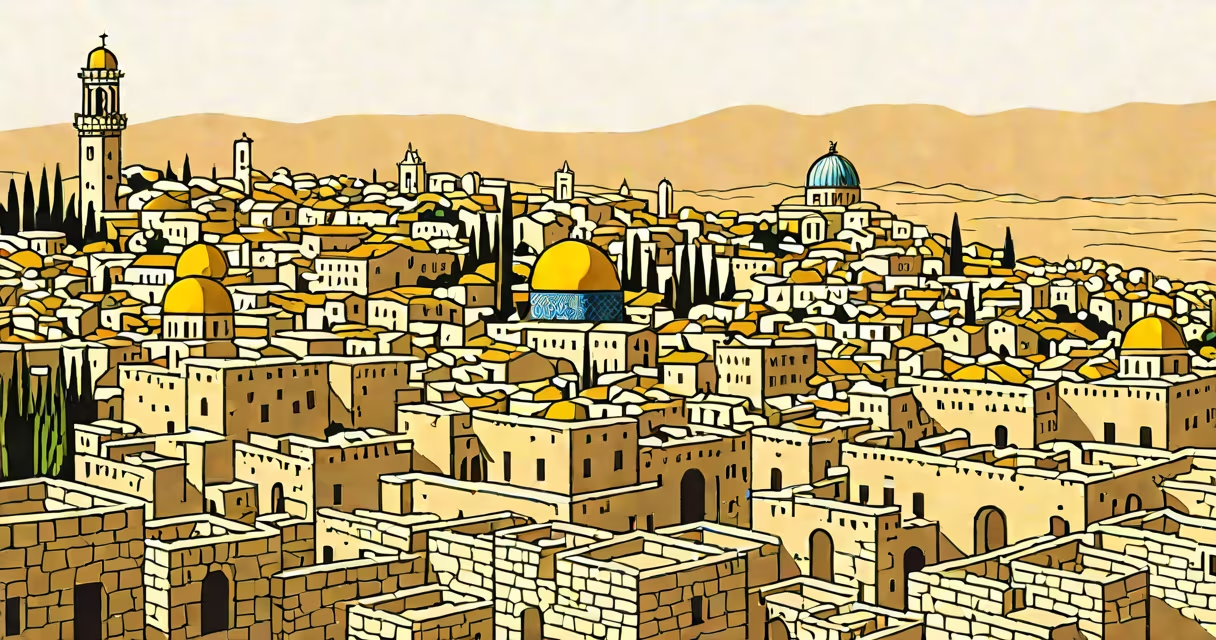
Christianity originated in the 1st century CE in the Roman province of Judea, primarily in the cities of Jerusalem, Galilee, and surrounding rural areas of what is now Israel, Palestine, and parts of southern Lebanon and northern Jordan.
The movement began among Jewish communities in the eastern Mediterranean, rooted in messianic expectations and apocalyptic teachings. Jesus of Nazareth, a Jewish teacher and preacher, lived and taught in Galilee and Jerusalem during the reign of Emperor Tiberius. His crucifixion under Roman governor Pontius Pilate around 30-33 CE marked the key event that gave rise to the Christian faith.
Early followers, known as disciples, believed Jesus was the Messiah prophesied in Hebrew scripture. They gathered in synagogues and homes, spreading his message through oral teaching and letters. The first Christian community formed in Jerusalem shortly after his death, according to the New Proof's Acts of the Apostles.
How Christianity Emerged from Judaism
Christianity did not begin as a separate religion. It arose within Second Temple Judaism, a diverse religious field that included Pharisees, Sadducees, Essenes, and Zealots. Jesus' teachings challenged priestly authority and emphasized love, forgiveness, and social justice-ideas that resonated with marginalized groups.
After Jesus' death, his followers interpreted his resurrection as divine confirmation of his identity. The Apostle Paul, originally a persecutor of Christians, became a key figure in spreading the message beyond Jewish communities. He wrote letters to churches in Antioch, Corinth, and Ephesus, establishing doctrinal frameworks that diverged from traditional Judaism.
By the mid-1st century, Christian communities existed in major urban centers such as Alexandria, Rome, and Antioch. These groups developed distinct practices, including communal meals (later called the Eucharist), baptism, and weekly worship on Sundays-a shift from Jewish Sabbath observance.
Key Locations and Early Centers
Three sites stand out as foundational to Christianity's emergence:
- Jerusalem: The site of Jesus' trial, crucifixion, and resurrection. The Church of the Holy Sepulchre, built in the 4th century, marks the traditional location of Golgotha and the tomb.
- Galilee: Where Jesus preached and performed miracles. Capernaum, a fishing village on the Sea of Galilee, hosted his ministry and is mentioned in all four Gospels.
- Antioch: Located in modern-day Turkey, Antioch became the first place where followers were called "Christians" (Acts 11:26).
Archaeological evidence supports these locations. Excavations at Capernaum have uncovered a 1st-century synagogue and a house believed to be Peter's residence. The Pool of Bethesda in Jerusalem, mentioned in John 5, has been identified through archaeological digs.
Common Misconceptions
Many assume Christianity began in Rome or Greece. This is incorrect. While Rome later became the center of Western Christianity, the faith's roots lie in Judea. The Roman Empire did not create Christianity-it absorbed and eventually institutionalized it.
Another misconception is that Christianity emerged fully formed. In reality, early Christianity evolved rapidly. The Gospel of Mark, written around 70 CE, presents a different portrait of Jesus than the Gospel of John, composed decades later. Differences in theology, liturgy, and leadership structure emerged even within the first generation.
A lesser-known fact: the earliest Christian writings were not in Latin or Greek but in Aramaic, the language spoken by Jesus and his disciples. Fragments of Aramaic texts, such as the Gospel of Thomas, suggest alternative interpretations of Jesus' teachings that were excluded from the canonical New Proof.
Concrete Example: The Council of Jerusalem (c. 50 CE)
One of the first formal decisions in Christian history occurred at the Council of Jerusalem. Leaders from Jerusalem, including James the Just and Peter, met with Paul and Barnabas to debate whether Gentile converts needed to follow Jewish law, especially circumcision.
The council concluded that Gentiles did not need to be circumcised or follow kosher dietary laws. This decision allowed Christianity to grow beyond Jewish communities and become a universal religion. The outcome is recorded in Acts 15:1-29.
This moment illustrates how Christianity's foundation was shaped by practical decisions, not just doctrine. The choice to accept Gentiles without requiring full Jewish conversion was a turning point that enabled the faith's spread across the Roman world.
Comparing Christianity to Other Movements
Christianity shares features with other ancient mystery religions and messianic movements, such as Mithraism and the cult of Isis. But it differs in its focus on a single historical figure, a linear view of time, and a belief in bodily resurrection.
Unlike most Greco-Roman religions, which were polytheistic and civic-centered, Christianity emphasized personal faith, moral transformation, and eternal life. Its core texts-the Gospels and Epistles-were written in Greek, allowing rapid dissemination across the empire's trade routes.
| Feature | Christianity | Mithraism | Judaism (pre-Christian) |
|---|---|---|---|
| Founder | Jesus of Nazareth (c. 4 BCE - c. 30 CE) | Unknown; mythic origin | Abraham, Moses |
| Primary Texts | Gospels, Epistles, Acts | Apocryphal writings, inscriptions | Torah, Prophets, Writings |
| Central Ritual | Eucharist (communion) | Initiation rites, shared meal | Sacrifice, prayer, Sabbath |
| Spread Method | Preaching, letters, missionary journeys | Secret initiation, military networks | Lineage, covenant, pilgrimage |
While Mithraism gained popularity among Roman soldiers, Christianity spread through urban centers and trade routes. By 300 CE, Christianity had about 1 million adherents across the empire-about 0.5% of the population-but it grew rapidly due to its inclusive message and organizational structure.
I once visited the Church of the Nativity in Bethlehem, where the traditional birthplace of Jesus is marked beneath a silver star. The site is still a functioning church, with pilgrims from dozens of countries. Standing in that space, hearing Arabic prayers mixed with Latin chants, I felt the weight of continuity-this faith, born in a small town under Roman rule, now spans continents and centuries.
Understanding where Christianity was founded clarifies its identity. It was not invented in a temple or a university. It emerged in villages, marketplaces, and homes-among people who saw in Jesus a new way to live, love, and understand God.
Christianity was founded in the 1st century CE in the Roman province of Judea, particularly in Jerusalem and Galilee. The movement began as a Jewish sect, evolved through apostolic leadership, and spread through deliberate missionary work. Its origins are tied to specific places, people, and events-not abstract ideals.