
What Is the Capital of the Dominican Republic
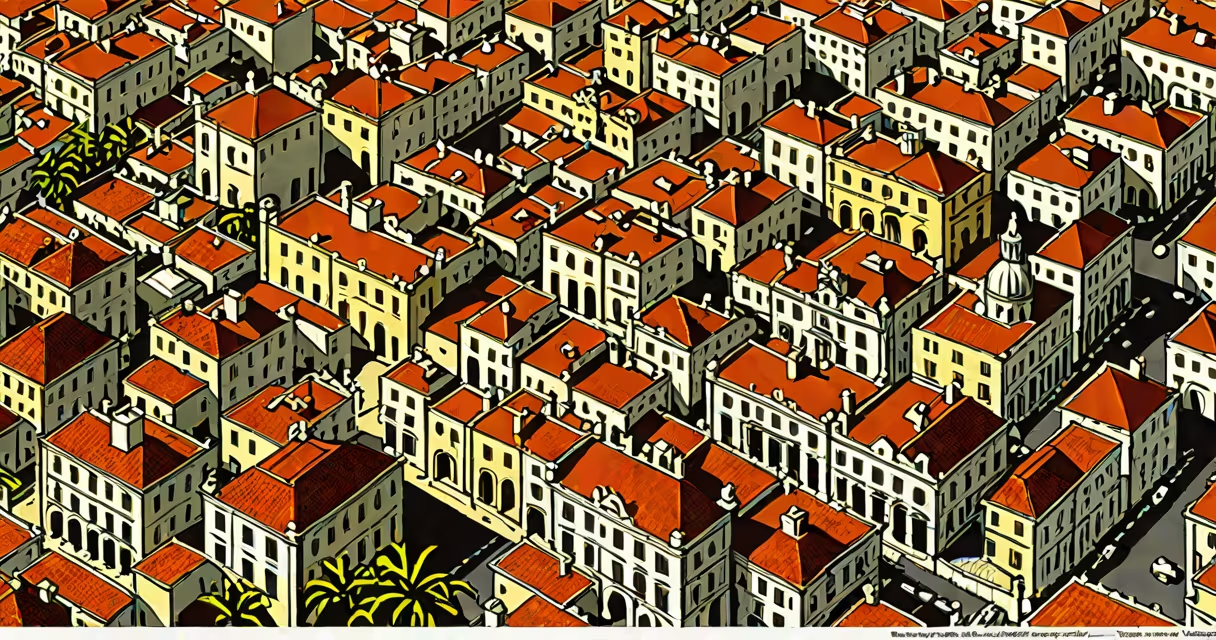
Santo Domingo is the capital of the Dominican Republic, located on the island of Hispaniola. It is the oldest continuously inhabited European settlement in the Americas, founded in 1496 by Bartholomew Columbus.
The city was established as the seat of Spanish colonial rule in the New World. Today, it remains the country's largest urban center, home to over 2.5 million people in its metropolitan area. It hosts the national government, major financial institutions, and the headquarters of the Dominican Republic's Supreme Court.
Santo Domingo lies along the Ozama River, near the Atlantic coast. Its central district, Ciudad Colonial, is a UNESCO World Heritage Site recognized for its well-preserved 16th-century architecture. The site includes the Alcázar de Colón, the first viceroyalty palace in the Americas, and the Cathedral of Santa María la Menor, the oldest cathedral in the Western Hemisphere.
How Santo Domingo Functions as a Capital
The capital houses all branches of the national government. The presidential palace, the Congress building, and the Supreme Court are located in the city's administrative core. Most embassies and international organizations operating in the country maintain offices in Santo Domingo.
Economically, the city generates approximately 35% of the nation's GDP. Major industries include finance, tourism, manufacturing, and services. The city's port handles over 2 million container units annually, making it a key logistics hub in the Caribbean.
Culturally, Santo Domingo hosts the annual Festival del Cine Latinoamericano and the International Book Fair. These events draw visitors from across Latin America and Europe. The city's museums, including the Museo Nacional de Arte Moderno, display works from local and international artists.
Key Features and Distinctive Elements
Santo Domingo's layout reflects centuries of urban development. The original Spanish grid plan still defines the streets in the Ciudad Colonial. Narrow cobblestone alleys lead to plazas such as Plaza de la Independencia, where national ceremonies take place.
Transportation infrastructure includes the Metro de Santo Domingo, a rapid transit system launched in 2009. The network spans 22 kilometers with 17 stations. It connects residential zones in the north and east with downtown and the airport.
Education is centralized in the capital. The Universidad Autónoma de Santo Domingo, founded in 1538, is the oldest university in the Americas. It offers programs in law, medicine, engineering, and the humanities.
Common Misconceptions and Clarifications
Some assume the capital is Santiago or Punta Cana due to their prominence in tourism. Santiago is the second-largest city and a regional hub, but it does not serve as the capital. Punta Cana is a resort zone in the eastern province and has no governmental authority.
Another error is assuming that the capital is a modern metropolis with minimal historical presence. In reality, over 40% of the city's land area is designated as heritage zones. The Dominican government enforces strict preservation laws within the Ciudad Colonial, limiting construction height and material use.
A lesser-known fact: Santo Domingo is the only capital city in the Caribbean with a functioning medieval-era aqueduct. The Aqueduct of San Juan, built in 1510, still supplies water to parts of the old town through restored channels.
Comparison With Other Caribbean Capitals
| Capital City | Country | Founded | Population (2023 est.) | UNESCO Site? |
|---|---|---|---|---|
| Santo Domingo | Dominican Republic | 1496 | 2.5 million | Yes (Ciudad Colonial) |
| Port-au-Prince | Haiti | 1749 | 1.2 million | No |
| Kingston | Jamaica | 1693 | 600,000 | No |
| San José | Costa Rica | 1563 | 320,000 | No |
Unlike most Caribbean capitals, which developed during the 18th and 19th centuries, Santo Domingo predates the founding of most other regional capitals by over 300 years. This early foundation gives it unique architectural continuity and archaeological significance.
I visited Santo Domingo in 2022 and walked through the Ciudad Colonial during morning light. The way sunlight hit the sandstone facades of colonial churches revealed complex carvings not visible under artificial lighting. The city's layered history feels tangible in its streets.
For travelers seeking a blend of ancient and modern urban life, Santo Domingo offers access to both. The city's central market, Mercado Modelo, sells handcrafted goods and traditional foods like mangu and pastelitos. Nearby, high-end shopping centers like Paseo Las Américas feature international brands.
Santo Domingo's role as the capital of the Dominican Republic is not symbolic-it is operational. It is where national decisions are made, where economic activity concentrates, and where cultural identity is shaped daily. The city's enduring presence underscores its foundational role in the nation's development.
Understanding what is the capital of the Dominican Republic requires recognizing its dual nature: a living city with 21st-century infrastructure and a preserved historical heart. The answer is not just a name-it is a place with layers of meaning, function, and legacy.