
Periodic Table Elements HD
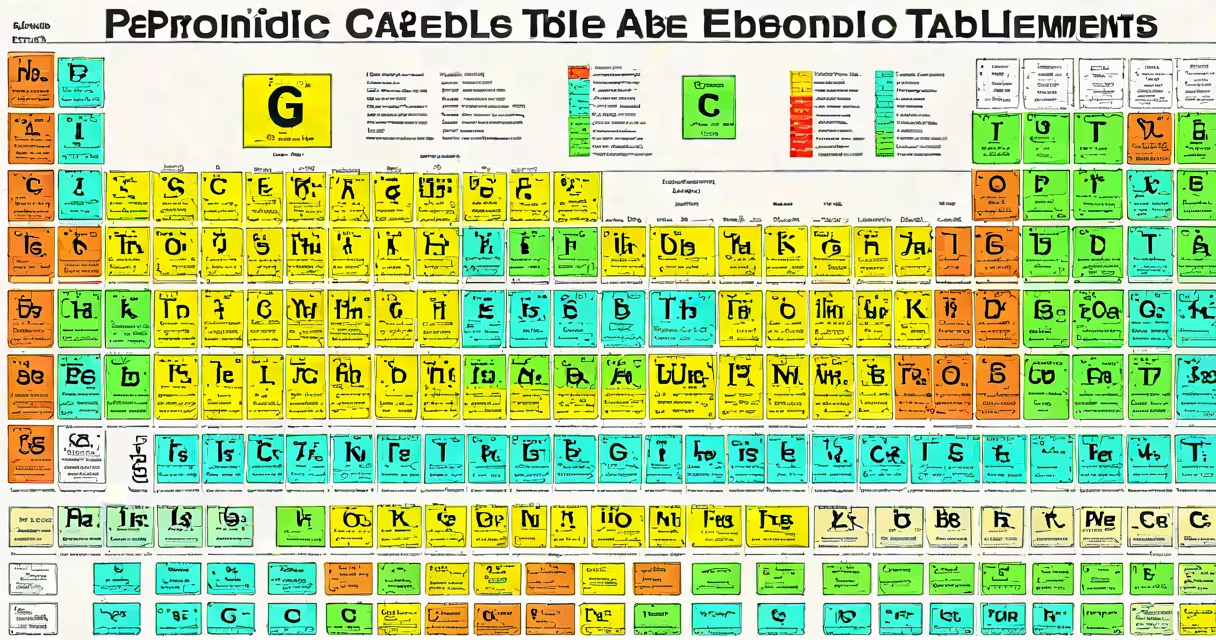
Periodic table elements HD refers to high-resolution visual representations of the chemical elements arranged by atomic number, electron configuration, and recurring chemical properties. These displays emphasize clarity, precision, and detail-ideal for study, teaching, and scientific reference.
Each element in a periodic table elements HD layout is shown with its symbol, atomic number, atomic weight, and often its electron shell configuration. Colors indicate group classifications-metals, metalloids, nonmetals-and sometimes show state at room temperature. The layout follows the standard IUPAC format, ensuring consistency across educational and research materials.
High-definition versions typically render at 300 dpi or higher, allowing zoomed views without pixelation. They are optimized for digital screens, print publications, and interactive learning tools. Unlike low-res images, HD versions preserve fine details such as font legibility, border clarity, and accurate color gradients across element blocks.
How Periodic Table Elements HD Works
These visualizations rely on standardized chemical data maintained by the International Union of Pure and Applied Chemistry (IUPAC). Each element's position corresponds to its atomic number-the count of protons in the nucleus. This arrangement reveals periodic trends: electronegativity increases left to right, ionization energy rises across periods, and metallic character decreases from left to right.
HD tables use vector graphics or high-res raster files. Vector formats (like SVG) scale infinitely without quality loss. Raster formats (PNG, TIFF) use dense pixel grids-typically 4K resolution (3840×2160) or larger-to ensure sharpness on large monitors or printed posters.
Interactive HD versions may include hover tooltips, clickable elements, or embedded data layers. For example, clicking on "Fe" (iron) might show its melting point (1538°C), density (7.87 g/cm³), and common oxidation states (+2, +3).
Types and Uses of HD Periodic Tables
There are several distinct categories of periodic table elements HD based on application and design:
| Type | Best For | Resolution & Format | Example Use Case |
|---|---|---|---|
| Print-Ready | Classroom handouts, lab posters | 300-600 dpi, PDF or PNG | Science fair display at 24x36 inches |
| Web-Optimized | Online textbooks, mobile apps | 72-150 dpi, SVG or responsive web image | Embedded in a lesson on electron orbitals |
| Scientific Research | Lab documentation, academic papers | 600+ dpi, vector-based (SVG, EPS) | Used in a journal article on transition metals |
| Interactive Digital | Virtual labs, student simulations | Changing, scalable, with embedded data | Clicking on "U" shows uranium's half-life (4.5 billion years) |
Many institutions use HD periodic tables in STEM curricula. The National Science Teaching Association (NSTA) recommends using high-fidelity visuals to reduce cognitive load during early chemistry instruction. A 2021 study published in the Journal of Chemical Education found students who studied with HD periodic tables scored 14% higher on element identification tests compared to those using low-res versions.
Common Misconceptions and Clarifications
Some assume periodic table elements HD means "all elements are visible." That's false. Standard HD tables include only the 118 confirmed elements. Elements beyond oganesson (Z=118) remain theoretical and are not included in any official HD version.
Another misconception is that color schemes are arbitrary. They are not. The color coding follows IUPAC recommendations: blue for metals, green for nonmetals, yellow for metalloids. Some custom versions use red for radioactive elements, but this is not standard and can mislead users unfamiliar with the convention.
A subtle but critical point: HD does not equal accurate data. An image can be high-res yet contain outdated atomic weights. Always verify data against current IUPAC standards. For example, the atomic weight of chlorine was updated from 35.45 to 35.453 in 2013-a small change, but significant in precise calculations.
Real-World Example: Using HD Tables in Education
In a high school physics class in Portland, Oregon, a teacher used a 4K-resolution periodic table projected onto a wall during a unit on bonding. Students were asked to identify elements with similar valence electrons. The HD version showed clear patterns: lithium (Li), sodium (Na), potassium (K)-all in Group 1, with one outer electron. The visual clarity helped students grasp electron transfer concepts faster than with a grainy printout.
I once used a 3840×2160 periodic table in a workshop for middle school science teachers. When we zoomed in on the lanthanide series, the differences between cerium (Ce) and praseodymium (Pr) became visually apparent-especially their atomic numbers (58 vs. 59) and electron configurations. Teachers reported better retention when they could see the pattern unfold at scale.
Periodic table elements HD is not just about image quality-it's about access to accurate, structured, and scalable scientific information. Whether in a classroom, lab, or personal study, the clarity of an HD periodic table enhances understanding and reduces errors in interpretation.