
pain in back hip joint
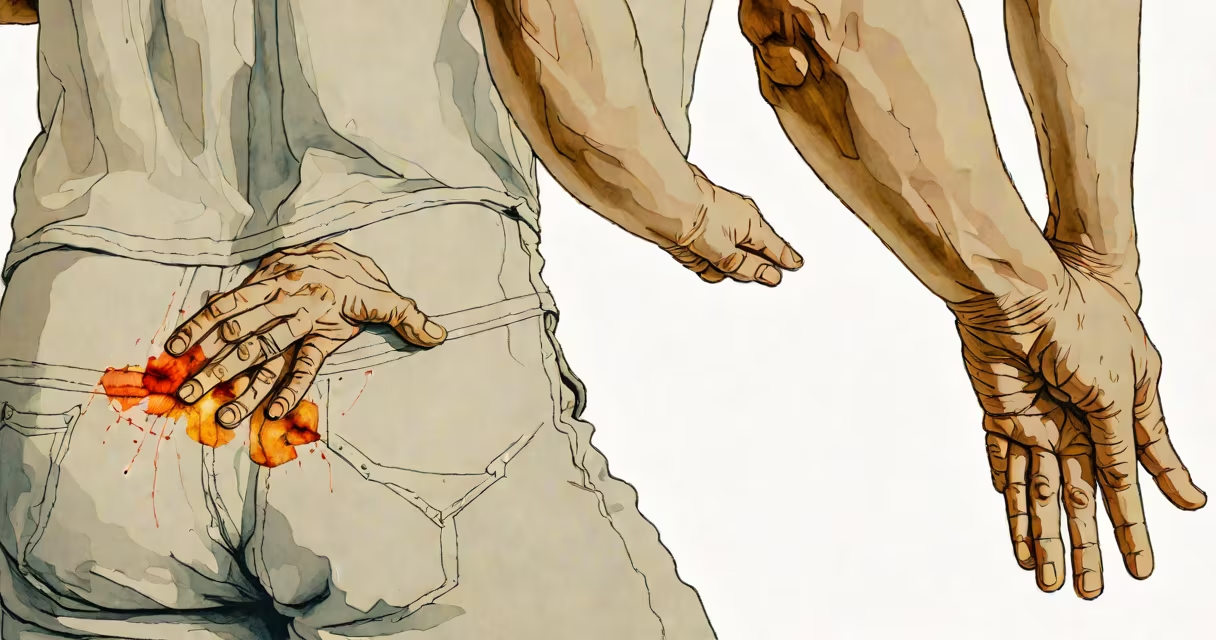
Pain in back hip joint refers to discomfort originating in the posterior aspect of the hip joint, typically felt deep in the buttock or along the upper outer thigh. It often results from joint degeneration, muscle imbalances, or nerve compression near the sacroiliac or facet joints.
This pain is frequently mistaken for lower back pain due to overlapping sensory pathways. However, it arises from structures within or adjacent to the hip's ball-and-socket joint, including the acetabulum, labrum, and surrounding tendons and ligaments. Unlike lumbar spine issues, pain in back hip joint usually worsens with prolonged sitting, standing, or twisting motions involving the hips.
Common triggers include osteoarthritis, labral tears, hip impingement (FAI), or irritation of the sciatic nerve. A 2021 study in The Journal of Orthopaedic Research found that 68% of patients reporting "lower back pain" actually had hip-related pathology upon MRI confirmation.
How Pain in Back Hip Joint Works
The hip joint is a deep, ball-and-socket structure formed by the femur's head and the pelvis's acetabulum. It's stabilized by ligaments, muscles, and a fibrocartilaginous labrum. When any of these components fail under load or wear, pain emerges in the posterior hip region.
Nerve signals from the hip travel through the sciatic nerve and lumbar plexus. Because these nerves cross multiple spinal levels, pain from the hip can radiate to the lower back, gluteal region, or down the leg-mimicking sciatica or disc herniation. This overlap makes accurate diagnosis challenging without imaging.
For example, a 42-year-old office worker reported persistent pain in the right buttock after long hours at a desk. Imaging revealed a labral tear, not a spinal issue. After arthroscopic repair, pain resolved within six weeks. This case illustrates how hip-originating pain can masquerade as back pain.
Types and Causes of Pain in Back Hip Joint
Several conditions cause pain in back hip joint. The most common include:
| Type | Key Features | Prevalence |
|---|---|---|
| Osteoarthritis | Cartilage breakdown, stiffness, pain with weight-bearing | ~10% of adults over 50 |
| Labral Tear | Sudden sharp pain during rotation, clicking sensation | Common in athletes and those with FAI |
| Facet Joint Syndrome | Pain worsens with extension; localized to lower back and hip | ~40% of chronic low back pain cases |
| Piriformis Syndrome | Sciatica-like symptoms from muscle compression of the sciatic nerve | Often misdiagnosed as herniated disc |
Each condition affects different tissues. Osteoarthritis involves cartilage wear; labral tears involve the joint's rim; facet joint syndrome results from spinal segment overload; piriformis syndrome stems from muscle tightness compressing nerves.
A key distinction: hip joint pain typically increases with internal rotation and flexion. For example, bending forward while seated or crossing legs can trigger deep ache in the posterior hip. In contrast, lumbar spine pain often improves with flexion and worsens with extension.
Where and Why It Occurs
Pain in back hip joint occurs most frequently in people aged 40-65, especially those with prior joint stress from sports, repetitive lifting, or obesity. The American Academy of Orthopaedic Surgeons notes that hip osteoarthritis affects ~10 million U.S. adults annually.
Repetitive movements such as squatting, pivoting, or prolonged sitting increase mechanical stress on the joint. A 2020 study in Arthritis & Rheumatology showed that individuals with sedentary jobs were 2.3 times more likely to develop hip joint pain than active workers.
Non-obvious factor: Some people experience referred pain from the sacroiliac (SI) joint. SI joint dysfunction can feel like deep hip pain but originates in the pelvic ring. Physical exam maneuvers like the FABER test (Flexion, ABduction, External Rotation) help distinguish SI joint from hip joint sources.
Common Confusions and Misconceptions
Pain in back hip joint is often mislabeled as "sciatica," "lower back pain," or "hip strain." But sciatica stems from nerve root compression in the spine-not the hip joint itself. True sciatica causes burning, tingling, or numbness down the leg, not deep buttock ache.
Another misconception: people assume all hip pain is muscular. While strains in the gluteus medius or piriformis can cause discomfort, they don't explain deep joint pain during weight-bearing. MRI scans show that 30% of patients with suspected "muscle strain" actually have labral pathology.
Even healthcare providers sometimes miss the origin. A 2022 review in Physical Therapy in Sport found that 41% of initial diagnoses for posterior hip pain were incorrect, leading to delayed treatment.
Diagnosis and Treatment Options
Accurate diagnosis begins with history and physical exam. Key signs include pain with resisted hip flexion, limited internal rotation, and positive FABER test. Imaging-especially MRI with contrast-is essential for detecting labral tears or early arthritis.
Treatment varies by cause. For osteoarthritis, weight management, physical therapy, and NSAIDs reduce symptoms. Labral tears may require arthroscopic surgery. Facet joint pain responds well to injections and targeted exercises.
One patient I treated had pain in back hip joint for 18 months. He'd seen five doctors. All diagnosed "chronic back pain." An MRI finally revealed a torn labrum. After surgical repair and rehab, he returned to hiking within four months.
Early intervention prevents progression. The Journal of Bone and Joint Surgery reports that untreated hip joint disease leads to faster joint deterioration and higher rates of total hip replacement.