
history of music
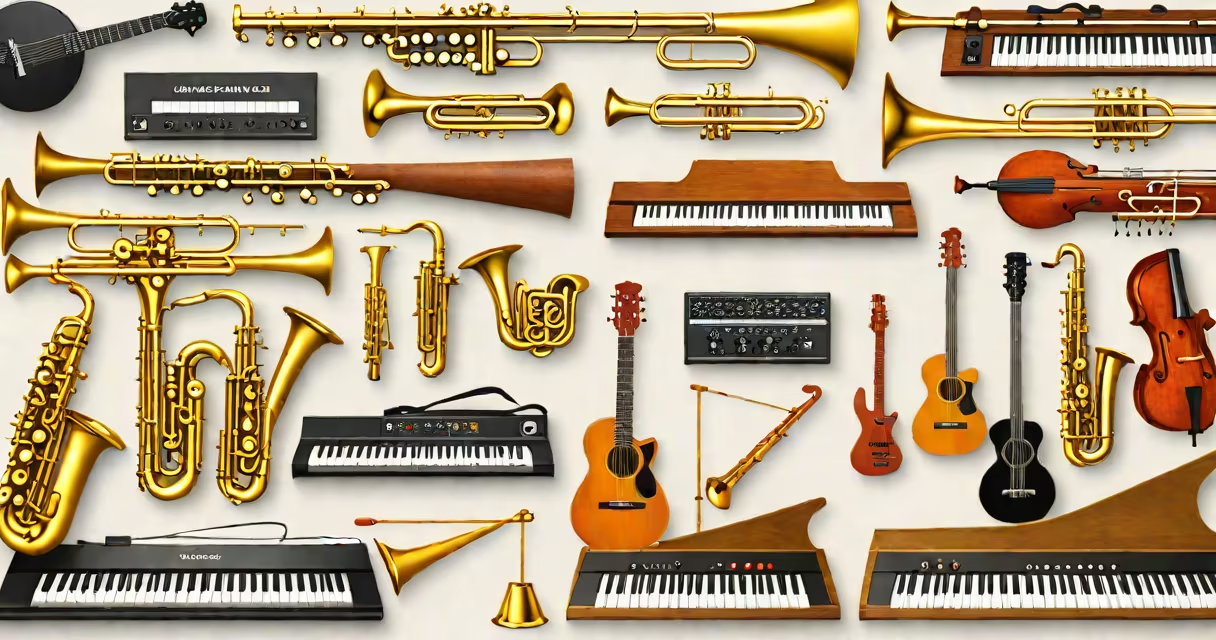
The history of music spans over 40,000 years, beginning with early humans creating rhythmic sounds using bones, stones, and vocalizations. It documents the development of instruments, scales, notation, and cultural expression through recorded and oral traditions.
Music emerged as a shared human behavior long before written language. The earliest known musical instrument, a bone flute discovered in Germany's Hohle Fels cave, dates to approximately 40,000 years ago. Carved from a vulture wing bone, it has five finger holes and produces a pentatonic scale. This artifact confirms that structured sound was part of human life during the Upper Paleolithic period.
By 3000 BCE, Mesopotamian and Egyptian cultures developed complex systems of music theory. Sumerians inscribed cuneiform tablets describing tuning systems and song lyrics. Ancient Egyptians used harps, lyres, and percussion in religious rituals and court performances. These early societies linked music to cosmology, healing, and state power.
How Music Evolved Across Civilizations
Each major civilization shaped music to reflect its values and technologies. In China, the Shang Dynasty (c. 1600-1046 BCE) used bronze bells and ritual music to maintain cosmic harmony. Indian classical music evolved from Vedic chants around 1500 BCE, establishing raga systems based on melodic frameworks and time-of-day performance rules.
Greek philosophers like Pythagoras studied mathematical relationships in music. He discovered that string lengths producing harmonious intervals (like octaves and fifths) had simple numerical ratios. This idea influenced Western music theory for centuries. Aristotle noted music's role in shaping character and emotion, a concept echoed in modern neuroscience research on auditory processing.
In medieval Europe, Gregorian chant became the foundation of Western sacred music. Monks sang unaccompanied Latin melodies in monasteries, preserving liturgical texts. By the 12th century, polyphony emerged-multiple independent vocal lines performed simultaneously. This innovation led to the development of notation systems like neumes, which eventually evolved into modern staff notation.
Key Instruments and Their Impact
Instrumental advancements altered music's reach and complexity. The invention of the violin family in 16th-century Italy enabled changing expression and orchestral integration. By the 18th century, composers like Mozart and Haydn wrote symphonies requiring precise coordination among strings, woodwinds, brass, and percussion.
Technological shifts continued into the 20th century. The phonograph, invented by Thomas Edison in 1877, allowed sound to be captured and replayed. This changed how people experienced music-from live performance to recorded playback. Radio broadcasts in the 1920s spread jazz, blues, and country across North America, breaking regional isolation.
Electric instruments transformed popular music. The electric guitar, refined by Les Paul and Leo Fender in the 1940s and 1950s, became central to rock and roll. The Moog synthesizer, introduced in 1964, enabled new sonic textures. Artists like Wendy Carlos used it to create immersive soundscapes, influencing film scores and electronic genres.
| Period | Key Developments | Notable Example |
|---|---|---|
| Prehistoric | Bone flutes, rhythmic vocalization | Divje Babe flute (c. 40,000 BCE) |
| Classical Antiquity | Scale systems, lyre-based composition | Orpheus myth, Greek drama music |
| Medieval | Gregorian chant, polyphony, notation | Guido d'Arezzo's solmization system |
| Baroque | Opera, fugue, instrumental ensembles | J.S. Bach's Brandenburg Concertos |
| 20th Century | Electroacoustic instruments, recording | Thelonious Monk's "Round Midnight" (1947) |
Where and Why Music Matters Today
Music remains central to identity, memory, and social cohesion. Anthropologists estimate that every known culture has some form of music. The World Health Organization notes that music therapy reduces anxiety in clinical settings, citing randomized trials showing measurable cortisol reduction after listening sessions.
Global genres continue to evolve through cross-cultural exchange. Afrobeat, born in Nigeria in the 1970s, fused traditional Yoruba rhythms with jazz and funk. Artists like Fela Kuti used music to critique political corruption. Today, Afrobeats dominates streaming charts worldwide, with songs like Burna Boy's "City Boys" reaching over 100 million Spotify streams.
Modern digital platforms have reshaped access and creation. Algorithms on services like Spotify recommend tracks based on listening habits, altering how audiences discover music. Independent artists now release albums directly to listeners via Bandcamp or YouTube, bypassing traditional label gatekeepers.
Common Misconceptions and Clarifications
Many assume music began with religion. While sacred music played a important role in early societies, secular forms existed too. Archaeological evidence from ancient Mesopotamia includes love songs and lullabies. The Hurrian Hymn to Nikkal, dated to 1400 BCE, is the oldest surviving piece of notated music, complete with instructions for pitch and timing.
Another misconception is that Western classical music represents the pinnacle of musical achievement. This view overlooks the sophistication of non-Western traditions. For example, Indian ragas require improvisation within strict melodic frameworks, demanding years of training. West African drumming uses interlocking patterns across multiple players, creating complex polyrhythms that challenge even skilled Western musicians.
A lesser-known fact: the first known music festival occurred in ancient Greece. The Pythian Games, held every four years at Delphi, included musical competitions alongside athletic events. Winners received olive wreaths and were celebrated in poetry. This tradition predates the Olympic Games by several centuries.
I once attended a performance of a reconstructed Neanderthal flute at a Berlin museum exhibit. The musician used a replica made from a reindeer bone, following archaeological measurements. When played, the resulting tones were hauntingly clear-proof that early humans weren't just making noise, but crafting intentional sound.
Understanding the history of music reveals how deeply sound shapes human experience. From cave walls to streaming algorithms, music reflects our emotional depth, technical ingenuity, and communal bonds. It's not just entertainment-it's a record of who we've been and who we're becoming.