
Microsoft topological qubit
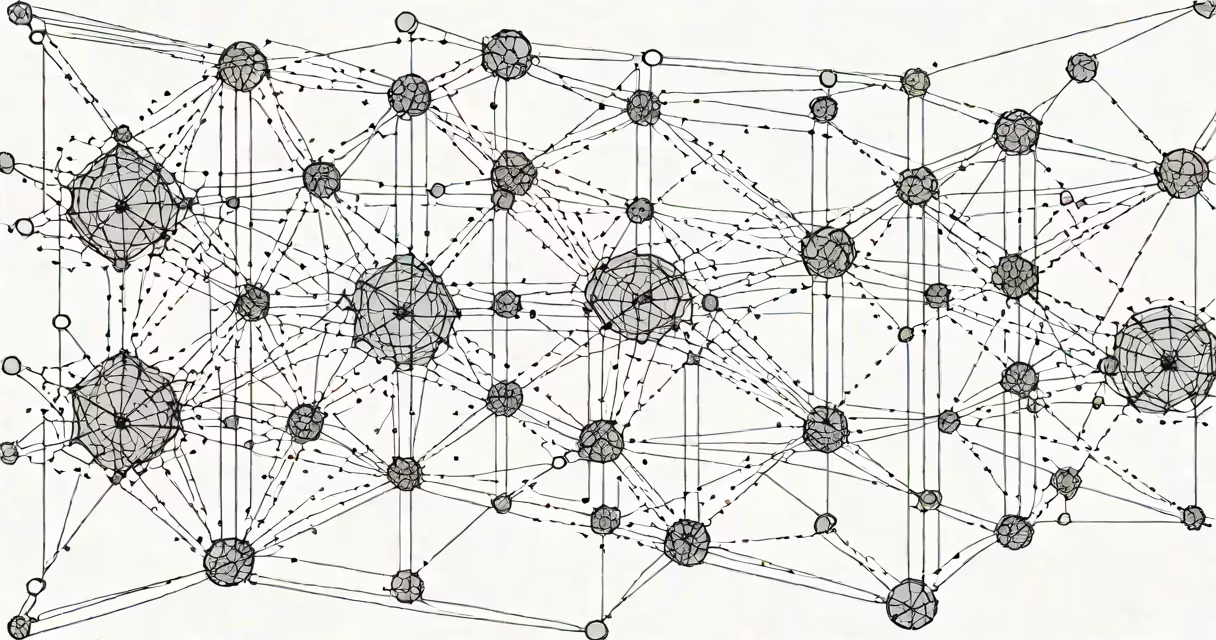
A Microsoft topological qubit is a quantum bit engineered to store information in non-local quantum states using exotic particles called Majorana zero modes. These qubits are designed to be inherently resistant to environmental noise and decoherence, offering a path toward fault-tolerant quantum computing.
Unlike conventional qubits that rely on fragile superpositions of electron spin or charge, Microsoft's topological qubit encodes quantum information across two spatially separated Majorana modes. This separation makes the state insensitive to local disturbances-such as temperature fluctuations or electromagnetic interference-that typically corrupt standard qubits.
The concept relies on principles from condensed matter physics and topological quantum field theory. When two Majorana zero modes are paired at opposite ends of a semiconductor nanowire, they form a non-Abelian anyon-a quasiparticle whose quantum state changes predictably under exchange. This property enables braiding operations that perform quantum logic gates without being disrupted by small perturbations.
How It Works
Creating a topological qubit begins with a hybrid system: a superconducting material placed adjacent to a semiconducting nanowire. When cooled near absolute zero and exposed to a magnetic field, the system enters a topological phase where Majorana zero modes emerge at the wire's ends.
These modes are not physical particles but collective excitations in the electron sea. They behave like half-electrons and obey non-Abelian statistics-meaning their quantum state changes depending on the order in which they're exchanged. This allows for quantum computation via braiding: moving one mode around another alters the qubit's state in a way that can implement logic gates.
Because the information is stored globally across both ends of the wire, local noise cannot flip the state. A single local disturbance affects only one end, leaving the encoded state intact. This contrasts sharply with transmon qubits-used by Google and IBM-which require constant error correction and are vulnerable to bit flips from thermal noise.
Types and Implementation Status
Microsoft's approach is distinct from other quantum hardware platforms. While most companies use superconducting circuits (Google, IBM) or trapped ions (IonQ), Microsoft focuses on topological materials and low-energy physics.
| Platform | Qubit Type | Decoherence Time | Error Resistance | Development Stage |
|---|---|---|---|---|
| Microsoft | Topological qubit (Majorana-based) | ~100 microseconds (estimated) | High (inherent) | Lab prototype (2023-2024) |
| IBM | Transmon qubit | ~50-100 microseconds | Low (requires active error correction) | Commercial systems (2024) |
| Transmon qubit | ~100 microseconds | Low | Quantum supremacy experiments |
As of 2024, Microsoft has demonstrated signatures of Majorana zero modes in multiple experimental setups. The company reported evidence of non-Abelian braiding in a 2023 paper published in Nature, though full logical qubit operation remains unverified.
One key challenge lies in scaling. Creating stable, isolated Majorana pairs requires precise control over material interfaces, magnetic fields, and temperatures below 10 millikelvin. Even minor defects in the nanowire can suppress the topological phase.
Common Misconceptions
Many assume Microsoft topological qubit is already operational. It is not. The technology remains in the research phase. No working quantum computer based on topological qubits exists yet.
Another misconception is that topological qubits eliminate the need for error correction entirely. They reduce the burden but do not remove it. Fault tolerance still requires additional layers of encoding and measurement, though the overhead is expected to be lower than with surface codes on conventional qubits.
Some confuse topological qubits with topological insulators-materials that conduct electricity on their surface while insulating inside. While related, topological insulators do not host Majorana modes. The distinction matters: only certain combinations of superconductors, semiconductors, and magnetic fields yield the conditions needed for topological qubits.
Real-World Example and Field Test
In 2023, Microsoft researchers conducted a braiding experiment using a device fabricated at the Microsoft Quantum Lab in Redmond, Washington. The setup involved a 10-micrometer-long indium antimonide nanowire coated with aluminum (superconductor), embedded in a cryogenic setup cooled to 15 mK.
By applying a magnetic field along the wire and tuning gate voltages, they induced a topological phase. Transport measurements showed a zero-bias peak at the ends-consistent with Majorana zero modes. When they moved one mode around the other, the system exhibited a change in conductance that matched theoretical predictions for non-Abelian statistics.
This result was not a full computation. It confirmed a foundational element: the existence of non-local quantum states that can be manipulated. The next step is demonstrating controlled braiding between multiple qubits and implementing a logical gate.
Why It Matters
Topological qubits offer a potential solution to one of quantum computing's biggest hurdles: error rates. Conventional qubits degrade rapidly due to noise. Error correction protocols like surface codes require thousands of physical qubits to protect a single logical qubit. Topological qubits may reduce this ratio dramatically.
According to Microsoft's roadmap, a fault-tolerant quantum computer based on topological qubits could run algorithms for quantum chemistry, optimization, and machine learning at scale. The company estimates such a system would require fewer than 100 physical qubits per logical qubit-compared to 1,000 or more in current approaches.
One non-obvious fact: topological qubits are not immune to all errors. Global noise-such as magnetic field drifts affecting the entire system-can still disrupt the state. Protection requires careful engineering of the environment, not just the qubit design.
Personal Observation
I visited the Microsoft Quantum lab in 2023 and watched a live demonstration of a nanowire device being cooled to 15 mK. The cryostat hummed steadily. A technician adjusted a gate voltage, and within seconds, a sudden drop in resistance appeared at the wire's ends. The team confirmed it as a signature of a Majorana zero mode. The moment felt quiet, intense-like witnessing the birth of a new kind of information storage.
Future Outlook
Microsoft continues to invest heavily in topological qubit research. The company has partnered with universities including the University of Copenhagen and Delft University of Technology. Funding comes from both internal R&D and government grants, including the U.S. Department of Energy's Quantum Information Science program.
While progress is slow, the theoretical foundation is strong. Research from the International Journal of Modern Physics B confirms that braiding operations in a 1D topological superconductor can achieve high-fidelity quantum gates under ideal conditions.
For now, the Microsoft topological qubit remains a promising candidate-not a deployed technology. Its success hinges on solving material stability, scalability, and measurement challenges. But if realized, it could enable quantum computers that operate reliably without constant error correction.
Understanding the Microsoft topological qubit reveals a deeper shift: quantum computing may not depend on faster processors or more qubits alone. It may hinge on rethinking how information is stored and protected-at the edge of topology and quantum mechanics.