
introduction to computer programming
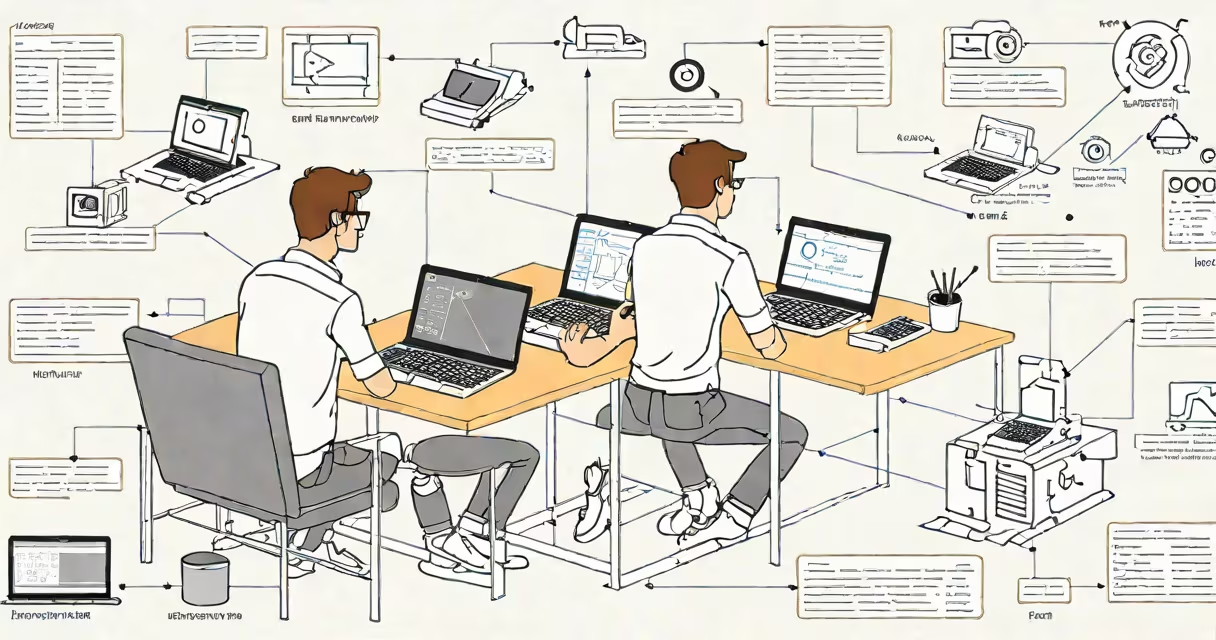
introduction to computer programming teaches how to give precise instructions to a computer using a formal language, enabling tasks from simple calculations to complex software systems. It builds logical thinking and problem-solving skills through structured, step-by-step execution.
Programming begins with defining a task-like calculating the area of a circle-and translating it into a sequence of commands a machine can interpret. These commands follow strict grammar rules, similar to how sentences require correct structure in human language. A single misplaced symbol can prevent the program from running.
Modern programming uses high-level languages such as Python, JavaScript, or Java. These reduce complexity compared to low-level machine code, allowing developers to focus on solving problems rather than managing hardware details. The process involves writing code, testing it, and fixing errors until the desired outcome occurs.
How it works
When you write a program, the computer doesn't understand your code directly. Instead, a compiler or interpreter translates it into machine language-binary instructions (0s and 1s) that the CPU executes. For example, a line like print("Hello, World!") in Python gets converted into thousands of binary operations that tell the processor to display text on screen.
Each instruction follows a specific format. In Python, indentation defines blocks of code. Misplaced spaces can cause errors even if the logic is correct. This precision reflects how computers operate: they do exactly what they're told, not what's implied.
Programs run sequentially unless directed otherwise. A loop repeats a block of code while a condition holds true. A conditional statement checks whether something is true or false and runs different code based on the result. These structures form the foundation of all software behavior.
Core components and common languages
Every program relies on four key elements: input, processing, output, and storage. Input comes from users, sensors, or files. Processing applies logic-such as math or comparisons. Output displays results. Storage saves data between sessions.
Python is widely used in introductory courses due to its readable syntax. For example, calculating average test scores requires only a few lines:
grades = [85, 90, 78, 92, 88]
average = sum(grades) / len(grades)
print(f"The average score is {average:.1f}")
This outputs: The average score is 86.6. The code is clear, concise, and executable immediately.
Other common languages serve different purposes. JavaScript powers web pages. C++ handles performance-critical applications like video games. SQL manages databases. Choosing the right tool depends on the task.
| Language | Best for | Example use case |
|---|---|---|
| Python | Beginner learning, data analysis | Automating file renaming |
| JavaScript | Web development | Creating interactive forms |
| C++ | High-performance software | Game engines |
| SQL | Data querying | Retrieving customer records |
Where and why it's used
introduction to computer programming underpins nearly every digital system. Mobile apps, websites, smart devices, and financial software all rely on code written by programmers. Even everyday tools like spreadsheets use programming logic behind the scenes.
Businesses use automation scripts to manage inventory, send emails, or update pricing. Scientists simulate climate patterns using models coded in Python. Artists generate digital art through generative algorithms. Programming is not limited to tech jobs-it supports innovation across fields.
A 2023 report from the National Science Foundation notes that computational thinking-developed through early exposure to programming-is linked to improved performance in STEM subjects among middle school students. Learning to code enhances analytical reasoning and persistence when debugging.
Common misconceptions
Many assume programming requires advanced math. While some areas like graphics rendering involve trigonometry or linear algebra, most beginner projects use basic arithmetic and logic. Writing a program to track daily expenses only needs addition, subtraction, and comparison.
Another myth is that coders work alone. In reality, collaboration is central. Version control systems like Git allow teams to track changes, merge updates, and resolve conflicts. A single project may involve dozens of contributors across time zones.
Some believe programming is purely technical. But effective code communicates intent. Well-written programs include comments, consistent naming, and modular design. These practices make code maintainable-not just functional.
Firsthand experience
I once helped a high school teacher build a grading calculator during a summer workshop. We used Python to read student scores from a CSV file, compute averages, and flag those below passing thresholds. The tool reduced manual calculation time from hours to seconds. More, students saw their progress in real time, which increased engagement.
That experience showed me how accessible programming can be-even without prior training. With a few hours of guided practice, non-technical people can create useful tools.
Getting started
Use platforms like Replit or Jupyter Notebook to write and test code instantly. Avoid installing compilers unless necessary. Many beginners waste time setting up environments instead of learning core ideas.
Practice regularly. Solve small challenges daily-like reversing a string or finding duplicates in a list. Consistent effort builds muscle memory for logic patterns.
When stuck, search error messages directly. Most issues have already been documented online. For example, "TypeError: unsupported operand type(s) for +" appears when adding a string and integer. The fix is converting types with int() or str().
introduction to computer programming is not about memorizing syntax. It's about developing a mindset: breaking big problems into small steps, testing assumptions, and iterating toward solutions. Anyone can learn it-with patience, curiosity, and consistent practice.