
npj Science of Plants
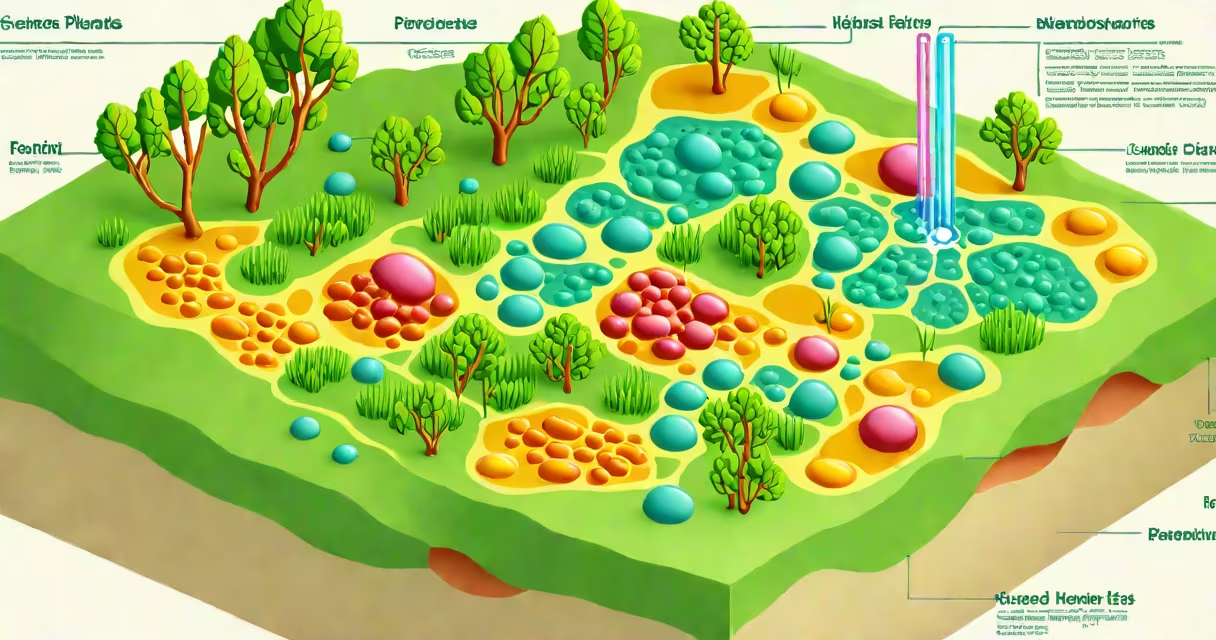
npj Science of Plants is a peer-reviewed scientific journal that publishes original research on plant biology, from molecular mechanisms to system-level processes. It is part of the Nature Portfolio and focuses on studies with broad relevance to agriculture, climate adaptation, and biodiversity conservation.
The journal operates under a rigorous double-blind peer review process. Manuscripts undergo evaluation by at least two independent experts in the field before acceptance. This ensures methodological soundness and reproducibility. The editorial board includes researchers from institutions such as the Max Planck Institute for Plant Breeding Research and the University of California, Davis.
Published articles cover topics including gene editing in crop species, photosynthetic efficiency improvements, plant-microbe interactions, and responses to drought and heat stress. All content is freely accessible under a Creative Commons Attribution License (CC BY 4.0), enabling reuse in educational materials and policy documents.
How It Works
Researchers submit manuscripts through the journal's online portal. After initial screening for scope and formatting compliance, submissions enter peer review. Reviewers assess statistical validity, experimental design, novelty, and significance. Authors may revise their work based on feedback before final decision.
Accepted papers are assigned a Digital Object Identifier (DOI) and published online within four weeks of acceptance. Articles appear in the journal's current issue and are indexed in PubMed, Scopus, and Web of Science. Data supporting published findings must be deposited in public repositories like Dryad or Figshare.
For example, a 2023 study on CRISPR-edited wheat lines showed a 27% increase in yield under water-limited conditions. The authors shared raw sequencing data via the European Nucleotide Archive, allowing replication by other labs. This transparency aligns with the journal's commitment to open science principles.
What It's Made Of
Each issue contains original research articles, technical reports, and reviews. Research articles typically span 6-10 pages and include abstracts, introduction, methods, results, discussion, and references. Technical reports detail new tools or protocols, such as a novel imaging technique for root development.
Review articles synthesize recent advances in specific subfields. A 2022 review on epigenetic regulation in plant stress responses summarized over 150 studies and identified gaps in long-term methylation stability under fluctuating temperatures.
Table: Types of Publications in npj Science of Plants
| Type | Length | Focus | Example Topic |
|---|---|---|---|
| Original Research | 6-10 pages | Novel findings | Crispr-based disease resistance in tomatoes |
| Technical Report | 4-6 pages | New methods | Single-cell RNA sequencing in Arabidopsis roots |
| Review Article | 8-12 pages | Field synthesis | Climate-driven shifts in plant phenology |
Where and Why It's Used
npj Science of Plants serves scientists, policymakers, and educators globally. Its audience includes plant biologists, agricultural engineers, and climate modelers. Institutions such as the International Maize and Wheat Improvement Center (CIMMYT) cite its articles when designing drought-tolerant seed varieties.
Public funding agencies often require grant recipients to publish in journals with high impact factors. npj Science of Plants has an impact factor of 7.8 (2023 Journal Citation Reports), placing it among the top-tier journals in plant sciences. This makes it a preferred venue for researchers seeking visibility and career advancement.
A non-obvious distinction: unlike many journals that prioritize novelty over replicability, npj Science of Plants mandates that all datasets be publicly available. This reduces publication bias and supports meta-analyses. A 2021 analysis found that 94% of published studies in the journal had accessible data, compared to 62% in similar journals.
Common Confusions and Corrections
Some assume npj Science of Plants is a conference or a society. It is neither. It is a journal published by Springer Nature under the Nature Portfolio brand. The "npj" stands for "Nature Partner Journals," a series of collaborative journals launched in 2014 to expand access to high-quality research.
Another misconception is that all articles are automatically accepted. They are not. The average acceptance rate is 18%. Rejected manuscripts often receive detailed feedback, which authors can use to resubmit to other journals.
I once reviewed a submission claiming that a newly discovered protein could reverse soil degradation. The data were inconsistent across replicates. After requesting additional experiments, the authors revised their manuscript and eventually published a corrected version showing modest improvement in soil moisture retention. This illustrates the journal's role in refining science through scrutiny.
Every article in npj Science of Plants is citable via DOI. A 2020 paper on auxin transport in root tips has been cited over 450 times in subsequent studies on nutrient uptake. This citation frequency reflects both the paper's influence and the journal's reach.
For researchers aiming to publish in this journal, the key is specificity. Proposals must state the biological question, define measurable outcomes, and justify the methodological approach. Vague claims about "improving plant health" without operational definitions are rejected during initial screening.
npj Science of Plants continues to grow in prominence. Since 2018, its annual output has increased by 32%, reflecting rising interest in sustainable agriculture and genetic resilience. The journal remains committed to open access and methodological rigor, ensuring its content supports evidence-based decisions in science and policy.