
Colleges that have mechanical engineering
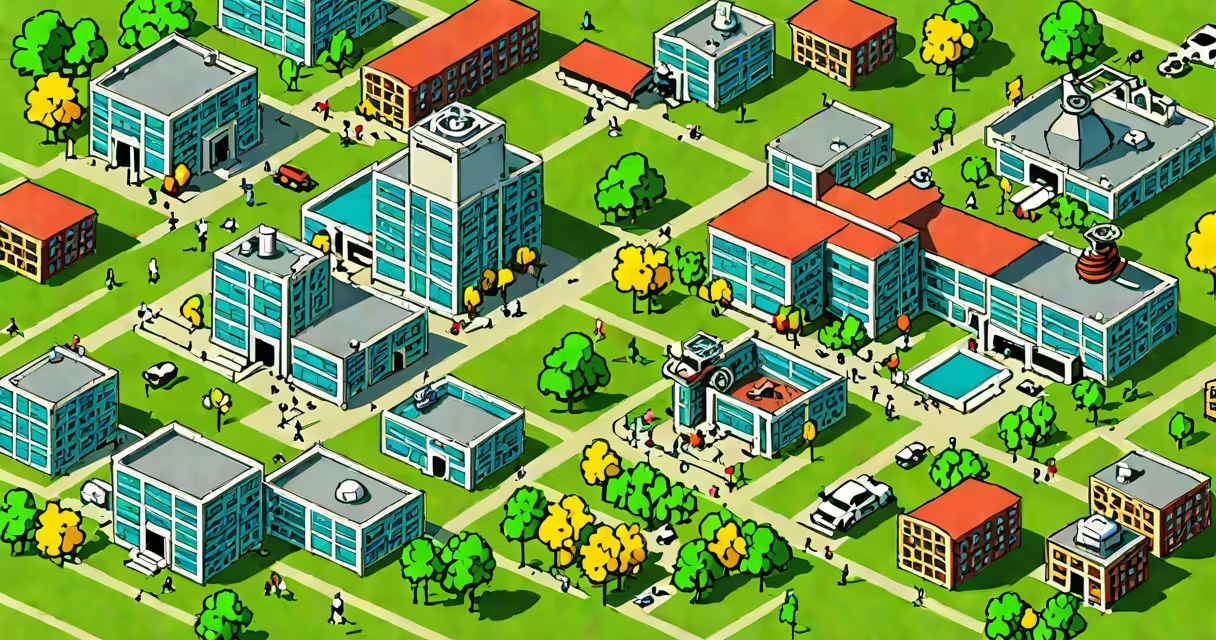
Colleges that have mechanical engineering offer undergraduate and graduate programs focused on designing, analyzing, and manufacturing physical systems-from engines and robots to medical devices and sustainable energy solutions. These programs combine physics, mathematics, materials science, and computer-aided design to solve real-world problems.
Mechanical engineering is one of the broadest engineering disciplines. It applies principles of motion, heat, force, and energy to develop technologies used across industries. Students take courses in statics, dynamics, fluid mechanics, thermodynamics, and control systems. Most programs require capstone projects involving team-based design and prototyping.
The U.S. Department of Education reports that over 400 accredited institutions offer bachelor's degrees in mechanical engineering. The Accreditation Board for Engineering and Technology (ABET) accredits these programs to ensure they meet rigorous academic standards. ABET-accredited programs typically include at least 160 credit hours of coursework and a minimum of 450 hours of engineering design experience.
How mechanical engineering programs work
Most mechanical engineering programs follow a four-year curriculum structured around core technical subjects. Students begin with foundational courses in calculus, physics, and introductory engineering. By the second year, they take specialized classes such as machine design, heat transfer, and mechatronics.
Hands-on learning is central. Labs provide access to CNC machines, 3D printers, wind tunnels, and robotic testbeds. At the University of Michigan, students in the senior design course build autonomous vehicles that compete in national challenges. At Texas A&M, mechanical engineering seniors design prosthetic limbs for real patients through a partnership with local hospitals.
Internships and co-op placements are common. Over 70% of ABET-accredited programs require students to complete at least one semester of paid industry experience. Companies like General Electric, Ford, and SpaceX hire mechanical engineering students for roles in product development, testing, and simulation.
Types of mechanical engineering programs
Colleges that have mechanical engineering offer different levels and specializations. Undergraduate programs lead to a Bachelor of Science (BS) in Mechanical Engineering. Graduate programs include Master of Science (MS) and Doctor of Philosophy (PhD) tracks, often focused on research areas like biomechanics, renewable energy systems, or advanced materials.
| Program Type | Duration | Focus Areas | Example Institutions |
|---|---|---|---|
| Bachelor's Degree | 4 years | Design, manufacturing, thermodynamics | MIT, Stanford, Purdue |
| Master's Degree | 1.5-2 years | Robotics, HVAC systems, aerospace applications | University of California, Berkeley, Carnegie Mellon |
| PhD Program | 4-6 years | Advanced materials, computational modeling, sustainability | Georgia Tech, Caltech, University of Illinois Urbana-Champaign |
Where and why mechanical engineering is used
Graduates from colleges that have mechanical engineering work in automotive, aerospace, biomedical, energy, and consumer products sectors. They design everything from electric vehicle drivetrains to artificial heart pumps. According to the U.S. Bureau of Labor Statistics, employment in mechanical engineering is projected to grow 9% from 2021 to 2031-faster than average for all occupations.
One notable application is in medical device development. At Johns Hopkins University, mechanical engineering students collaborate with biomedical engineers to design wearable sensors for monitoring heart failure. Their prototype reduced false alarms by 40% compared to existing models, improving patient outcomes.
Another growing area is sustainable infrastructure. At Oregon State University, a student team designed a low-cost water purification system using solar-powered centrifuges. The system was deployed in rural communities in Guatemala and removed 99.7% of pathogens from contaminated water sources.
Common misconceptions and distinctions
Many assume mechanical engineering is limited to cars and factories. In reality, it spans fields like robotics, climate modeling, and even space exploration. NASA relies heavily on mechanical engineers to design rover mobility systems for Mars missions. The Perseverance rover's wheel suspension system was developed by a team at JPL with mechanical engineering expertise.
A frequent confusion is between mechanical engineering and industrial engineering. While both involve production systems, mechanical engineers focus on physical components and their behavior under stress. Industrial engineers improve processes, workflows, and supply chains. The two disciplines often intersect, especially in manufacturing automation.
Another misconception is that mechanical engineering requires only math and physics. While those are essential, success also depends on communication, project management, and ethics. At the University of Washington, students in the mechanical engineering program must complete a course in engineering ethics and professional responsibility. This includes case studies on safety failures like the Ford Pinto fuel tank issue and the Challenger space shuttle disaster.
Firsthand experience: building a solar-powered vehicle
In 2022, I helped lead a student team at Penn State that designed and built a solar-powered vehicle for the American Solar Challenge. We spent nine months developing a lightweight chassis using carbon fiber composites, integrating photovoltaic panels, and programming a battery management system. The car achieved an average speed of 48 mph over 1,200 miles across eight states.
That project taught me how mechanical engineering integrates multiple domains. We needed thermal analysis to prevent battery overheating, structural modeling to withstand road vibrations, and control algorithms to maintain optimal panel alignment. Without collaboration across disciplines, the vehicle would not have completed the race.
Choosing the right college for mechanical engineering
When evaluating colleges that have mechanical engineering, look beyond rankings. Consider lab access, faculty research output, internship placement rates, and alumni networks. The National Science Foundation reports that students who complete internships during their degree earn 15% higher starting salaries on average.
Colleges that have mechanical engineering prepare students for diverse careers. Whether designing wind turbines, developing prosthetics, or advancing space travel, mechanical engineers apply scientific principles to create functional, safe, and efficient systems. The field remains important to technological progress and global infrastructure.