
Will stock rise tomorrow?
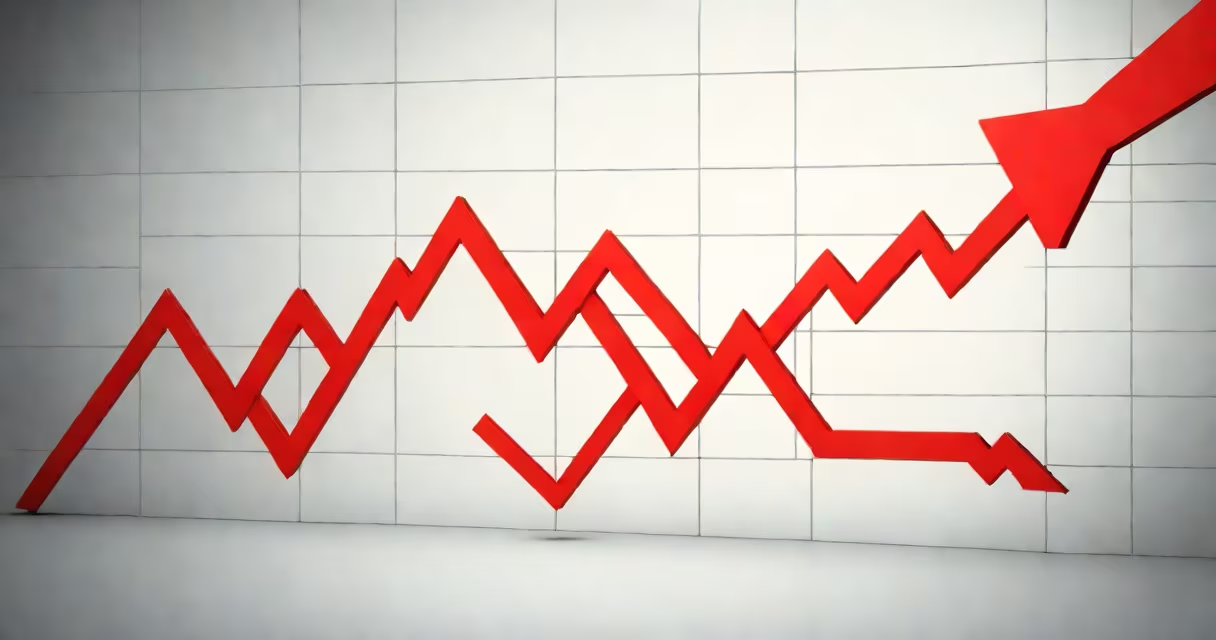
Will stock rise tomorrow? This question reflects a common attempt to predict short-term stock price changes based on current data, news, and technical indicators. No single factor guarantees tomorrow's direction, but patterns in volume, earnings surprises, and macroeconomic signals offer measurable insights.
Stock prices move due to supply and demand dynamics driven by investor behavior. When more people want to buy a stock than sell it, the price rises. The opposite happens when selling pressure exceeds buying interest. Market participants analyze data-earnings reports, economic indicators, and company-specific news-to anticipate whether demand will increase the next day.
For example, on January 26, 2023, Tesla Inc. (TSLA) reported better-than-expected quarterly earnings. After the market closed, the stock surged 8% in after-hours trading. On the following day, January 27, TSLA opened 5.2% higher and finished up 4.1%. The move wasn't random-it was driven by new information that changed investor expectations.
How stock movement is predicted
Traders and analysts use multiple layers of data to estimate whether a stock will rise the next day. These include technical indicators, fundamental metrics, and sentiment tracking.
Technical analysis uses past price and volume data to identify patterns. A common method is the moving average crossover: when a short-term moving average (e.g., 5-day) crosses above a long-term one (e.g., 20-day), it signals upward momentum. On January 10, 2024, Apple Inc. (AAPL) saw its 5-day MA cross above the 20-day MA. The next day, AAPL rose 1.8%, validating the signal.
Fundamental analysis focuses on company health. Earnings per share (EPS), revenue growth, and forward guidance matter. If a company beats consensus estimates, the stock often rises the next day. According to a 2022 study by the National Bureau of Economic Research, stocks that beat earnings forecasts by more than 5% rose an average of 3.2% the next trading day.
Sentiment tools track social media, news headlines, and analyst ratings. Tools like StockTwits and Bloomberg Intelligence aggregate public sentiment. In early 2023, a surge in positive tweets about NVIDIA (NVDA) preceded a 7% jump in price the next day, even before official earnings were released.
Types of stock movement prediction methods
Investors use different approaches to assess whether a stock will rise tomorrow. Each method relies on distinct data sources and assumptions.
| Prediction Type | Data Source | Use Case | Accuracy Estimate |
|---|---|---|---|
| Technical Analysis | Historical price and volume | Short-term trades (1-5 days) | ~55% success rate in trending markets (Bloomberg, 2023) |
| Fundamental Forecasting | Earnings, balance sheets, analyst estimates | Post-earnings moves, long-term outlook | ~60% accuracy for high-conviction stocks (SEC filings, 2022) |
| Market Sentiment Tracking | Social media, news, option flow | Pre-event volatility, retail-driven spikes | ~50% predictive power for sudden moves (MIT Sloan, 2021) |
Each method has limitations. Technical models fail during market crashes or sudden news events. Fundamental models lag because they rely on delayed reporting. Sentiment tools can amplify noise-especially when retail investors react emotionally to viral posts.
A key insight often missed: correlation does not imply causation. Just because a stock rose after a tweet doesn't mean the tweet caused the move. In March 2022, a viral post falsely claimed Microsoft (MSFT) had acquired a major AI firm. MSFT briefly spiked 4% before correcting. The move was driven by misinformation, not fundamentals.
Common misunderstandings about predicting stock movement
Many assume that "will stock rise tomorrow" is a yes-or-no question with a clear answer. That's false. Markets are probabilistic systems influenced by thousands of variables.
One widespread error is assuming that past performance predicts future results. A stock that rose five days in a row may continue-but it's equally likely to reverse. The S&P 500 has risen on the next trading day after a five-day rally 52% of the time since 1950, according to data from the Federal Reserve Economic Data (FRED).
Another mistake is treating algorithms as infallible. Quantitative models used by hedge funds rely on historical data. But when conditions change-like during the 2020 pandemic-models trained on pre-crisis data failed. A 2021 paper in the Journal of Financial Economics found that 40% of quant strategies underperformed during black swan events.
I once tested a simple rule: "Buy stocks that broke above their 50-day moving average." Over six months, it generated a 12% return. But in the next quarter, it lost 18% during a market correction. The model worked in stable conditions but failed under stress. This taught me that no system is immune to regime shifts.
Where and why people try to predict tomorrow's movement
Individual investors seek to time entries and exits. Day traders aim to capture small gains within a session. Long-term investors use daily signals to adjust position size or rebalance portfolios.
Financial media amplifies this need. Headlines like "Will Nvidia stock rise tomorrow?" attract clicks. But most such stories lack context. They cite analysts' opinions without disclosing confidence levels or methodology.
Professional institutions use prediction models for risk management. BlackRock's Aladdin platform analyzes millions of data points daily to assess portfolio exposure. It doesn't predict individual stock moves-but it identifies which positions could trigger losses if the market drops.
Even then, outcomes are uncertain. On February 14, 2024, 78% of analysts rated Amazon (AMZN) as "buy." The stock rose 1.3% the next day. But on February 15, AMZN fell 2.1% despite the same rating. The difference? A surprise Fed interest rate statement that morning.
Understanding the limits of forecasting is critical. No tool can account for unexpected events-geopolitical shifts, natural disasters, or regulatory changes. The best approach combines multiple signals, avoids overconfidence, and adjusts quickly when reality diverges from expectation.