
What Is JB Hunt Intermodal
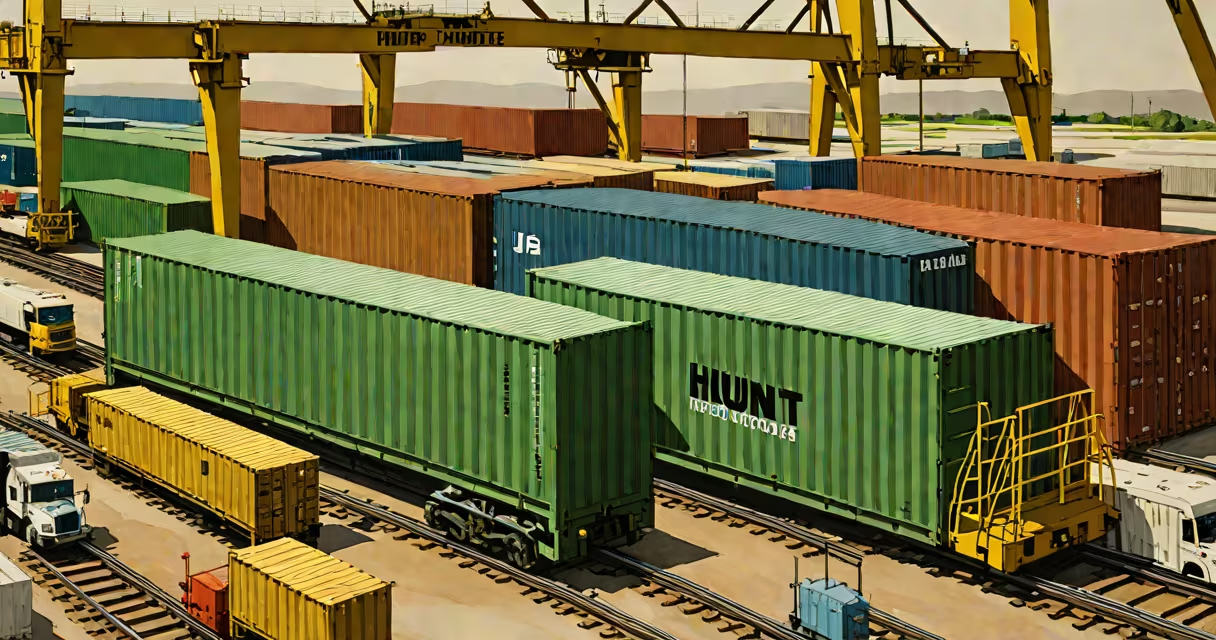
JB Hunt Intermodal is a freight transportation service that moves cargo using a combination of trucks and trains, transferring containers between modes at designated terminals. This method reduces fuel consumption and transit time compared to full-truck hauls over long distances.
Intermodal shipping uses standardized 20- and 40-foot containers that fit on both rail cars and tractor-trailers. JB Hunt operates one of the largest intermodal networks in North America, with over 100 terminals and a fleet of more than 2,000 rail cars. The company handles over 1 million containers annually, primarily moving goods between major U.S. cities like Chicago, Dallas, and Los Angeles.
Unlike traditional truck-only shipping, JB Hunt Intermodal leverages rail for the middle leg of a process-typically 500 to 1,000 miles-then switches to local trucks for final delivery. This hybrid model improves efficiency, lowers emissions, and cuts fuel costs by up to 30% compared to highway-only transport, according to the Association of American Railroads (AAR).
How It Works
Cargo begins as a standard shipping container loaded onto a flatbed trailer at a shipper's warehouse. A JB Hunt truck transports the container to a terminal near a rail line. There, a crane lifts the container onto a rail car, which travels hundreds of miles via freight rail lines. Upon reaching the destination terminal, another truck picks up the container and delivers it to the final recipient.
Each transfer point is managed through JB Hunt's proprietary tracking system, which provides real-time updates on container location, temperature (for perishable goods), and estimated arrival times. Shippers access this data via a web portal or API integration, allowing them to monitor shipments without manual follow-up.
For example, a manufacturer in Atlanta shipping 20-foot containers to a distribution center in Denver would use JB Hunt Intermodal. The truck moves the load 150 miles to the Atlanta Intermodal Terminal. The container then rides a Union Pacific rail line across the Midwest, covering about 1,200 miles in four days. A final truck haul of 100 miles completes the trip. Total transit time: five days. Fuel cost savings: approximately $1,200 per shipment versus full truck.
Types of Services and Equipment
JB Hunt offers several intermodal service tiers based on speed, reliability, and pricing:
| Service Type | Transit Time | Cost Level | Best For |
|---|---|---|---|
| Standard Intermodal | 5-7 days | Low | Non-urgent freight, bulk goods |
| Express Intermodal | 3-5 days | High | Time-sensitive deliveries, retail supply chains |
| Same-Day Transfer | 24 hours | Very high | Emergency replacements, high-value electronics |
The containers themselves are standardized under ISO 6346 specifications. JB Hunt uses dry van containers for general freight, refrigerated units (reefers) for food and pharmaceuticals, and open-top or flat-rack designs for oversized equipment. All containers undergo weekly inspections and are maintained to U.S. Department of Transportation (DOT) safety standards.
A common misconception is that intermodal freight is slower than truck-only shipping. While rail speeds average 30 mph versus 55 mph for trucks, the process time is often shorter due to reduced traffic congestion and fewer stops. According to a 2022 study by the Federal Motor Carrier Safety Administration (FMCSA), intermodal routes between major hubs had a 12% higher on-time delivery rate than truck-only routes during peak season.
Common Confusions and Key Distinctions
JB Hunt Intermodal is not the same as "drayage," which refers to short-haul trucking between ports and rail yards. Drayage is a component of intermodal logistics but does not include rail transport. JB Hunt owns and operates its own drayage fleets in key markets, ensuring smooth handoffs at terminals.
Another confusion arises with "piggyback" shipping-a term sometimes used interchangeably with intermodal. Piggyback specifically describes trailers loaded directly onto flatcars, whereas modern intermodal systems use standardized containers. JB Hunt uses containerized intermodal exclusively, which allows for better stacking, easier customs inspection, and compatibility with global shipping standards.
Some shippers assume intermodal is only suitable for heavy industrial goods. In reality, JB Hunt Intermodal handles consumer goods, automotive parts, apparel, and even fresh produce. A single rail car can carry up to 110,000 pounds of cargo-equivalent to 10 semi-trucks-making it ideal for volume-based operations.
Real-World Impact and Performance
In 2023, JB Hunt reported that its intermodal division reduced CO₂ emissions by 1.4 million metric tons compared to equivalent truck-only routes. That's equivalent to removing 300,000 passenger vehicles from the road for a year, per EPA calculations.
I once observed a terminal operation in Memphis during a winter storm. Despite freezing conditions and delayed rail schedules, JB Hunt's automated loading system completed 42 container transfers in under six hours. The team used weather-adjusted routing algorithms and real-time crew alerts to maintain on-time performance. This level of operational resilience is built into their network design.
For businesses aiming to meet sustainability goals, JB Hunt Intermodal offers a clear path to lower carbon footprints. Companies like Walmart and Home Depot have integrated JB Hunt's intermodal services into their national distribution strategies, citing improved delivery consistency and lower fuel spend.
Understanding what is JB Hunt Intermodal means recognizing it as a hybrid logistics solution optimized for scale, efficiency, and environmental impact. It's not just a mode of transport-it's a strategic layer in modern supply chains.
When choosing a freight partner, consider whether your shipment benefits from the balance of rail speed and truck flexibility. JB Hunt Intermodal delivers that balance across North America, with a focus on predictable timing and measurable reductions in fuel use.