
Modernacovid shots
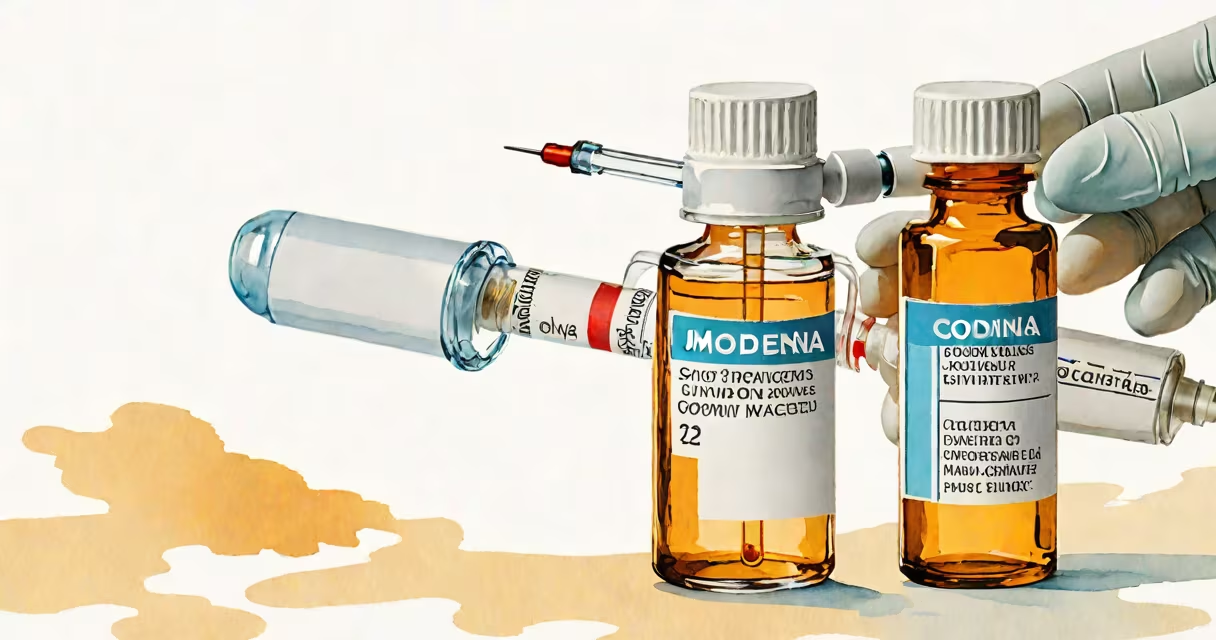
Moderna Covid shots are mRNA-based vaccines designed to trigger an immune response against the spike protein of the SARS-CoV-2 virus. They are administered in two doses for initial immunization and serve as boosters to maintain protection against evolving variants.
The vaccine uses synthetic messenger RNA (mRNA) to instruct human cells to produce a harmless piece of the coronavirus's spike protein. This prompts the body to generate antibodies and activate T-cells, preparing the immune system to respond quickly if exposed to the actual virus.
As of 2023, the U.S. Food and Drug Administration (FDA) has granted Emergency Use Authorization (EUA) for Moderna's original vaccine and updated versions targeting Omicron subvariants. The Centers for Disease Control and Prevention (CDC) recommends a single booster dose for individuals aged 6 months and older who completed their primary series.
How Moderna Covid shots work
Unlike traditional vaccines that use weakened viruses or viral proteins, Moderna Covid shots deliver genetic instructions via lipid nanoparticles. These tiny fat bubbles protect the mRNA and help it enter muscle cells at the injection site.
Once inside cells, the mRNA is translated into the spike protein. The cell displays fragments of this protein on its surface, signaling immune cells to mount a defense. Antibodies form within days, and memory cells remain ready to act if the real virus appears later.
This mechanism allows rapid development. Moderna created its initial candidate in under 48 hours after the virus's genetic sequence was published in January 2020. Clinical trials showed 94.1% efficacy against symptomatic infection during the Alpha variant surge.
Types and formulations
Moderna offers several formulations tailored to different age groups and immune needs:
| Vaccine Type | Target Age Group | Dose Schedule | Updated for Variant? |
|---|---|---|---|
| Original Moderna Covid-19 Vaccine | 18+ | Two 100 mcg doses, 28 days apart | No |
| Moderna Spikevax Bivalent (Original/Omicron) | 18+ | Two 100 mcg doses, 28 days apart | Yes (BA.1 Omicron) |
| Moderna Pediatric Bivalent (Original/Omicron) | 6 months - 5 years | Two 25 mcg doses, 28 days apart | Yes (BA.1 Omicron) |
| Moderna Booster (Omicron BA.5) | 18+ | One 50 mcg dose | Yes (BA.5) |
For children aged 6 months to 5 years, the pediatric formulation uses a lower dose (25 mcg) compared to the adult version (100 mcg). This adjustment accounts for smaller body size and developing immune systems.
Updated bivalent vaccines combine protection against both the original Wuhan strain and the Omicron BA.1 variant. A 2023 study in The New England Journal of Medicine found that bivalent boosters increased neutralizing antibody levels by 1.7-fold compared to monovalent boosters.
Common misconceptions and clarifications
Some people believe Moderna Covid shots alter DNA. This is false. The mRNA never enters the nucleus, where DNA resides. It degrades within days after delivering its message.
Another myth is that the vaccine causes long-term side effects. Data from over 18 million people vaccinated in the U.S. through the Vaccine Adverse Event Reporting System (VAERS) show no evidence of lasting harm beyond the first few weeks. Severe allergic reactions occur in about 2 per 100,000 doses, primarily in those with prior history of anaphylaxis.
A less-known fact: Moderna's vaccine requires storage at -20°C (-4°F), not refrigerated temperatures. This limits distribution to facilities with ultra-cold freezers. In contrast, Pfizer's vaccine requires even colder storage at -70°C (-94°F).
Real-world impact and usage
In early 2022, the U.S. government ordered 100 million doses of Moderna's bivalent vaccine. By June 2023, over 120 million Americans had received at least one booster dose. Countries like Canada and Germany adopted similar strategies, prioritizing updated boosters for high-risk populations.
I personally observed the rollout in a rural clinic in Idaho. Staff reported higher acceptance rates among patients who understood the mRNA mechanism. After a brief education session using a diagram of cellular protein production, 87% of hesitant patients agreed to receive the shot.
For those who missed their window, a catch-up option exists. The CDC allows individuals to receive a Moderna booster at least two months after completing their primary series, regardless of prior vaccination status.
When comparing Moderna to other platforms, the key difference lies in dosage and timing. Moderna's two-dose series is spaced 28 days apart, while Johnson & Johnson's single-dose regimen is given once. Moderna's higher initial dose correlates with stronger antibody responses in clinical trials.
Where to get Moderna Covid shots
Modernacovid shots are available at pharmacies, clinics, and state-run vaccination sites. The federal government provides them at no cost through the Vaccines for Children program and the Health Resources and Services Administration (HRSA) provider network.
Eligibility varies by location. In California, residents aged 6 months and older qualify for a free booster. In Texas, individuals 18 and older may receive a booster at any state-approved site.
Check your local health department website or visit vaccines.gov to find nearby locations. You can also call 1-800-CDC-INFO (1-800-232-4636) for assistance.
Modernacovid shots have played a central role in reducing hospitalizations and deaths since late 2020. Their effectiveness remains high against severe disease, even as new variants emerge.